
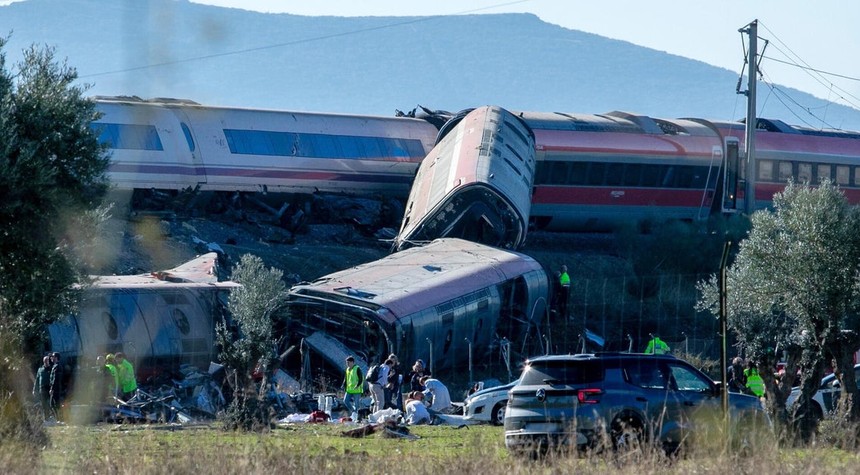
A catastrophic collision between two high-speed passenger trains in central Spain has claimed at least 68 lives and injured 58 others, marking the second deadly rail accident in the nation this year and raising serious questions about the safety of what was once considered Europe’s most reliable rail system.
The accident occurred Wednesday morning in Toledo province when a high-speed train traveling from Madrid struck the rear of another train that had stopped on the tracks. The impact derailed two carriages, scattering debris across olive fields in the flat terrain between the towns of Urda and Los Yébenes. Rescue workers continued searching the wreckage throughout the day for survivors and victims.
The collision involved 544 passengers total: 397 aboard a train operated by Spain’s state-owned RENFE company and 147 aboard a privately operated IRYO train. Both trains were traveling in the same direction on the Madrid-to-Seville route when disaster struck at 8:53 a.m. local time.
Spanish Transport Minister Óscar Puente provided a detailed timeline of the technical failures that preceded the crash. At 8:30 a.m., a computer malfunction disabled the security system along a 63-kilometer stretch of track, automatically stopping all trains in that section. However, the central command center then issued what Puente termed an “inexplicable” order for the RENFE train to resume travel without speed restrictions, despite an active stop signal remaining on the line.
The train may have been traveling at speeds up to 200 kilometers per hour when it collided with the stationary IRYO train. Puente emphasized that the train engineers bore no responsibility for the accident, placing the focus instead on the command center’s decision-making process following the system failure.
“I am not attributing responsibility to anyone, I am just stating the facts,” Puente said, though his detailed account clearly raises questions about operational protocols and oversight.
Prime Minister Pedro Sánchez traveled to the crash site and announced three days of national mourning. His remarks reflected both the gravity of the tragedy and the political implications of a second major rail accident within months.
“Today all of Spain is grieving,” Sánchez said. “It is unacceptable for a country like Spain to suffer two high-speed rail accidents in the same year.”
The Prime Minister called for increased safety measures to restore public confidence in the high-speed rail system, which has long been a source of national pride for Spain. The timing carries political weight as well, with national elections scheduled for November 29.
Rail service between Madrid, Ciudad Real, and Andalusia remained suspended as investigators worked to piece together the full sequence of events. The regional government of Castilla La Mancha confirmed the death toll, while Health Minister Mónica García stated that emergency workers were prioritizing the rescue of survivors and the recovery of victims from the most severely damaged carriages.
This tragedy serves as a sobering reminder that even advanced technological systems require vigilant human oversight. When automated safety systems fail, the decisions made in those critical moments can mean the difference between a manageable delay and a national catastrophe.
The investigation will undoubtedly focus on why the command center ordered a train to proceed at full speed on a track where safety systems had failed. That decision, and the protocols that either permitted or failed to prevent it, will determine whether this disaster was the result of human error, systemic failure, or both.
Related: Tense Standoff Between US and Cuban Diplomats Interrupts United Nations Proceedings