
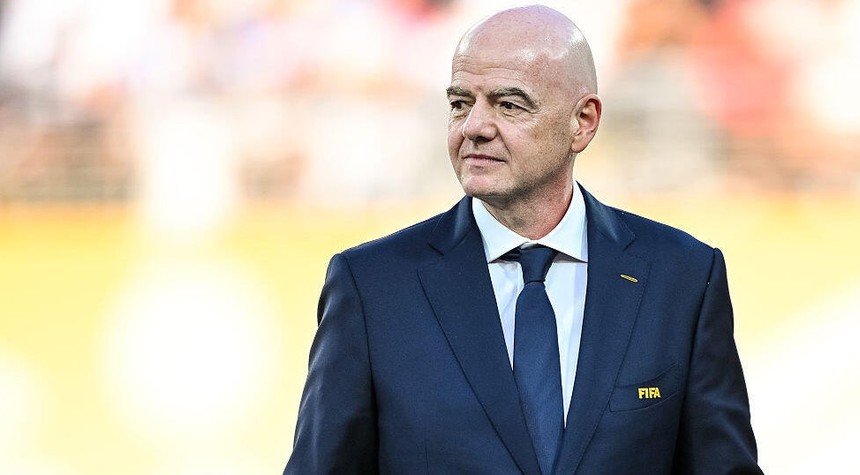
FIFA has withdrawn a controversial proposal that would have opened the World Cup to billions of dollars in private commercial investment, bowing to overwhelming opposition from member nations across the globe.
The decision represents a significant retreat for FIFA President Gianni Infantino, whose secretive plan threatened to fracture the international soccer community and sparked threats of a European boycott of the World Cup itself.
“Having listened carefully to all the views, it has become clear that the project has created divisions of a nature that, regardless of the level of support, are no longer in the interest of the objective set out in the first place,” Infantino stated Friday evening.
The plan, known as FIFA Forward Enterprise, would have created a commercial rights and event operations company valued at $20 billion. FIFA intended to sell 20 percent of this entity to private investors while retaining 80 percent ownership. The proposal called for $4.2 billion to be raised from what FIFA termed “carefully selected long-term investors.”
The investment group was to be led by Thrive Eternal, a venture spearheaded by Joshua Kushner, brother of Jared Kushner, President Trump’s son-in-law. Thrive Eternal operates as a subsidiary of Thrive Capital, Joshua Kushner’s investment firm.
FIFA had projected the arrangement would substantially increase funding to its 211 member associations, raising their four-year allocations from $8 million to approximately $20 million.
The Trump family connection drew immediate scrutiny, though sources close to Thrive Capital insisted the criticism was misplaced. They emphasized that Joshua Kushner maintains no ties to the administration, holds no political appointments, and has not contributed to Republican causes. His political donations, they noted, have consistently supported Democratic candidates and organizations.
President Trump himself denied any involvement when questioned by reporters during a Cabinet meeting Friday, stating he had never discussed the matter with Infantino or other FIFA officials.
The proposal’s collapse came swiftly once details became public. UEFA, European soccer’s governing federation representing 55 nations, delivered the most devastating blow Thursday by announcing its members had unanimously agreed to boycott FIFA competitions, including the World Cup, if Infantino proceeded with the plan.
UEFA’s statement was unequivocal in its rejection of commercializing soccer’s premier tournament. “The World Cup cannot be treated as an investment product,” the federation declared. “It is one of football’s greatest sporting legacies. The World Cup is not for sale.”
The European threat carried enormous weight. A World Cup without European participation would be commercially and competitively meaningless, given that European nations have won twelve of the twenty-two World Cups contested and provide much of the tournament’s global audience and revenue.
UEFA characterized Infantino’s proposal as “irresponsible and indefensible,” language that reflected deep anger at both the substance of the plan and the secretive manner in which it was developed.
North America’s soccer confederation, representing 41 nations, also registered opposition to the scheme.
The episode raises questions about FIFA’s governance and Infantino’s judgment. The organization has worked for years to rehabilitate its reputation following massive corruption scandals that led to criminal prosecutions and the downfall of previous leadership. This proposal, developed in secrecy and sprung upon member nations, revived concerns about transparency and accountability at soccer’s highest levels.
For now, the World Cup remains under traditional FIFA control, its commercial future determined by the sport’s member nations rather than private investors.
Related: United States and Israel Prepare Major Military Strike Against Iranian Energy Infrastructure