
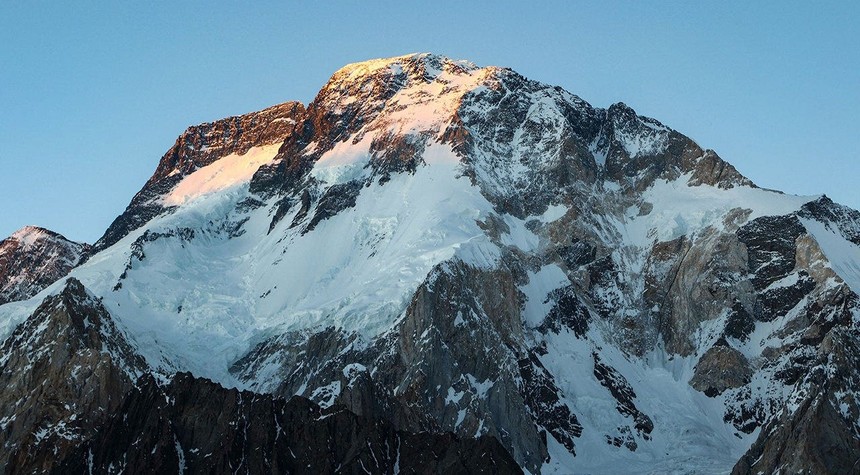
Three members of an international climbing expedition have been confirmed dead following an avalanche on Broad Peak in Pakistan’s Karakoram mountain range, with rescue operations continuing under treacherous conditions for additional missing climbers.
Pakistani officials confirmed Friday that rescue teams recovered the remains of American climber Sarah Mallory Geis, Nadhira Ahmed Abdullah Al Harthy of Oman, and Pur Bahadur Gurung of Nepal. The climbers were part of a group of at least ten mountaineers who went missing Thursday after the avalanche struck.
Drone footage from the search area revealed signs of several additional bodies, according to local officials coordinating the recovery effort.
At 26,414 feet, Broad Peak stands as the twelfth-tallest mountain in the world, presenting formidable challenges even under optimal conditions. The current rescue operation faces both the mountain’s inherent dangers and deteriorating weather that has already forced temporary suspension of efforts.
“We hope to continue our operations, both aerial search and the ground rescue, till the time we find the survivors or the dead bodies,” stated Irfan Arshad, president of the Alpine Club of Pakistan. Operations were halted Friday night as weather conditions made further progress impossible.
The remaining missing climbers hail from Nepal, Pakistan, China, and the United Kingdom. Among them is renowned mountaineer Nirmal Purja, whose disappearance has drawn international attention to the disaster.
Sajid Hussain, deputy director of the tourism department in Gilgit-Baltistan, characterized the rescue area as “remote and difficult,” underscoring the extraordinary challenges facing recovery teams.
The Gilgit-Baltistan police acknowledged these obstacles in an official statement, noting that “high-altitude porters and rescue teams are working to retrieve the bodies and transport them to the base camp. Due to the extremely rugged terrain and challenging weather conditions, the rescue operation is being carried out with the utmost caution.”
The tragedy on Broad Peak stands in stark contrast to a recent survival story on Mount Everest, where a Sherpa guide who had vanished was found alive nearly a week later, crawling toward base camp. That remarkable rescue highlights both the resilience of experienced mountain guides and the unpredictable nature of high-altitude climbing.
The international composition of the Broad Peak expedition reflects the global nature of extreme mountaineering, where climbers from diverse nations unite in pursuit of summiting the world’s most challenging peaks. This shared ambition, however, comes with shared risk in an environment where human error, natural forces, and unpredictable weather can turn deadly within moments.
As rescue teams prepare to resume operations when conditions permit, the focus remains on locating any possible survivors while working to recover those who perished, bringing closure to families across multiple continents awaiting news from one of the world’s most unforgiving landscapes.
Related: Five Iranian Military Personnel Return Home After Deaths in Iraq Operations