
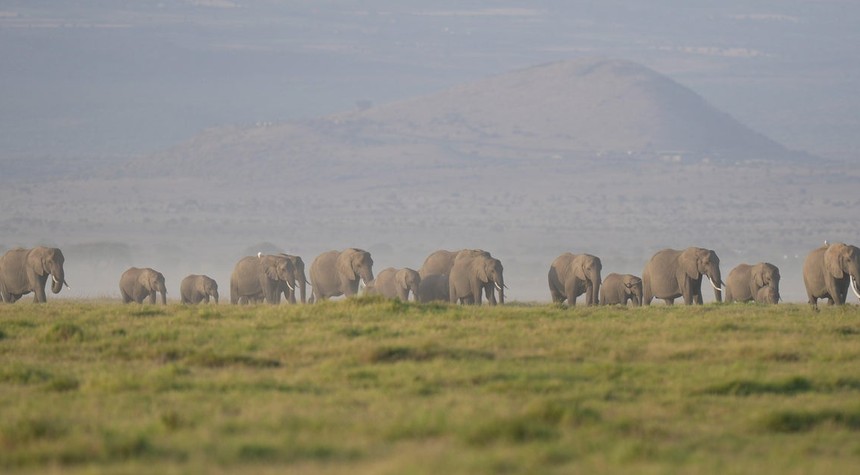
The death of fifteen elephants within a single month near Kenya’s Amboseli National Park has prompted a comprehensive investigation by wildlife authorities, marking what officials describe as the most significant mortality event of its kind in the region in decades.
The Kenya Wildlife Service reported Tuesday that ten of the deceased animals exhibited signs of partial paralysis in the two days preceding their deaths. The remaining five elephants were discovered already deceased, their remains partially consumed by scavengers. The demographic pattern of the deaths raises particular concern: the vast majority of victims were female elephants and their calves, with only a single male among the dead.
The deaths occurred not within the national park itself, but in the surrounding Kimana Sanctuary and Kuku Ranch areas, both part of the broader Amboseli ecosystem. This distinction matters, as these buffer zones often present different management challenges than the protected park proper.
Kenya has confronted elephant mortality before, typically linked to two primary causes: deliberate poisoning by poachers seeking ivory, and retaliatory killings stemming from human-wildlife conflict when the animals damage crops or property. However, the scale and pattern of these recent deaths appear unprecedented for this particular region.
Laboratory analysis has thus far produced conflicting results. Preliminary testing conducted at the University of Nairobi detected what researchers termed a “potential toxic substance” in samples collected from the deceased elephants. Yet separate analyses performed by Kenya’s Government Chemist returned negative results for the specific toxins examined. Additional testing remains underway.
The Kenya Wildlife Service has expanded its investigation beyond toxicology. Environmental teams are now analyzing water sources and examining other potential environmental contaminants throughout the affected areas. The objective is to determine whether the elephants encountered a common exposure point that might explain the cluster of deaths.
Officials have moved to address public health concerns, stating that current evidence provides no indication that whatever condition affected these elephants poses a transmission risk to humans. This reassurance comes as local communities and the tourism industry await answers.
The Amboseli ecosystem, situated at the northwestern base of Mount Kilimanjaro near the Tanzania border, supports a population exceeding two thousand elephants. The park itself has long served as one of East Africa’s premier wildlife viewing destinations, with its elephant herds set against the dramatic backdrop of Africa’s highest peak.
The loss of fifteen animals, while representing less than one percent of the total population, nonetheless carries significance beyond mere numbers. Female elephants, which constitute the majority of casualties in this incident, serve as the foundation of elephant social structure. Their deaths, particularly when accompanied by the loss of calves, can reverberate through family groups for years.
As investigators work to identify the cause, the incident serves as a reminder of the complex challenges facing wildlife conservation in regions where protected areas intersect with human settlement and agricultural activity. The coming weeks should provide greater clarity as laboratory results become available and environmental assessments progress.
Related: Argentine President Milei Alleges Democratic Party Funded Campaign Against National Team