
The French Republic finds itself at a crossroads this evening, as authorities prepare for what may prove another significant test of the nation’s security apparatus. The State Department has issued warnings that confrontational protests are expected this weekend in Orléans, where Marine Le Pen’s National Rally party will hold its political convention on October 24th and 25th.
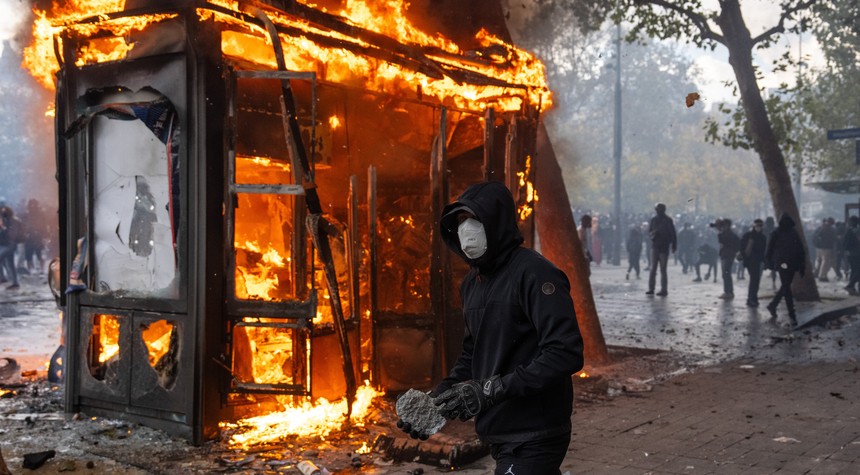
The timing is noteworthy. Just days ago, France experienced widespread civil unrest that resulted in nearly 2,400 arrests across the nation. More than 550,000 demonstrators participated in 110 separate marches throughout the country on October 17th, according to France’s Interior Ministry. The toll was substantial: nearly 1,000 law enforcement officers and firefighters sustained injuries, and thousands of businesses suffered damage.
The scale of that unrest caught French authorities unprepared, exposing what observers are calling significant intelligence and security failures. President Emmanuel Macron’s government now faces the delicate task of preventing a recurrence while respecting the right to peaceful assembly.
According to an internal State Department assessment, antifascist groups are organizing what officials describe as a “potentially more confrontational protest” to coincide with the National Rally convention. Left-wing parties, labor unions, and activist organizations have announced plans for demonstrations on Saturday, with separate antifascist protests scheduled for Sunday near the convention venue.
The political dimensions of this situation warrant careful consideration. The very security failures that embarrassed the Macron administration may now provide an opening for opposition parties, including the center-right and Le Pen’s National Rally, to challenge the president’s governance record. It is a paradox not lost on political observers: the party whose convention requires extraordinary security measures may benefit politically from the government’s inability to maintain order.
Le Pen, who is expected to launch her presidential campaign at this gathering, represents a formidable political force in contemporary France. National Rally President Jordan Bardella has made clear the convention will proceed as planned, despite the security concerns.
Local authorities are implementing additional security restrictions around the convention site. The measures reflect lessons learned, perhaps belatedly, from the October 17th demonstrations. On that day, cities across France witnessed scenes of disorder that included the forced entry and destruction of Limoges city hall, where fires damaged the building during protests ostensibly organized around economic grievances.
The demonstrators on October 17th represented a diverse coalition: former participants of the Yellow Vest movement, students from secondary schools and universities, climate activists, and farmers. This broad spectrum of discontent presents unique challenges for authorities attempting to anticipate and manage civil unrest.
President Trump observed from across the Atlantic that “France is burning,” a characterization that, while perhaps emphatic, captured the attention such events command on the world stage.
As this weekend approaches, France confronts questions that extend beyond immediate security concerns. The nation must reconcile competing values: maintaining public order while preserving democratic freedoms, protecting political gatherings while acknowledging legitimate grievances, and projecting strength internationally while addressing domestic vulnerabilities.
The outcome of this weekend’s events may well influence France’s political trajectory as the nation moves toward its next presidential election. That is the way it is.
Related: Britain Deploys Fighter Jets to Defend Saudi Arabia Against Houthi Attacks