
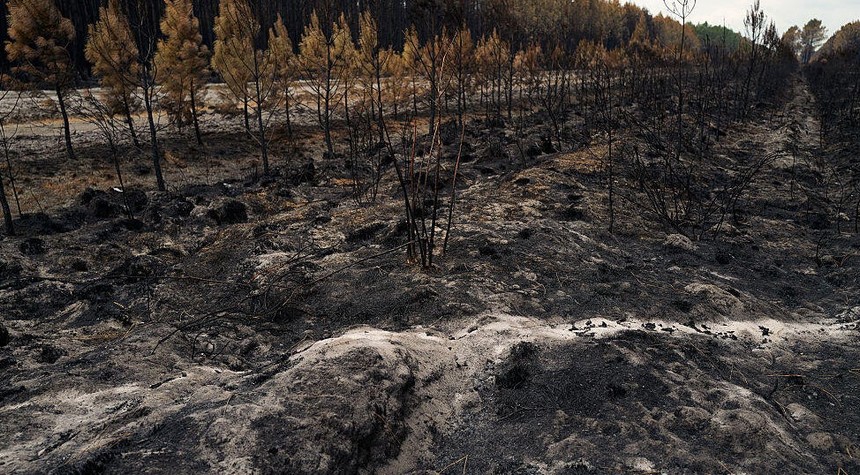
France confronts what President Emmanuel Macron has characterized as the nation’s most severe wildfire crisis since the Second World War. Beyond the immediate human toll, these fires now threaten one of France’s most economically vital and culturally significant industries: winemaking.
The situation has grown particularly acute near Bordeaux, where authorities last week ordered the evacuation of nearly 60,000 residents. This region produces approximately 700 million bottles of wine annually, representing not merely an agricultural output but a cornerstone of French economic strength and cultural identity that has endured for generations.
The timing of these fires could scarcely be worse for vintners. The grapes currently stand at a critical juncture in their development, transitioning from green to red. This particular stage renders them exceptionally vulnerable to smoke damage. Ray Isle, executive wine editor for Food & Wine, explained the stakes plainly: should smoke linger and permeate the crops, the resulting wine would taste like licking an ashtray.
While the full extent of the damage remains unclear, the potential economic consequences merit serious attention. Bordeaux wines, particularly renowned varieties such as Cabernet Sauvignon and Merlot, command premium prices in international markets. These are not merely beverages but investments, cultural artifacts, and critical export commodities that contribute substantially to France’s balance of trade.
Recent history provides sobering precedent for such agricultural disasters. Winemakers have witnessed similar scenarios unfold in other regions, where smoke taint has rendered entire vintages commercially unviable. The economic ripple effects extend far beyond the vineyard owners themselves, affecting bottlers, distributors, restaurants, and the broader tourism industry that depends heavily on wine country appeal.
For internationally-aware observers, this crisis illuminates the fragility of even the most established industries when confronted with natural disasters. France has long prided itself on its winemaking tradition, viewing it as both an art form and a science perfected over centuries. The prospect of losing even a single vintage to wildfire damage represents more than financial loss; it threatens cultural continuity.
The broader implications extend to questions of climate resilience and agricultural adaptation. If such fires become more frequent, as some climate patterns suggest they might, traditional winemaking regions may face fundamental challenges to their long-term viability. This raises questions not only for French producers but for agricultural industries worldwide that depend on specific climatic conditions and established growing seasons.
As evacuation orders remain in effect and firefighting efforts continue, the wine industry watches and waits. The grapes cannot be harvested prematurely without sacrificing quality, yet leaving them exposed to smoke damage risks destroying the vintage entirely. It is a calculation that balances immediate safety concerns against economic necessity.
The outcome of this crisis will likely influence not only this year’s wine production but also future planning and risk management strategies across France’s agricultural sector. For now, the focus remains on containing the fires and protecting both human lives and livelihoods that depend on the land.
Related: United States Launches Heavy Strikes Against Iranian Military Targets