
The United States has reached a significant agreement with Denmark and Greenland that would grant permanent military access, basing rights, and overflight privileges across the Arctic territory. The arrangement represents a substantial shift in America’s Arctic defense posture as competition intensifies among global powers for strategic positioning in the region.
Secretary of State Marco Rubio characterized the agreement as essential for maintaining Greenland within North America’s strategic defense perimeter while preventing adversaries including Russia and China from establishing footholds on the island. The accord requires ratification by both Danish and Greenlandic legislative bodies before taking effect.
While complete terms remain undisclosed, officials familiar with the agreement indicate it would preserve Greenland’s status under Danish sovereignty while explicitly prohibiting China, Russia, and other non-NATO adversaries from constructing military installations or pursuing certain categories of sensitive investments on the territory.
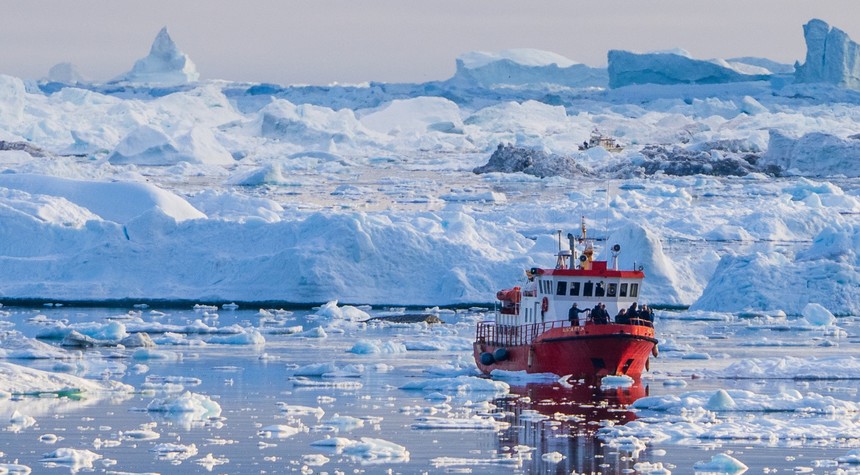
The geopolitical significance of Greenland has grown substantially as Arctic ice continues its retreat. The world’s largest island, nearly equal in size to Alaska and Texas combined, holds strategic importance far exceeding what its population of approximately 56,000 residents might suggest. Most Greenlanders inhabit small coastal communities spread across five municipalities, with roughly eighty percent of the island remaining covered by ice sheet and largely uninhabited.
Greenland’s position off the northeastern coast of Canada places it squarely at the center of Arctic defense considerations. The United States has operated a military installation at Pituffik Space Base in northwestern Greenland since 1953, now under the administration of the Space Force. Russia maintains its own military presence in the Arctic region, while China has pursued expanded access since declaring itself a “near-Arctic state” in 2018.
The changing Arctic environment has opened new shipping lanes around Greenland that could substantially reduce transit times for commercial traffic between North America, Europe, and Asia. Beyond maritime routes, the territory possesses significant deposits of rare earth elements and other critical minerals essential for modern technology, renewable energy systems, and military applications.
These rare earth elements prove particularly crucial in manufacturing high-performance magnets utilized in electric vehicles, wind turbines, generators, and precision guidance systems. Military applications include missile guidance, radar systems, sonar technology, satellite components, and advanced aircraft systems.
China currently dominates global rare earth production, controlling approximately sixty percent of mining operations and more than ninety percent of processing capacity worldwide. As the United States and European Union pursue strategies to reduce dependence on Beijing for these critical materials, Greenland has emerged as a potentially valuable alternative source.
The agreement comes after considerable diplomatic effort by the Trump administration to secure greater American presence in Greenland. The arrangement seeks to formalize and expand existing defense cooperation while addressing contemporary security challenges posed by great power competition in the Arctic.
And that is the way it is with this significant development in Arctic security policy. The United States has taken a measured but decisive step toward ensuring its strategic interests in a region of growing importance to global commerce and military planning.
Related: Male Passenger Jumps Overboard from Carnival Cruise Ship During Return to California