
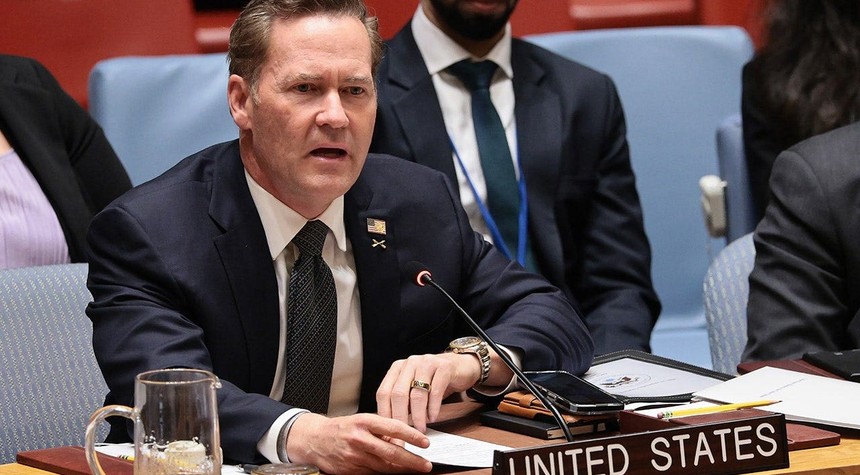
A remarkable confrontation unfolded on the floor of the United Nations General Assembly Tuesday when United States Ambassador Mike Waltz faced an aggressive interruption from Cuban Foreign Minister Bruno Rodríguez Parrilla during remarks critical of the Cuban regime.
The incident occurred during the General Assembly’s annual debate over the long-standing United States embargo on Cuba. Ambassador Waltz was urging member states to reject a resolution calling for an end to the economic restrictions when the Cuban delegation attempted to interrupt his statement.
“I know you don’t like to hear this,” Waltz stated firmly as the Cuban minister approached the podium. “This is America, my friend. This is the United Nations. This is not your communist dictatorship. You cannot silence me.”
The American ambassador’s remarks centered on accusations that Cuba’s government has enriched its leadership while ordinary Cuban citizens endure significant hardships. Waltz made clear his position that the suffering of the Cuban people stems not from American policy, but from corruption and repression within Cuba itself.
As Foreign Minister Rodríguez Parrilla continued moving toward the podium, the president of the General Assembly attempted to restore order, reminding delegates that proper procedures would allow for responses in due course. The Cuban minister, however, persisted in his approach.
“This individual needs to back away from this podium,” Waltz declared as tensions escalated. “He’s not going to intimidate me in the United States of America. I’m the representative of the United States of America. Back up! Back up, Ambassador. Back away! This isn’t Havana.”
The scene was extraordinary by the standards of international diplomacy, where such direct confrontations between member state representatives are uncommon, particularly on the General Assembly floor. The exchange highlighted the enduring tensions between Washington and Havana, tensions that have persisted through multiple American administrations and generations of Cuban leadership.
When Cuba eventually received the floor through proper channels, Foreign Minister Rodríguez Parrilla accused Ambassador Waltz of lying and requested that the General Assembly president call the American diplomat to order. He characterized Waltz’s remarks as beneath the dignity of the forum and insulting to both Cuba’s government and its people.
The decades-old embargo remains one of the most contentious issues in hemispheric relations. The United Nations General Assembly has voted repeatedly to condemn the American policy, though such resolutions carry no binding authority. The United States has maintained that the embargo represents a legitimate response to Cuba’s human rights record and its authoritarian system of government.
This confrontation represents a significant departure from the more measured diplomatic exchanges typically witnessed at the United Nations. It underscores the deeply held convictions on both sides of this long-standing dispute and suggests that normalization of relations between the United States and Cuba remains a distant prospect.
The incident also demonstrates the willingness of the current American administration to directly challenge nations it views as adversarial, even in the formal setting of the General Assembly. Whether this approach advances American interests or complicates diplomatic efforts remains a matter of considerable debate among foreign policy specialists.
Related: Democratic Resilience Tested as Lula Defeats Bolsonaro Dynasty in Brazil