
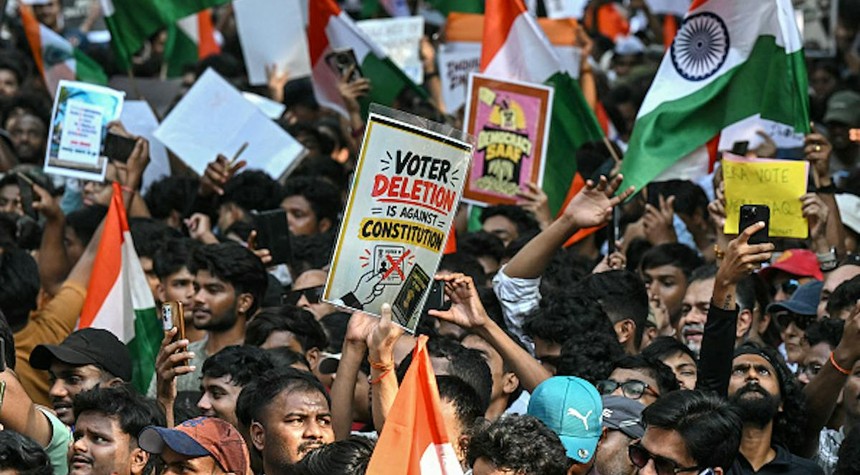
India faces a constitutional crisis as nationwide protests continue following the removal of more than 130 million names from voter registration rolls, a decision that has sparked accusations of systematic disenfranchisement targeting the nation’s Muslim minority.
The facts are sobering. In a country of 1.48 billion people, where Muslims constitute nearly 15 percent of the population, this sweeping electoral revision has created questions about the integrity of democratic processes in the world’s largest democracy. A senior official within the ruling Hindu nationalist Bharatiya Janata Party acknowledged to international media, speaking anonymously, that the purge was designed specifically to reduce Muslim political participation.
Prime Minister Narendra Modi’s government maintains a different narrative. The BJP contends these revisions serve to ensure electoral accuracy and remove what they term “infiltrators” from the voting system. Under the new requirements, removed voters must produce documentation proving their citizenship to regain registration status.
Here lies the practical difficulty. India’s vast population includes millions who lack formal documentation due to inconsistent record-keeping practices, particularly in rural areas and among economically disadvantaged communities. Critics argue this creates an insurmountable barrier for legitimate citizens while providing government authorities with discretionary power over electoral participation.
President Trump referenced India’s electoral procedures in August while advocating for American election security legislation. He cited India’s Chief Election Commissioner Gyanesh Kumar, who reportedly questioned how American elections could proceed without mandatory photo identification. India’s most recent national election processed 646 million voters, with less than one percent voting by mail and universal photo identification requirements.
The situation has energized India’s youth protest movement, which gained momentum earlier this year after forcing the resignation of the education minister in July. Demonstrators now demand the removal of Commissioner Kumar, accusing him of manipulating voter rolls to provide electoral advantages to the ruling party. Thousands have gathered in cities across the nation.
Kumar defended the election commission’s independence last year, stating that the body treats all political entities equally, recognizing neither opposition nor ruling sides. He has not addressed the current controversy publicly.
Opposition parties have escalated their response beyond political rhetoric, calling for Kumar’s criminal prosecution on charges of treason. This represents a significant escalation in India’s increasingly contentious political environment.
This marks the second major electoral roll revision within months. In December, India conducted one of its largest voter list updates in decades, which similarly drew accusations from opposition leaders of deliberate disenfranchisement targeting poor and minority populations, particularly Muslims.
The broader implications extend beyond India’s borders. As the world’s most populous democracy navigates questions of electoral integrity and minority rights, the outcome will influence democratic movements throughout Asia and beyond. The international community watches carefully as India balances security concerns against fundamental democratic principles of universal suffrage.
For Americans observing these developments, the situation offers perspective on our own electoral debates while reminding us that the challenges of maintaining democratic integrity transcend national boundaries. The methods nations employ to secure their elections while preserving voting rights remain among the most critical questions facing democracies worldwide.
Related: Murphy Praises Education City Programs as Congressional Critics Question Qatar Partnerships