
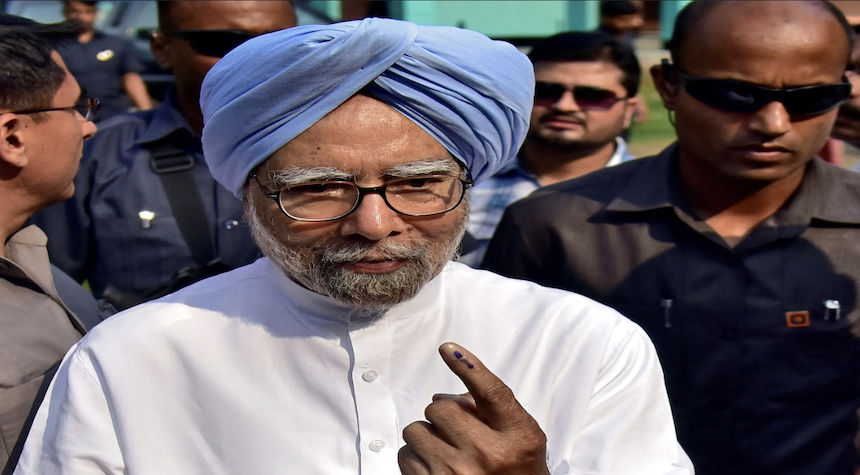
The former Indian Prime Minister Manmohan Singh died aged 92.
Singh, India’s longest-serving prime minister and finance minister from 2004 to 2014, was credited with a number of important economic reforms.
Reports say that his health had deteriorated and he was admitted to a Delhi hospital.
On Thursday, Prime Minister Narendra Modi was among those who paid tributes to Singh. He wrote on social networks that “India mourns one of its distinguished leaders”.
Modi stated that Singh’s wisdom and humility were always evident during their interactions and that during his tenure as Prime Minister he “made extensive effort to improve the lives of people”.
Priyanka Gandhi is the daughter of Rajiv Gandhi, former Prime Minister, and a member of the Congress party. She said Singh was “truly egalitarian, smart, strong-willed, and courageous to the end”.
Rahul, her brother, the leader of Congress, stated that he “lost both a mentor and a guide”.
Singh is the first Indian leader to have been re-elected following a first full term since Jawaharlal Nehru, and the only Sikh to hold India’s highest office. In parliament, he apologized publicly for the 1984 riots that killed 3,000 Sikhs.
However, his second term was marred by the corruption allegations that plagued his administration. Many say that the scandals were partly responsible for the crushing defeat of his Congress Party in 2014’s general elections.
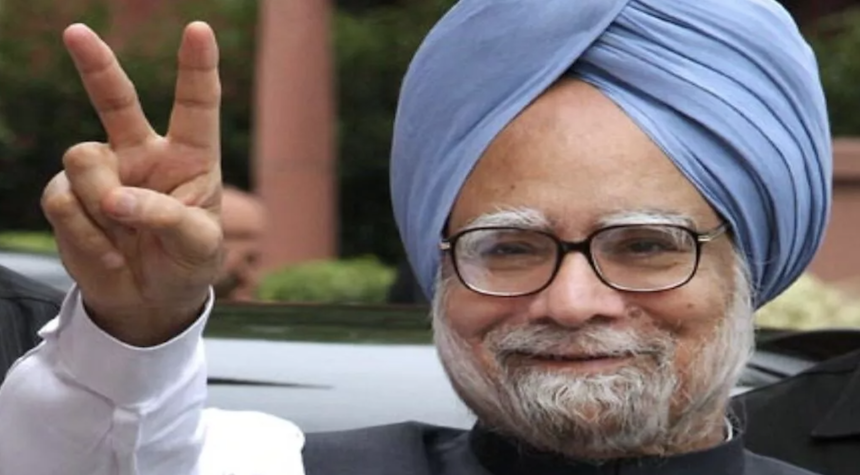
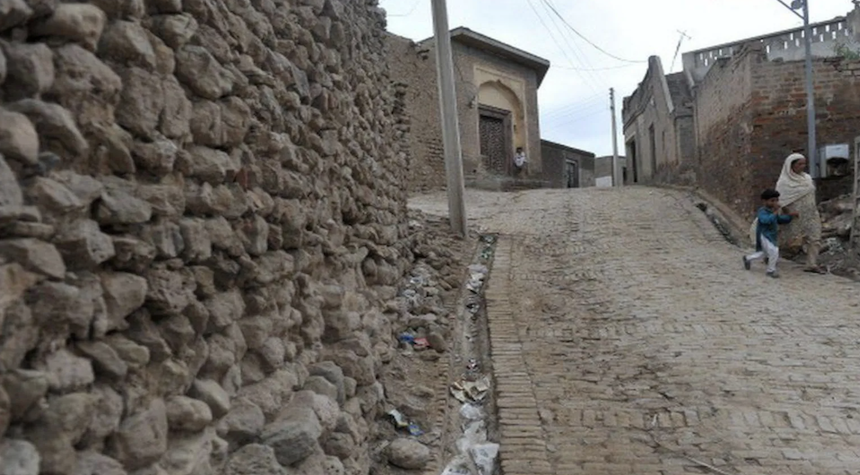
Singh was born in Punjab, an undivided province in India on September 26, 1932. The village lacked electricity and water.
After attending Panjab University he took a master’s degree at the University of Cambridge and then a DPhil at Oxford.
Daman Singh wrote a book about her parents when she was studying in Cambridge and the lack of money bothered Singh.
His tuition and living costs came to around PS600 per year. Panjab University Scholarship gave him around PS160. The rest of his money was provided by his father. Manmohan lived very sparingly. The subsidized meals were two shillings and sixpence.
Daman Singh remembered that her father was “completely helpless around the house, and couldn’t boil an egg nor turn on the TV”.
Consensus Builder
Singh became India’s Finance Minister in 1991 when the country plunged into bankruptcy.
His unexpected appointment culminated in a long, illustrious academic and civil service career – he was an economist for the government and then became governor of India’s Central Bank.
In his first speech as Finance Minister, he famously cited Victor Hugo saying “Nothing on Earth can stop a concept whose time is now”.
This was the launchpad for a bold and unprecedented economic program: he devalued rupees, privatized state-owned companies, and encouraged foreign investments.
Inflation was controlled, and growth rates were consistently high throughout the 1990s.
‘Accidental PM’
Manmohan was acutely aware that he lacked a strong political base. He once said, “It’s nice to be a statesman but to be one in a democratic system you have to first win elections.”
In 1999, he lost his bid to be elected to India’s lower chamber. Instead, he sat in the upper chamber of parliament, which was chosen by his own Congress Party.
In 2004, Singh was appointed as prime minister for the first time after Congress President Sonia Gandhi declined the position – ostensibly to protect her party from negative attacks because of her Italian heritage. However, critics claimed that Sonia Gandhi held the real power during his time as prime minister and that he never really was in charge.
The greatest triumph of his first five-year tenure was bringing India out of nuclear isolation through a landmark agreement securing American nuclear technology.
The deal was not without its price. After protesting, the Communist allies of the government withdrew their support. Congress then had to regain lost votes by enlisting another party in the face of accusations of vote buying.
Singh, a consensus builder and leader, presided over an alliance of regional allies and supporters who were sometimes assertive, difficult, and unruly.
He was known for his intelligence and integrity, but also his softness and indecisiveness. Some critics argued that the pace at which reforms were implemented slowed, and he did not achieve the same momentum as he did when he was finance minister.
Singh, who led Congress to its second and decisive victory at the 2009 elections, promised that the party “would rise to the occasion”.
The glitz soon wore off, and the second term of his government was dominated by scandals that cost the country billions, a parliament paralyzed by opposition, and a policy paralysis that led to a severe economic downturn.
LK Advani is a leader of the BJP, a rival party. He called Singh India’s weakest Prime Minister.
Manmohan Singh defended himself, saying that his government worked with “utmost dedication and commitment for the country and its people”.
Pragmatic Foreign Policy
Singh followed the pragmatic foreign policy of his two predecessors.
He continued to work on the peace process, despite the attacks that were blamed on Pakistani terrorists. The culmination of this was the Mumbai bomb and gun attack in November 2008.
He attempted to resolve the border dispute between China and Tibet by brokering an agreement to reopen Nathu La Pass into Tibet, which had been shut for over 40 years.
Singh, the first Indian leader in nearly 30 years to visit Afghanistan, increased the financial support for the country.
He angered opposition politicians as well by claiming to have ended relations with India’s former ally, Iran.
Low-Profile Leaders
He was a self-effacing former academic and bureaucrat who kept a low public profile. He was known for his dull social media posts and had only a small number of followers.
His calm demeanor won him many fans despite his lack of words.
In response to questions about a scandal surrounding the illegal allocations of licenses worth billions, he said that his silence was “better” than thousands of responses.
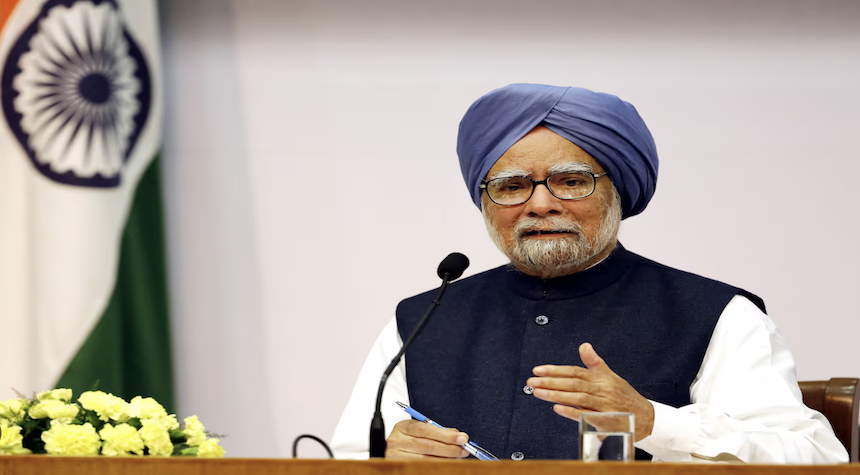
He was called to court in 2015 to answer charges of criminal conspiracy, trust breach, and corruption-related offenses. A frustrated Singh told reporters he was open to legal scrutiny and that “the truth will prevail”.
Singh, despite his advanced age, remained deeply involved with the current issues as a leader of the main Congress opposition party.
He said in August 2020 that India must take three “immediate” steps to stop the economic damage caused by the coronavirus epidemic, which has sent the economy of the country into a deep recession.
He said that the government should provide direct cash aid to people, allocate capital to businesses, and repair the financial system.
Singh will be remembered for his role in bringing India back from economic and nuclear isolation. However, some historians might suggest that he could have retired sooner.
In 2014, he said to an interviewer, “I believe that history will treat me better than the media of today, or the opposition parties in the parliament.”
Singh is survived by his wife and 3 daughters.