
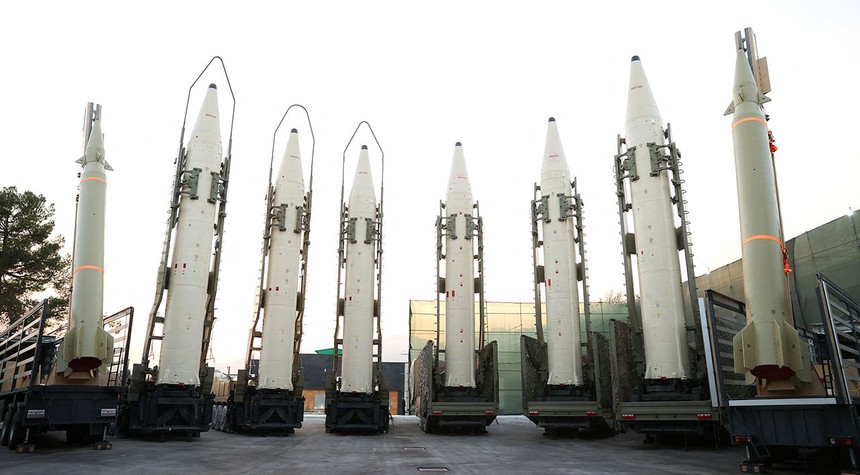
The United States and Iran stand at a critical juncture this evening, as the Trump administration prepares what Treasury Secretary Scott Bessent has characterized as unprecedented economic measures against the Islamic Republic, while national security analysts warn of potential Iranian military action as early as this fall.
The escalating confrontation took on immediate urgency Thursday when two vessels were struck while transiting the Strait of Hormuz, according to the Abu Dhabi National Oil Company. While ADNOC reported no injuries and indicated the situation remained under control, the United Arab Emirates foreign ministry condemned what it described as Iranian attacks on the commercial shipping lanes through which a significant portion of the world’s oil supply passes.
Secretary Bessent, speaking publicly about the administration’s economic strategy, indicated that Washington intends to implement a level of economic isolation never before applied to any nation. The Treasury Department has signaled that additional measures will be announced in the coming week, suggesting a coordinated effort to bring Iran’s economy to its knees through financial pressure rather than military force.
The strategy appears to be yielding measurable results. Iran’s oil exports have declined precipitously under the weight of American sanctions, contributing to what observers describe as rising economic misery throughout the country. President Trump has coupled this economic pressure with demands for billions of dollars in compensation for what the administration characterizes as decades of Iranian-sponsored damages to American interests and personnel.
Yet history teaches us that cornered adversaries rarely submit quietly. Behnam Ben Taleblu, a senior fellow at the Foundation for Defense of Democracies, has assessed that Tehran will likely respond to intensified economic pressure with military action. The pattern is familiar to students of Iranian strategy: when diplomatic and economic channels close, the regime has historically turned to asymmetric military operations.
The concern among national security professionals centers on Iran’s capacity to strike high-value targets throughout the region. Iranian forces have demonstrated proficiency in guerrilla-style hit-and-run attacks, a capability they could exploit even as the United States increases its military presence in the Gulf. The current American troop buildup, while substantial, may not prevent determined Iranian operations designed to demonstrate resolve and fracture international support for the sanctions regime.
The administration’s approach represents a calculated gamble that economic pain will force behavioral change before military escalation spirals beyond control. It is a strategy that worked to varying degrees during the first Trump administration, bringing Iran to severe economic distress without triggering full-scale war.
Whether that delicate balance can be maintained remains the central question facing policymakers in Washington and capitals throughout the Middle East. The international community watches with considerable apprehension, understanding that miscalculation by either side in the Strait of Hormuz or elsewhere in the region could ignite a broader conflict with global economic consequences.
As we have seen throughout history, economic warfare and military conflict exist on a continuum rather than in separate spheres. The coming weeks will test whether maximum economic pressure can achieve American objectives without crossing the threshold into sustained military engagement. That is the way it is, and the stakes could hardly be higher.
Related: Australian Housing Proposal Would Make Energy Efficiency Optional