
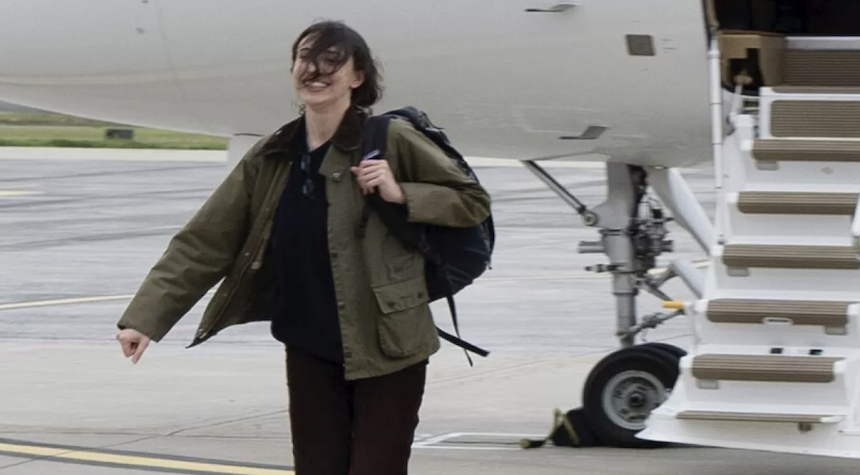
Italian officials have announced that an Italian journalist who was detained in Iran and held for three weeks, and whose fate had become intertwined with the fate of a wanted Iranian engineer by the United States, has been released and is returning home.
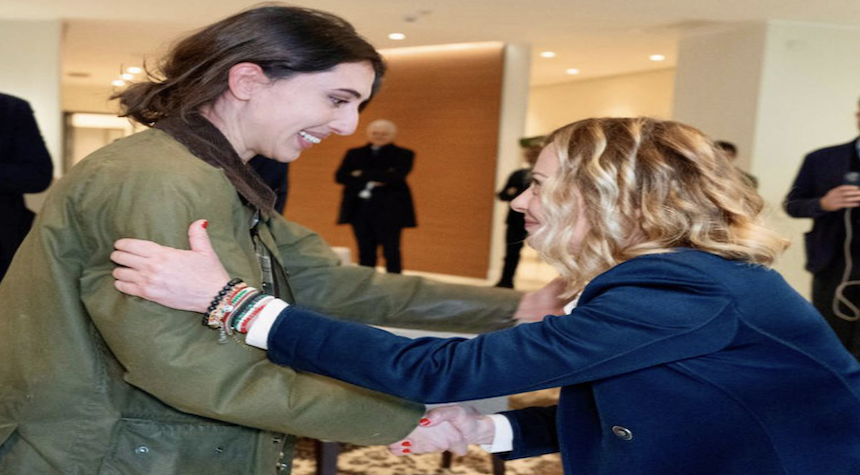
The office of Prime Minister Giorgia Meloni said that a plane carrying Cecilia Sala had taken off from Tehran following “intensive work in diplomatic and intelligence channels.” Meloni also informed Sala’s family about the news.
Iranian media confirmed the release of the journalist, citing foreign reports. Iranian officials did not immediately comment.
Sala, 29, a reporter from the Il Foglio newspaper, was arrested in Tehran, three days after arriving on a visa for journalists. The official IRNA news agency reported that she was accused of breaking the laws of the Islamic Republic. However, no details were provided by Iranian officials about her alleged transgressions.

In Italy, where Sala’s plight had been the focus of headlines, lawmakers were elated to hear that she was released. They praised the successful negotiation with her government.
Meloni had made a surprise visit to Florida to meet Donald Trump, the U.S. president-elect at his Mar-a-Lago property. Meloni announced Sala’s return on X, thanking “all those that helped Cecilia return and allowed her to re-memorize her family and coworkers.”
Italian commentators speculated that Iran held Sala as a bargaining tool to secure the release of Mohammad Abedini who had been arrested three days earlier, on Dec. 16 at Milan’s Malpensa Airport on a U.S. Warrant. Iranian analysts, who requested anonymity, said the same.
The U.S. Justice Department has accused Abedini, along with another Iranian, of supplying drones to Iran. These drones were used in an attack in January 2024 on a U.S. Outpost in Jordan which killed three American soldiers. He remains in detention in Italy.
The fate of the two men became entangled in a diplomatic mess when the foreign ministers of each country summoned their ambassadors to demand that the prisoners be released and given decent treatment. It was a particularly complex saga for Italy, a historic ally to Washington but which has good relations with Tehran.
Iran has been using prisoners with Western connections as a bargaining chip in its negotiations with the rest of the world since the 1979 U.S. embassy crisis.
Five Americans who had been held in Iran for many years were released in September 2023 in exchange for five Iranians that were in U.S. custody, and $6 billion of frozen Iranian assets which South Korea would release.
Western journalists were also held in the past. Washington Post journalist Jason Rezaian spent more than 540 days in captivity before being freed in 2016 as part of a prisoner exchange between Iran and the U.S.