
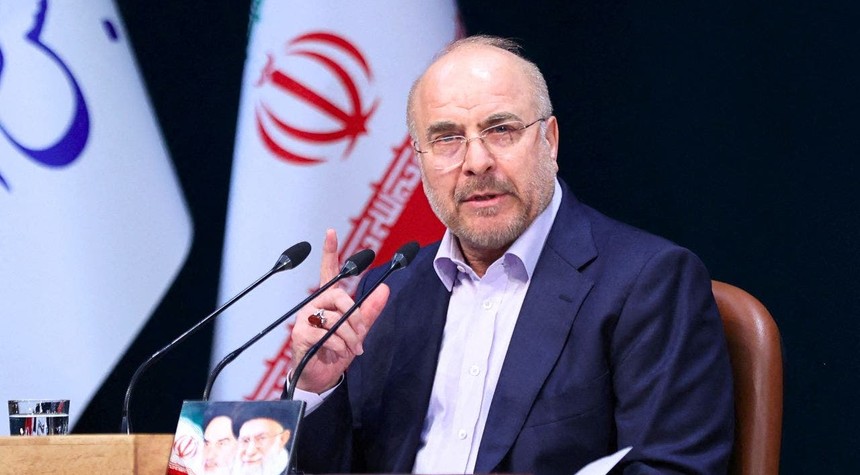
Iranian Parliament Speaker Mohammad Bagher Ghalibaf issued a stark warning to the United States on Monday evening, threatening to “reveal new cards on the battlefield” as the fragile ceasefire between the two nations approaches its Wednesday expiration.
The statement, posted to social media, represents a significant escalation in rhetoric following what appeared to be promising diplomatic engagement just days earlier. Ghalibaf’s words carry particular weight given his position and his direct involvement in the ongoing peace negotiations.
“Trump, by imposing a siege and violating the ceasefire, seeks to turn this negotiating table — in his own imagination — into a table of surrender or to justify renewed warmongering,” Ghalibaf wrote. He concluded with an unambiguous declaration: “We do not accept negotiations under the shadow of threats, and in the past two weeks, we have prepared to reveal new cards on the battlefield.”
The Iranian parliament speaker personally led his nation’s delegation during peace talks held in Islamabad on April 11. Across the table sat a United States delegation headed by Vice President JD Vance. These discussions occurred during a two-week ceasefire that Pakistan successfully mediated, which was formally announced on April 8.
The temporary truce emerged from the broader Hormuz conflict, a confrontation that has placed one of the world’s most critical maritime chokepoints at the center of international tensions. The Strait of Hormuz serves as the transit point for approximately one-fifth of global oil supplies, making any military escalation in the region a matter of worldwide economic concern.
The Trump administration now faces a critical decision point. With the ceasefire set to expire in a matter of days, the president must weigh the potential consequences of resumed hostilities against the uncertain prospects of achieving a lasting diplomatic resolution. The administration has reportedly considered various military options, including strikes against Iran’s oil infrastructure, though such actions would carry profound implications for global energy markets and regional stability.
Ghalibaf’s accusation that the United States has violated the ceasefire terms and imposed what he characterizes as a siege suggests that fundamental disagreements persist over the interpretation and implementation of the temporary truce. These conflicting narratives do not bode well for the prospect of extending the ceasefire or reaching a permanent agreement.
The international community watches these developments with considerable apprehension. Pakistan’s successful mediation in bringing both parties to the negotiating table represented a diplomatic achievement, but the current trajectory suggests that achievement may prove short-lived.
The reference to “new cards on the battlefield” remains deliberately vague, leaving analysts to speculate about Iran’s military preparations during the ceasefire period. Whether this represents genuine capability enhancement or strategic bluffing designed to strengthen Tehran’s negotiating position remains unclear.
What stands certain is that the coming days will prove decisive. Either diplomacy will prevail and the ceasefire will extend, or the region will witness a return to the dangerous confrontation that preceded these negotiations. The stakes extend far beyond the immediate parties involved, touching upon global energy security and the broader stability of the Middle East.
And that is the situation as it stands tonight.
Related: Rubio Announces Sanctions Against Ortega Regime Official Over Rights Abuses