
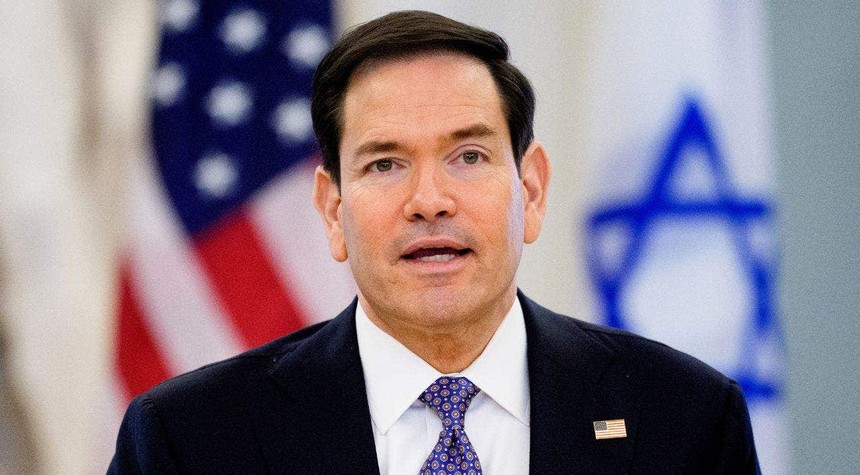
The Trump administration has imposed sanctions on a senior Nicaraguan government official, marking the latest action in an ongoing effort to hold the Ortega regime accountable for human rights violations against its citizens.
Secretary of State Marco Rubio announced Saturday the designation of Luis Roberto Cañas Novoa, Vice Minister of the Interior, for his role in what the State Department characterizes as gross violations of human rights under the government of President Daniel Ortega and Vice President Rosario Murillo.
The sanctions represent a continuation of American foreign policy aimed at addressing authoritarian practices in Central America, a region that has long presented challenges to United States interests and democratic values in the Western Hemisphere.
“The Trump administration continues to hold the Murillo-Ortega dictatorship accountable for brutal human rights violations against Nicaraguans,” Rubio stated in announcing the designation. The Secretary of State specifically cited Cañas Novoa’s position within the Interior Ministry as placing him in a role of direct responsibility for actions taken against Nicaraguan citizens.
The Interior Ministry in Nicaragua oversees internal security operations, including police forces that have been implicated in crackdowns on political opposition and civil society organizations. International observers have documented a pattern of repression under the Ortega government, which has consolidated power through the detention of opposition figures, the closure of independent media outlets, and restrictions on religious institutions.
This designation follows established procedures under American sanctions law, which allows the Treasury Department to freeze assets held in United States financial institutions and prohibit American citizens and companies from conducting business with designated individuals. While the immediate practical impact of such sanctions can vary depending on the target’s financial exposure to American markets, they serve as both a punitive measure and a diplomatic signal of disapproval.
The Ortega government has ruled Nicaragua since 2007, with Daniel Ortega having previously served as president from 1985 to 1990. His current tenure has been marked by increasing authoritarianism, particularly following widespread protests in 2018 that were met with violent suppression. Vice President Rosario Murillo, who is also Ortega’s wife, wields considerable influence within the government and has been described by analysts as a co-ruler of the country.
The Trump administration’s focus on Nicaragua fits within a broader strategy of addressing what it views as destabilizing regimes in Latin America, including those in Venezuela and Cuba. These governments have maintained close relationships with one another and have been characterized by American officials as forming an axis of authoritarian influence in the region.
The practical effect of these sanctions on the ground situation in Nicaragua remains to be seen. However, they demonstrate the administration’s willingness to use diplomatic and economic tools to pressure governments it deems to be violating fundamental human rights standards.
As the situation in Nicaragua continues to evolve, the international community watches to see whether such measures will contribute to meaningful change or merely serve as statements of principle in an increasingly complex geopolitical landscape.
Related: Hezbollah Denies Responsibility as French Peacekeeper Dies in Lebanon Attack