
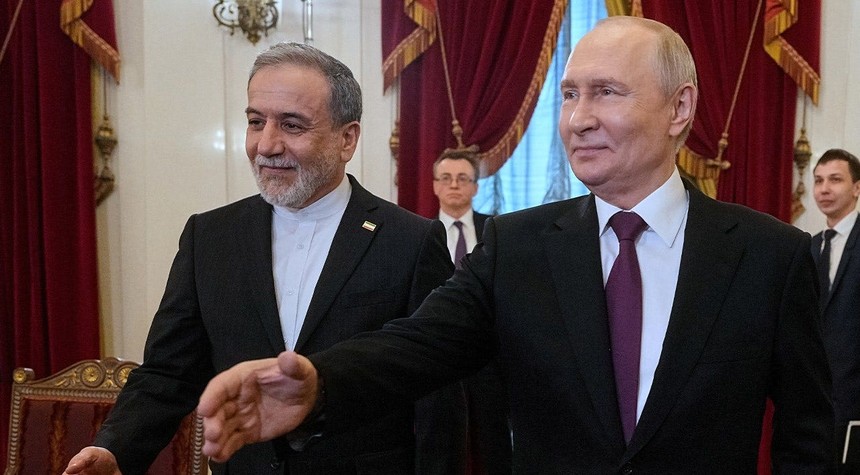
Iran is forging deeper financial and military partnerships with Russia and China as the United States escalates what President Donald Trump has characterized as the most severe economic pressure campaign ever directed against a nation.
Regional security analysts issued warnings Wednesday that Tehran has established what they describe as a critical lifeline through Beijing and Moscow, enabling the Islamic Republic to circumvent American sanctions while weathering Washington’s renewed maximum pressure strategy. These analysts indicate that Iran has positioned itself as a central player in a non-Western alliance network that directly challenges American influence across the Middle East and beyond.
The developments come as President Trump announced Wednesday an intensification of what his administration terms Operation Economic Fury. In a statement, the president warned of sweeping consequences for any nation or business entity that provides Iran with economic support, declaring his intention to further isolate the regime in Tehran.
“This will be Economic Warfare and Isolation on an unprecedented scale,” Trump stated, characterizing the effort as the most crushing economic operation ever undertaken against any country.
The strategic realignment represents a significant shift in the balance of power in the region. Iran’s deepening cooperation with Russia encompasses military hardware and defense technology, while its expanding relationship with China provides crucial economic channels that help offset the impact of American sanctions. These partnerships have allowed Tehran to maintain critical revenue streams despite Washington’s efforts to strangle its economy.
Security analysts emphasize that this trilateral arrangement between Iran, Russia, and China represents more than simple economic necessity. It reflects a deliberate effort to construct an alternative power structure that operates outside the traditional Western-led international order. For Tehran, these partnerships offer not merely survival but a pathway to sustained regional influence.
The timing of Trump’s announcement carries particular weight. As his administration moves to implement what it describes as maximum pressure, Iran has demonstrated its capacity to adapt through alternative partnerships. The question now facing American policymakers is whether economic isolation can succeed when the target nation has secured backing from two of the world’s major powers.
The Iranian government has made clear its intention to resist American pressure through these strategic alliances. The presence of senior Iranian officials, including Parliament Speaker Mohammad Bagher Ghalibaf, Chief Justice Gholam-Hossein Mohseni-Eje’i, and President Masoud Pezeshkian at recent state ceremonies underscores the regime’s unified front in the face of American economic warfare.
What remains uncertain is whether Trump’s escalated economic campaign can achieve its objectives when Iran has established these alternative channels of support. The effectiveness of sanctions historically depends upon international cooperation and the target nation’s isolation. With Russia and China actively supporting Tehran, that isolation appears increasingly difficult to achieve.
The situation presents a test of American economic power against an emerging coalition that has demonstrated willingness to resist Western pressure. How this confrontation unfolds will likely shape not only the future of Iran but the broader structure of international relations in an increasingly multipolar world.
Related: President Warns Global Partners Against Providing Lifeline to Iranian Regime