
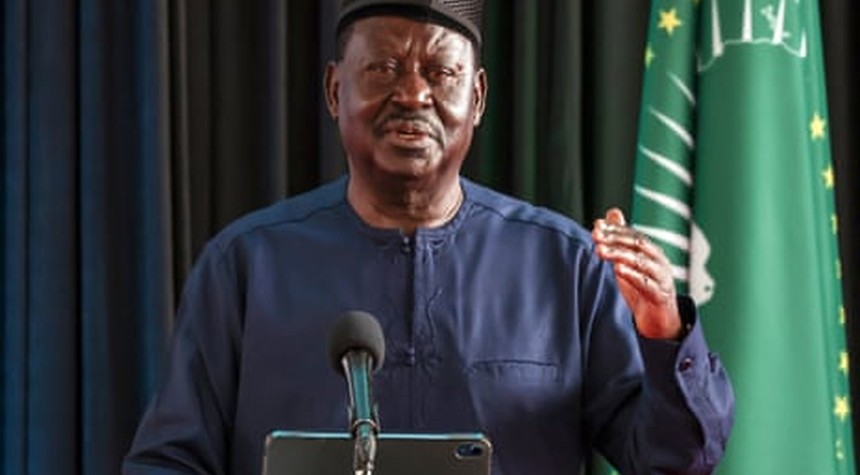
Raila Odinga, a towering figure in Kenyan politics and five-time presidential candidate who helped shape his nation’s democratic journey, died Wednesday in Kochi, India at the age of 80. Medical authorities reported he suffered cardiac arrest during a morning walk while receiving treatment in the southern Indian city.
Kenyan President William Ruto declared seven days of national mourning and announced plans for a state funeral, recognizing Odinga’s profound impact on the East African nation’s political landscape. In a solemn address to the nation, President Ruto characterized Odinga as “a once-in-a-generation leader” and “a tireless warrior of good governance.”
Odinga’s political career, spanning more than three decades, was marked by both triumph and tribulation. The son of Kenya’s first vice-president, Oginga Odinga, he entered parliament in 1992 and emerged as a formidable voice for democratic reform. His dedication to multiparty democracy came at a significant personal cost, including six years of detention without trial following treason charges in 1982 during the presidency of Daniel arap Moi.
His influence on Kenya’s political evolution proved instrumental in two watershed moments: the transition to multiparty democracy in 1991 and the implementation of a new constitution in 2010. Following the disputed 2007 presidential election, which sparked violence claiming approximately 1,300 lives, Odinga demonstrated statesmanship by accepting the role of Prime Minister in a unity government aimed at stabilizing the nation.
Known affectionately as “Baba” (father) among his supporters, Odinga maintained a remarkable ability to mobilize massive crowds throughout his political career. As news of his passing spread, hundreds of supporters from Nairobi’s Kibera district, where he once served as parliamentary representative, processed to his residence in the Karen neighborhood.
In his final year, Odinga demonstrated his commitment to national stability by entering into an agreement with President Ruto, allowing his Orange Democratic Movement party to participate in government policy-making despite their previous electoral rivalry.
Former Kenyan President Uhuru Kenyatta, in a statement reflecting the national sentiment, said, “We have lost a father to the nation, a steadfast champion for the people, and a true son of Kenya. His legacy resides not merely in the political battles he fought, but in the peace he helped construct.”
Odinga’s passing marks the end of an era in Kenyan politics, leaving behind a legacy of unwavering dedication to democratic principles and national unity. His journey from political prisoner to prime minister exemplifies the complex path of African democracy, and his influence will continue to shape Kenya’s political landscape for generations to come.
Related: US Lawmakers Probe Musk’s Starlink Connection to Asian Fraud Ring