
The future of the automobile, it appears, is being written in China, and increasingly, it is a future without human hands on the wheel.
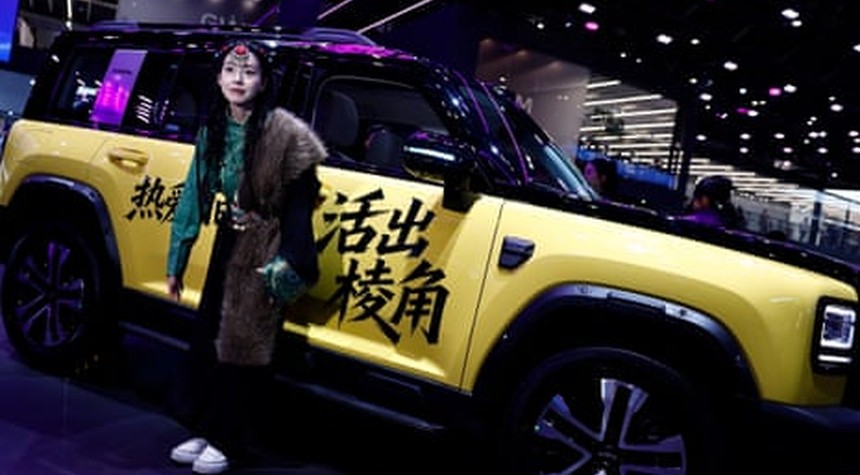
At the Beijing Auto Fair, which opened Friday across 380,000 square meters on the capital’s outskirts, the world’s largest automotive exhibition presented a striking tableau: hundreds of manufacturers, more than one thousand vehicles, hundreds of thousands of enthusiasts, and remarkably few drivers actually driving.
China’s automotive industry, having already dominated the domestic electric vehicle market, is now making a calculated pivot toward what industry leaders believe represents the next frontier: autonomous driving technology. This strategic shift comes at a critical juncture, as domestic sales have begun to falter and manufacturers seek new revenue streams both at home and abroad.
The scope of investment is substantial. Huawei, the telecommunications conglomerate, announced this week it will commit up to 80 billion yuan, approximately 8.7 billion pounds, over the next five years to develop autonomous driving software and computing capabilities. This is not an outlier. Nearly every major Chinese automaker is pouring resources into the software and computing infrastructure necessary to make hands-free driving a commercial reality.
The competitive intensity of China’s domestic market has fundamentally altered the economics of automobile manufacturing in the country. According to industry analysts, simply selling passenger vehicles domestically no longer provides a viable profit margin for Chinese companies. The solution these manufacturers have embraced is the monetization of additional features, particularly AI-powered software systems that can be leased to consumers.
The technological demonstrations at the Beijing fair illustrated the breadth of these ambitions. Xpeng, an electric vehicle manufacturer, presented an AI system that accepts natural language commands, allowing drivers to instruct their vehicles to “park near the entrance to the shopping center” rather than designating specific coordinates. Xiaomi, better known for consumer electronics and mobile phones, has developed an AI-powered operating system capable of making restaurant reservations, compiling voice notes during transit, and placing coffee orders. The system even monitors driver stress levels and adjusts home lighting and music accordingly upon arrival.
These innovations emerge against a backdrop of challenging domestic market conditions. Passenger vehicle sales in China declined seventeen percent in the first quarter of this year as government subsidies were phased out. BYD, the nation’s leading electric vehicle manufacturer and widely regarded as an industry bellwether, has reported seven consecutive months of declining sales.
The response has been a dramatic expansion into foreign markets. Chinese automotive exports surged more than sixty percent in the first quarter, a remarkable figure that underscores the industry’s determination to find growth beyond its borders. Chery, China’s largest car exporter, recently entered the British market, launching operations in August.
What distinguishes the Chinese market from virtually any other automotive market globally is the ubiquity of intelligent driving systems. This technological arms race, driven by fierce domestic competition, may well position Chinese manufacturers at the forefront of the autonomous vehicle revolution.
And that is the way it is.
Related: King Charles Follows Mother’s Footsteps with Rare Address to Congress