
France finds itself in the grip of significant civil unrest as student demonstrations have escalated into violent confrontations with authorities across the nation. French officials report more than 5,000 arrests and nearly 200 injuries as protesters clash with riot police, block schools, and in some instances set fire to public property in major cities.
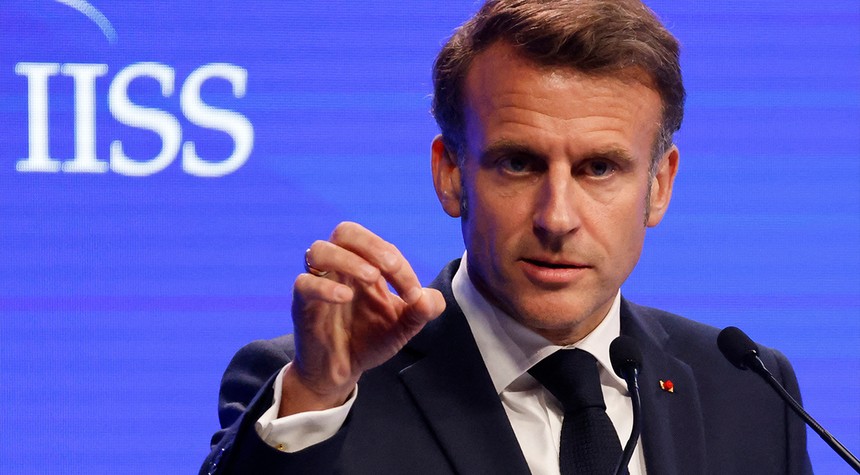
The timing of these disturbances has drawn particular attention to recent remarks by French President Emmanuel Macron, who used an appearance at Complutense University in Madrid to challenge fundamental American principles of free expression. Speaking at a forum on democracy and youth in the digital age, Macron articulated a vision of liberty that stands in marked contrast to the American constitutional tradition.
“The so-called American ‘free speech’ today, which some people have promoted, is the opposite of free speech,” Macron stated during his address. The French president argued that genuine freedom of expression cannot exist without boundaries, maintaining that speech must be constrained by respect for others’ rights, public order, and what he described as a relationship to truth.
Macron drew an analogy between speech restrictions and prohibitions against physical violence or property destruction. “There is no freedom if there is no limit to my freedom, which begins with the freedom of others and respect for a common framework,” he explained. “My freedom cannot mean hitting you, insulting you or trashing the public space we all share.”
These philosophical musings on liberty have generated considerable criticism, particularly as they emerged while Macron’s government struggles to maintain order at home. The contrast between his theoretical framework for restricted speech and the very real violence unfolding in French streets has not escaped notice among observers of international affairs.
The student protests themselves appear to have originated from grievances regarding deteriorating school facilities, though analysts suggest that organized left-wing factions have capitalized on this initial discontent to amplify the disturbances. The demonstrations have spread nationwide, with some of the most intense confrontations occurring in suburbs surrounding Paris.
Foreign policy experts note the irony of a European leader criticizing American constitutional principles while his own nation faces challenges to public order that the French system appears ill-equipped to address peacefully. The American model of robust free expression, enshrined in the First Amendment, rests on the premise that liberty flourishes best when government power to restrict speech remains narrowly confined.
Macron’s remarks reflect a broader Continental European approach to speech regulation that prioritizes social harmony and government-defined truth over the more absolutist American tradition. This philosophical divide has grown more pronounced in recent years as European nations have enacted increasingly stringent restrictions on expression, particularly regarding digital communications.
The current crisis in France raises fundamental questions about governance, civil liberty, and the proper relationship between state authority and individual freedom. As French authorities work to restore order, the world watches to see whether Macron’s vision of bounded liberty proves adequate to address the very unbounded chaos now confronting his administration.
The situation continues to develop, with no clear resolution in sight as both protesters and government officials appear entrenched in their positions.
Related: US Forces Implement Emergency Restrictions Following Death of Japanese Woman