
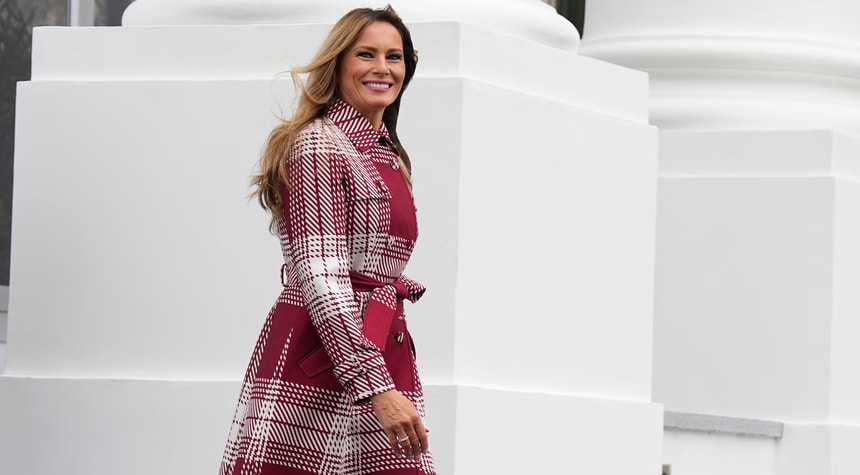
The White House announced Wednesday that First Lady Melania Trump has successfully facilitated the return of nine more Ukrainian and Russian children to their families, marking the seventh such reunion since she began these humanitarian efforts. The total number of children reunited through her intervention now stands at 43.
This latest development represents a continuation of the first lady’s measured yet demonstrable approach to addressing the humanitarian consequences of the war between Russia and Ukraine, a conflict now approaching its fifth year. While President Donald Trump had initially projected confidence in achieving a swift resolution to the hostilities, he has since acknowledged the complexity of the situation exceeds his initial assessment.
In a statement, Mrs. Trump emphasized the universal vulnerability of children caught in armed conflict. She noted that children cannot comprehend why matters of geography and governance have subjected them to the horrors of war, and stated that adults bear a moral obligation to place children’s welfare above the divisions that fuel such conflicts.
According to the White House, the reunification of these nine children occurred with the full cooperation of both Russian and Ukrainian leadership. Officials declined to provide additional details about the children’s identities or circumstances, citing privacy and security considerations.
The first lady has designated assistance to children in conflict zones as a primary focus during her husband’s second term in office. She previously convened a United Nations Security Council meeting dedicated to this issue earlier in the year, demonstrating her willingness to engage international institutions on humanitarian matters.
Her involvement in these reunification efforts began in August of last year, when she arranged for President Trump to personally deliver a letter calling for peace in Ukraine to Russian President Vladimir Putin during a summit held in Alaska. The first lady has indicated she maintains a direct line of communication with leaders of both nations involved in the conflict.
Over the subsequent twelve months, Mrs. Trump helped facilitate the return of nearly three dozen children to their relatives after wartime circumstances had separated them from their families.
In October, the first lady’s diplomatic efforts expanded beyond individual family reunifications to broader humanitarian access. She helped negotiate a six-day ceasefire in Oleshky, a Russian-occupied city in southern Ukraine. Earlier this month, she hosted both Russian and Ukrainian officials at the White House to commemorate that achievement.
The localized ceasefire in the Kherson region of southern Ukraine lasted from October 27 through November 1 and represented the most substantial pause in hostilities since Russia initiated its full-scale invasion in February 2022. During this cessation of fighting, approximately 800 residents successfully evacuated the city, while humanitarian organizations delivered essential supplies including food, water, and medical assistance to those who remained.
The first lady’s approach represents a distinct diplomatic channel operating alongside traditional government negotiations, focusing specifically on humanitarian outcomes rather than broader political settlements. Whether this model can be expanded or contribute to larger peace efforts remains uncertain as the conflict continues.
Related: Iranian Singer Receives 74 Lashes for Performing Without Mandatory Head Covering