
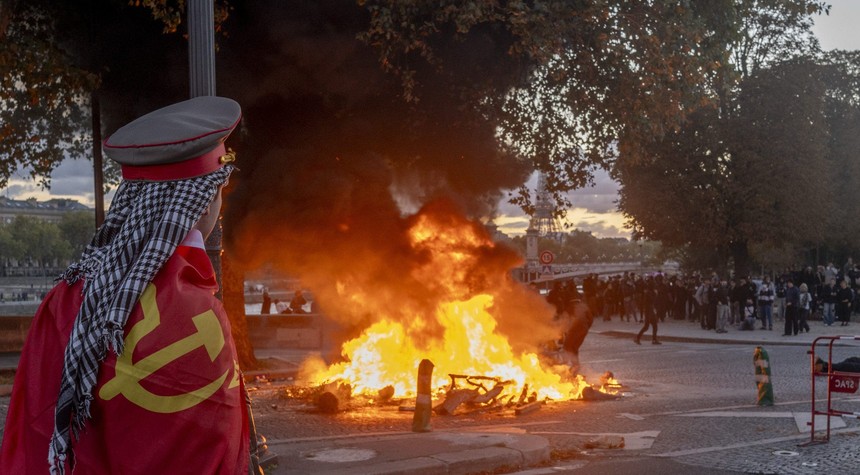
France finds itself in the grip of a security crisis that has exposed fundamental weaknesses in the nation’s intelligence apparatus and raised serious questions about governmental preparedness in the face of civil unrest.
President Emmanuel Macron has ordered a comprehensive security review following days of violent protests that exceeded official estimates by nearly threefold and left authorities struggling to maintain order in major cities across the country. Senior government officials have acknowledged a catastrophic intelligence failure and offered their resignations as the full scope of the chaos becomes clear.
The numbers tell a sobering story. French intelligence services predicted approximately 200,000 demonstrators would participate in Saturday’s nationwide protests against the rising cost of living. Instead, the Interior Ministry confirmed that 550,000 people joined 110 separate marches throughout the country. Protest organizers place the actual figure even higher, at 800,000 participants.
What began as demonstrations quickly deteriorated into widespread violence and destruction. More than 1,500 stores were ransacked or destroyed, vehicles burned in the streets, and public buildings came under attack in scenes reminiscent of the nation’s worst periods of civil disorder. In Limoges, a city in central France, rioters forced entry into the historic 19th-century city hall and set it ablaze. The building, which had endured both world wars intact, saw its roof collapse as flames consumed the structure.
The deployment of 60,000 police officers, gendarmes, and security personnel proved woefully insufficient to contain the unrest. Nearly 1,000 law enforcement officers and firefighters sustained injuries in confrontations with protesters. Authorities arrested at least 2,400 individuals, while estimates suggest approximately 3,000 businesses suffered damage.
By Monday, the ripple effects continued. Student protesters blocked entrances to the Louvre, forcing the world-renowned museum to remain closed and extending the disruption into yet another day. The closure of one of the world’s most visited tourist destinations underscores the severity of France’s current predicament.
Prime Minister Sebastien Lecornu convened an interministerial crisis meeting as the government scrambled to formulate a response to public discontent that has now manifested in some of the worst street violence France has witnessed in recent years. The timing could hardly be more problematic for Macron’s government, coming just six months before a presidential election.
The protests have drawn together a diverse coalition of aggrieved groups, including former participants of the Yellow Vest movement, secondary school and university students, climate activists, and farmers. This broad alliance, united by anger over economic conditions, presents a formidable challenge to authorities attempting to restore order while addressing underlying grievances.
Senior officials have publicly admitted that police “lost control” in several major cities as masked rioters systematically smashed storefronts, ignited fires, and engaged in direct confrontations with security forces. The admission represents a rare acknowledgment of governmental failure and raises troubling questions about France’s capacity to manage large-scale civil disturbances.
As France confronts this crisis, the fundamental question remains: how did intelligence services so dramatically miscalculate public sentiment and protest participation? That question, more than any other, will likely define the investigation Macron has now ordered and may well determine the political consequences in the months ahead.
Related: Trump Suspends Russia Sanctions as Ukraine Conflict Deepens