
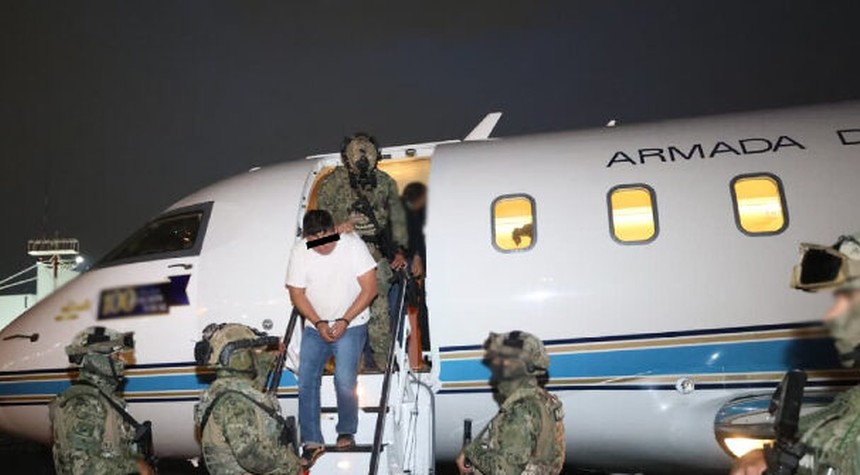
Mexican naval forces have dealt a significant blow to one of North America’s most dangerous criminal organizations with the coordinated capture of two high-ranking commanders of Cartel Jalisco New Generation. These operations, conducted this week, follow closely on the heels of February’s killing of the cartel’s founder and supreme leader, Nemesio “El Mencho” Oseguera Cervantes, marking what appears to be a sustained campaign against the organization.
The first operation commenced Monday in the coastal state of Nayarit, near the town of El Mirador. Mexican naval forces moved to arrest Audias Diaz Flores, known by his alias “El Jardinero,” who served as security chief and principal enforcer for the late cartel leader. The operation represented the culmination of nineteen months of intelligence gathering conducted jointly by Mexico’s Navy, United States federal agencies, and Mexican law enforcement.
Intelligence indicated that Diaz Flores had fortified his position considerably. He maintained a security detail exceeding sixty armed men and commanded a fleet of more than thirty vehicles. The Mexican Navy responded with overwhelming force, deploying dozens of naval infantrymen supported by multiple military helicopters.
When the military force arrived at the target location, Diaz Flores and his gunmen chose retreat over confrontation with the heavily armed government forces. What followed was an extensive manhunt across the region. Authorities eventually located the fugitive hiding in an irrigation canal. Remarkably, the entire operation concluded without a single shot fired.
The cartel’s response was swift and predictable. Gunmen loyal to the organization erected roadblocks throughout Nayarit and set fire to vehicles in a calculated effort to impede the transfer of their captured leader and pressure authorities into his release. These tactics proved unsuccessful. Mexican authorities successfully transported Diaz Flores to Mexico City, where he now faces multiple federal drug trafficking charges. Additionally, he faces separate drug trafficking charges in the United States District of Columbia.
In a simultaneous operation, a separate Mexican military unit moved against Cesar Alejandro Flores, known as “El Guero Conta,” described as both the best friend and right-hand man of Diaz Flores. Military officials identified him as a principal financial operator for the CJNG faction previously commanded by his associate.
The significance of these arrests extends beyond Mexico’s borders. The United States government has designated CJNG as one of six Mexican drug cartels classified as foreign terrorist organizations. This designation reflects the group’s extraordinary violence and its substantial impact on American communities through drug trafficking operations.
These operations demonstrate a level of coordination between Mexican and American security forces that has not always been present in the troubled history of bilateral anti-narcotics efforts. The nineteen-month investigation leading to these arrests suggests a patient, methodical approach rather than the reactive tactics that have sometimes characterized Mexico’s drug war.
The question now is whether Mexican authorities can maintain pressure on the fractured organization or whether new leadership will emerge from the ranks. History suggests that Mexican cartels have demonstrated remarkable resilience, with new commanders rising quickly to fill vacuums left by arrested or killed leaders.
What remains clear is that the current Mexican administration, working in concert with American intelligence agencies, has achieved what previous efforts could not: the systematic dismantling of CJNG’s top leadership structure within a matter of weeks. Whether this translates into lasting security improvements for communities on both sides of the border remains to be seen.
Related: Two Jewish Men Stabbed in North London as Antisemitic Attacks Continue