
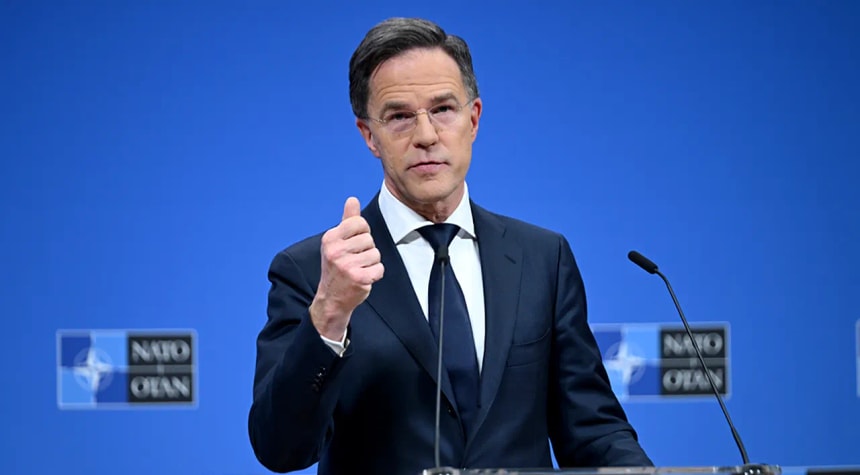
NATO Secretary General Mark Rutte delivered a stark warning to European allies gathered in Berlin on Monday, cautioning that any attempt to establish a separate European army alongside existing NATO structures could prove catastrophic in the event of Russian aggression. Speaking before the seventy-second annual session of the NATO Parliamentary Assembly, Rutte painted a sobering picture of a continent facing an adversary whose military machine continues expanding even as the war in Ukraine grinds forward.
The Secretary General’s central concern centers on the practical realities of crisis response. With Russia’s war economy operating at maximum capacity, Rutte warned that duplicative command structures would create dangerous delays precisely when speed proves essential. The scenario he outlined was blunt in its implications. Should Russian forces attack, two or three weeks spent negotiating between separate NATO and European Union military hierarchies could allow an aggressor to advance deep into Western Europe before allied forces even agreed on a coordinated response.
Rutte drew a pointed comparison to the United States military structure, noting that America maintains a single integrated force rather than separate armies for individual states. If Europe wishes to pursue its own unified military, he suggested, it must follow the same model and abandon separate national forces entirely. The alternative, maintaining both NATO commitments and a parallel European structure, would create the very confusion and hesitation that modern warfare cannot afford.
The threat Rutte described extends beyond the immediate conflict in Ukraine. Russia’s growing cooperation with China, Iran, and North Korea represents a fundamental shift in the security architecture facing the West. Moscow’s expanding military production capacity will not simply disappear when fighting in Ukraine eventually concludes. That industrial base, now fully mobilized and integrated with other authoritarian powers, will continue posing a long-term challenge to European security regardless of how the current war ends.
Particularly notable was Rutte’s rejection of the notion that only nations bordering Russia or Ukraine face direct military danger. The latest Russian missiles, he explained, require merely five additional minutes to reach Lisbon, Rome, or The Hague compared to the time needed to strike Tallinn, Warsaw, or Helsinki. In Rutte’s assessment, every NATO member now effectively sits on the eastern flank. The old geographic distinctions that once shaped European defense planning have been rendered obsolete by advances in missile technology.
These warnings arrived against a backdrop of renewed tensions along NATO’s borders. Polish authorities confirmed that three Russian cruise missiles landed on Polish territory during strikes against Ukraine last week, prompting the alliance to deploy an Airborne Warning and Control System aircraft to strengthen surveillance capabilities. Ukrainian President Volodymyr Zelenskyy indicated Monday evening that intelligence suggests Moscow is preparing another major wave of attacks.
Beyond conventional military threats, Rutte emphasized Europe’s vulnerability across multiple dimensions of modern conflict. The continent’s interconnected energy networks, communications infrastructure, and economic systems present numerous targets for disruption. Defending against such threats requires more than military readiness alone.
The NATO chief pointed to northern European nations as models for the kind of comprehensive preparedness modern security demands. Countries including Norway, Sweden, Denmark, and Finland have begun systematic efforts to educate their populations about civilian responsibilities during wartime. These preparations extend beyond simply keeping civilians clear of military operations to ensuring emergency services, police, and fire departments can effectively support military efforts when required.
Rutte’s remarks take on additional significance given ongoing discussions about Ukraine’s long-term security arrangements. American officials have indicated willingness to consider security guarantees resembling NATO’s Article Five collective defense commitment as part of any future peace agreement. How such guarantees would function alongside existing NATO structures, and whether they might contribute to the very command confusion Rutte warned against, remains an open question.
What emerges clearly from Rutte’s assessment is a European security environment transformed by Russia’s actions in Ukraine and its deepening partnerships with other powers opposed to Western interests. The comfortable assumptions that guided European defense policy for decades no longer apply. Whether European leaders can muster the political will to adapt their institutions accordingly may well determine the continent’s security for generations to come.
Related: COP31 Talks Break Down Over Dispute on Fossil Fuel Commitments