
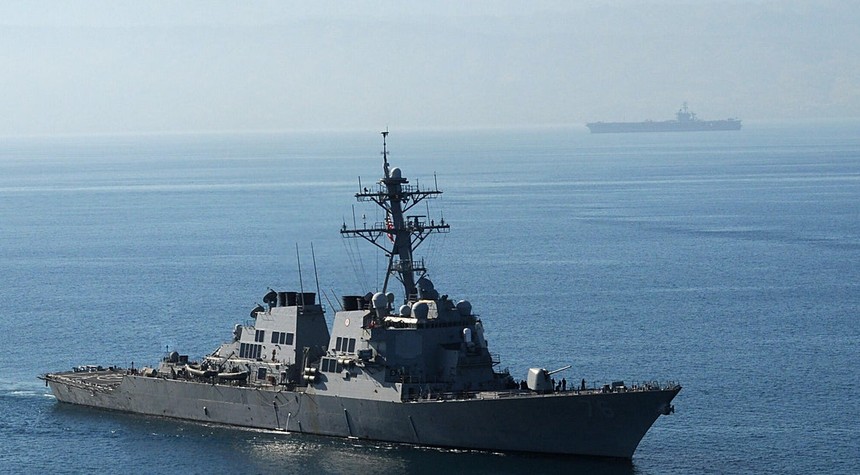
The United States Navy confirmed Wednesday that the USS Higgins, a guided-missile destroyer stationed in the Indo-Pacific region, experienced an electrical fire at sea that temporarily disabled the vessel’s propulsion and electrical systems.
The fire, which occurred Tuesday, was quickly contained by the ship’s crew and caused no injuries to service members. Defense Department officials characterized the incident as an “electrical casualty,” indicating a short circuit in one of the ship’s generators rather than a widespread conflagration. The flames did not spread beyond the affected equipment.
The Higgins, homeported in Yokosuka, Japan, serves as part of the Navy’s Seventh Fleet, which maintains forward-deployed forces throughout the Indo-Pacific region. This fleet represents a critical component of American military presence across more than half the globe, underscoring the strategic importance of each vessel under its command.
Naval officials declined to specify the destroyer’s exact location at the time of the incident or provide details regarding which sections of the ship sustained damage. The timeline for repairs remains undetermined. Vessel tracking data indicated the Higgins was ported in Singapore as recently as February.
The ship bears the name of Marine Colonel William Higgins, a Vietnam War veteran who served with a United Nations peacekeeping mission in southern Lebanon before his kidnapping in February 1988.
This incident marks the third fire aboard a U.S. Navy vessel in recent weeks, raising questions about the operational tempo and maintenance challenges facing America’s naval forces. Earlier this month, a fire on the aircraft carrier USS Dwight D. Eisenhower injured eight sailors. Separately, another fire in the laundry spaces of the USS Gerald R. Ford injured two additional service members.
The Ford and its strike group are scheduled to depart the Middle East in the coming days, according to U.S. officials. The carrier had been operating as one of three American flattops deployed to the region, demonstrating the global demands placed on the Navy’s fleet.
The clustering of these incidents aboard different vessel classes suggests potential systemic concerns regarding equipment maintenance and crew fatigue across the fleet. The Navy has not indicated whether these events are related or represent isolated mechanical failures.
As the United States maintains its commitment to freedom of navigation and deterrence in the Indo-Pacific theater, the operational readiness of forward-deployed vessels like the Higgins remains paramount. The destroyer’s role in this strategically vital region cannot be easily replaced, making swift repairs essential to maintaining American naval presence.
The Navy has launched an investigation into the cause of the electrical fire. Officials emphasized that the situation remains under control and that the Higgins is currently underway, though the extent of its operational capabilities while repairs are pending was not disclosed.
This incident serves as a reminder of the demanding conditions under which American sailors operate and the constant vigilance required to maintain the world’s most powerful navy in a state of readiness across multiple theaters of operation.
Related: Mexico Delivers Major Blow to Jalisco Cartel With Arrest of Top Commanders