
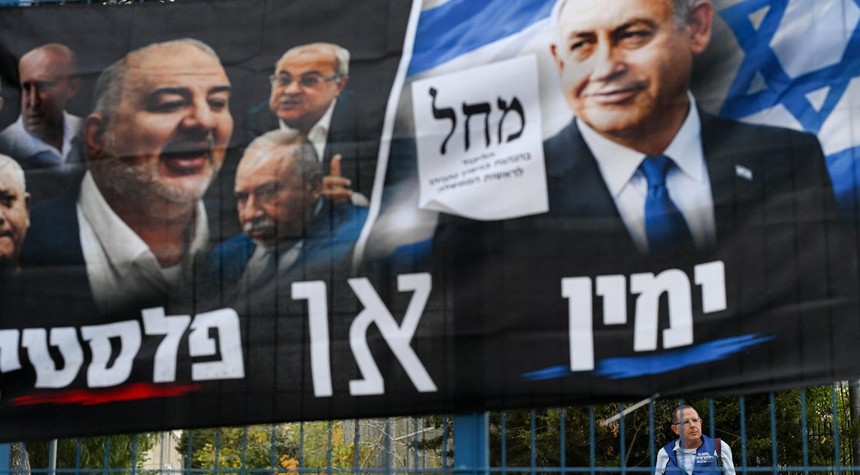
Israeli voters have delivered an inconclusive verdict in elections held this week, leaving the nation’s political future uncertain as ballot counting continues and neither major bloc has secured the parliamentary majority needed to form a government.
With eighty-five percent of votes tallied, Prime Minister Benjamin Netanyahu’s Likud party leads with 20.8 percent, while challenger Gadi Eisenkot’s Yashar party trails with 16.1 percent. Local projections estimate Netanyahu’s coalition commanding 53 seats, the opposition bloc holding 48 seats, and Arab-led parties capturing 19 seats in the 120-member Knesset. Formation of a government requires 61 seats.
The arithmetic presents a formidable challenge. Neither Netanyahu nor Eisenkot can reach the majority threshold without either forming a unity government with each other or breaking longstanding pledges to exclude Arab parties from governing coalitions.
On Wednesday morning, Yair Golan, leader of Israel’s principal left-wing party, urged opposition allies to abandon what he termed Netanyahu’s “racist division between Jewish votes and Arab votes” and partner with Arab parties to form what he called “a government of change in partnership with Israel’s Arab citizens.”
Netanyahu responded swiftly, rejecting any coalition with Arab parties and calling instead for formation of “a right-wing, nationalist government.” The prime minister warned against establishing “a government that relies on anti-Zionist Arab parties,” arguing such an arrangement would endanger Israel.
The Arab parties achieved their strongest electoral performance in Israeli history, securing more Knesset seats than in any previous election. This success follows what Arab voters described as a difficult period under Netanyahu’s hard-right government, spurring historic turnout among the minority community that comprises approximately twenty percent of Israel’s population.
Both major political camps had previously vowed to exclude Arab parties from governing coalitions, though such pre-election commitments have frequently been abandoned in Israeli political practice. Should the opposition reverse its position, it could potentially remove Netanyahu from power.
Political analysts suggest another scenario: a unity government joining pro-Netanyahu and opposition forces while excluding both Arab parties and ultra-Orthodox factions. Such an arrangement would require resolution of the prime minister question, possibly through a rotating leadership structure between Netanyahu and Eisenkot.
This election marks the first since the October 7, 2023, Hamas attacks, which Israeli authorities acknowledged as the nation’s most catastrophic security failure since its founding in 1948. Israelis cast their ballots with their country engaged in ongoing military operations across multiple fronts in Gaza, Lebanon, and Syria, following two direct confrontations with Iran and amid Netanyahu’s advocacy for renewed strikes against the Islamic Republic.
The circumstances have imbued this election with particular gravity. After three years of sustained conflict on multiple fronts, many Israelis view the outcome as existential, a sentiment reflected in apparently high voter turnout.
As the final votes are counted, Israel faces a period of political uncertainty at a moment when decisive leadership carries exceptional weight. The coming days will reveal whether pragmatic coalition-building can overcome ideological pledges, or whether the nation faces the prospect of yet another election in its turbulent democratic tradition.
Related: High-Speed Train Collision in Central Spain Claims 68 Lives