
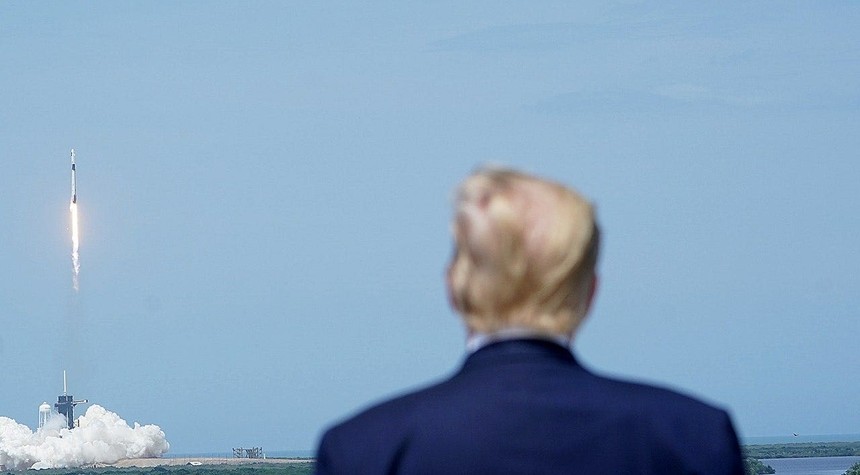
The United States government has announced an ambitious plan to expand the nation’s space launch capacity to more than 1,000 rocket launches and spacecraft returns annually by 2030, a nearly threefold increase from current levels that reflects both the growing economic importance of space infrastructure and mounting concerns about China’s military capabilities.
The White House policy directive, released Thursday, instructs federal agencies to expand launchpads, military ranges, airspace corridors, and regulatory systems necessary to support what would amount to nearly three launches or reentries per day. The administration has made clear it intends to rely heavily on commercial companies to shoulder much of this burden.
This represents a significant acceleration from the current pace. In fiscal year 2024, the Federal Aviation Administration licensed 148 commercial launches and reentries, a record at the time. The new policy would require more than a sixfold increase within six years.
The expansion acknowledges a fundamental shift in how space affects American life. Satellite networks now provide essential services that businesses, households, and government agencies depend upon daily. GPS navigation, weather forecasting, internet access, and military communications all rely on satellites orbiting hundreds of miles above Earth. As these services become more deeply embedded in the nation’s economic infrastructure, the ability to quickly launch and replace satellites will increasingly determine the reliability of those services.
The policy also reflects strategic competition with China, which has undertaken its own rapid space buildup. Beijing has expanded launch sites and is constructing large satellite constellations for internet service, communications, and surveillance. According to Pentagon assessments, China launched 67 intelligence, surveillance, and reconnaissance satellites in 2024 alone, bringing its total operational fleet to more than 500 such satellites.
Military planners have grown increasingly concerned about America’s vulnerability in space. Pentagon officials warn that China has developed missiles, jamming equipment, and other systems designed to disrupt or destroy American satellites during a conflict. Defense analysts believe that in any future confrontation with China, some of the first strikes could target satellites rather than ground-based assets.
Chinese missiles could threaten satellites in low-Earth orbit, while jamming devices, laser systems, and cyberattacks could disrupt the GPS signals, imagery, and secure communications that American military forces depend upon to identify targets and coordinate operations across the Pacific theater. The Pentagon has assessed that Beijing is developing these anti-satellite capabilities specifically to deny the United States access to space during a conflict.
The ability to rapidly launch replacement satellites could prove critical in such scenarios. If Chinese attacks successfully disrupted American satellite networks, the capacity to quickly restore those systems could determine whether military operations on the ground, at sea, or in the air could continue effectively.
The policy builds upon the existing partnership between the government and commercial space companies. SpaceX continues to launch batches of Starlink satellites into low Earth orbit as part of its internet service constellation, demonstrating the kind of regular, high-frequency launch capability the new policy envisions for the nation as a whole.
Whether the United States can achieve this dramatic expansion in launch capacity within six years remains to be seen. The effort will require not only physical infrastructure but also streamlined regulatory processes and continued innovation from the commercial space industry.
Related: Ukrainian Forces Field New Equalizer Bomb Amid Escalating Russian Air Strikes