
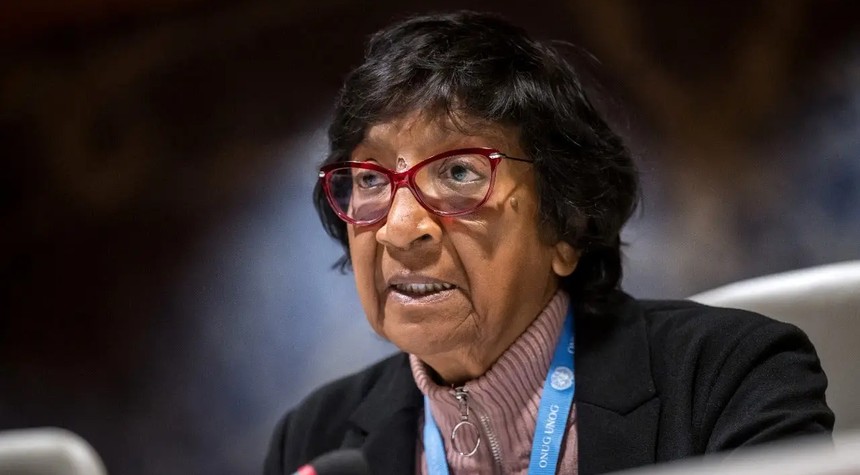
The Norwegian Nobel Committee has awarded this year’s Peace Prize to Navanethem “Navi” Pillay, a decision that has ignited sharp debate over the appropriate role of international judicial bodies in matters of war and peace. The award, announced Friday, recognizes Pillay for what the committee described as “her efforts to promote peace and international law.”
Pillay’s distinguished legal career spans decades, including service as a criminal court judge and extensive work within United Nations human rights mechanisms. Most recently, however, she chaired the UN Independent International Commission of Inquiry on the Occupied Palestinian Territory, a body established in 2021 following renewed tensions in the region.
The commission’s September 2025 report drew international attention and controversy in equal measure. Nearly two years after the October 7 attacks that killed approximately 1,200 Israelis, the commission concluded that Israel had committed genocide against Palestinians in Gaza. The report specifically named Prime Minister Benjamin Netanyahu and then-Defense Minister Yoav Gallant, accusing them of inciting genocide.
“It is clear that there is an intent to destroy the Palestinians in Gaza through acts that meet the criteria set forth in the Genocide Convention,” Pillay stated upon the report’s release. Israel immediately and forcefully rejected these findings as distorted and false.
The Nobel Committee’s decision appears designed to reinforce the authority of international legal institutions at a time when such bodies face increasing political pressure. The committee specifically noted that attacks against judges and international law itself have become more commonplace, expressing concern that enforcement mechanisms must remain strong to address the growing number of global conflicts.
Yet serious questions remain about whether this award serves its stated purpose. General Jack Keane, a respected strategic analyst with recent firsthand knowledge of the region, has rejected genocide allegations against Israel. Following an eleven-day visit that included examination of Gaza’s extensive tunnel network, Keane emphasized Israel’s efforts to protect civilian populations and condemned Hamas for deliberately using human shields during military operations.
The fundamental disagreement centers on how international law should be applied in asymmetric warfare. Israel maintains it has acted in legitimate self-defense against a terrorist organization that deliberately embeds military infrastructure within civilian areas. Critics of the genocide accusation note that Hamas constructed elaborate tunnel systems beneath hospitals, schools, and residential buildings, creating the very conditions that lead to civilian casualties when military action becomes necessary.
Nitsana Darshan-Leitner, president of the Israel-based Shurat HaDin Law Center, questioned the committee’s judgment directly. “A peace prize should honor those who build peace, not those accused of turning Israel into a defendant in a campaign of political delegitimization,” she stated. Her organization has led protest campaigns in Geneva against Pillay’s commission. “What peace, exactly, has she brought? The Middle East remains engulfed in conflict, and the region is nowhere near the peace this prize supposedly celebrates.”
The award highlights a broader tension in international relations between judicial activism and political reality. While strong legal institutions undoubtedly play a role in maintaining global order, the effectiveness of such institutions depends upon their perceived legitimacy and evenhandedness.
This Nobel Prize may ultimately reveal more about the committee’s own political priorities than about the actual promotion of peace in the Middle East. That is the way it is.
Related: Warren Davidson Drafts Bill to Block Federal Digital Currency as Counterfeiting