
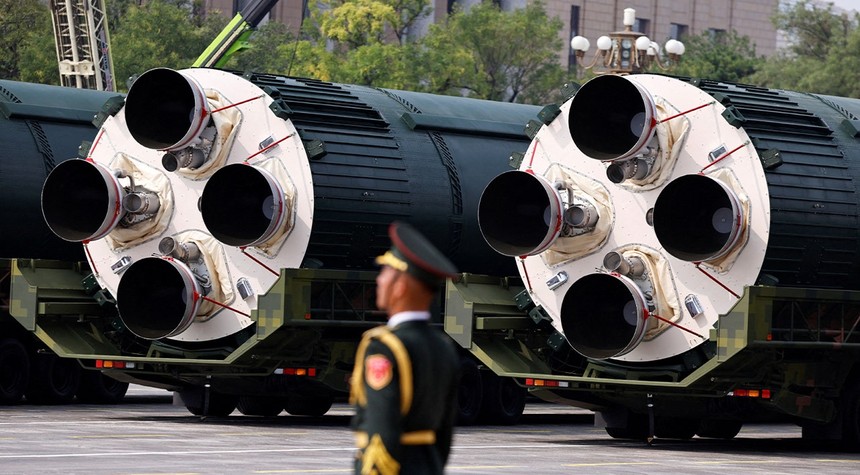
The Pentagon is developing a comprehensive nuclear strategy designed to provide the President with expanded options for responding to regional conflicts involving China or Russia, a significant shift in American defense posture that reflects the changing nature of global threats.
The classified initiative, under the direction of Under Secretary of Defense for Policy Elbridge Colby, represents a fundamental reassessment of how the United States might employ nuclear weapons in limited scenarios. Rather than relying primarily on the nation’s long-range strategic arsenal, the new doctrine places greater emphasis on tactical nuclear systems intended for use against military targets in regional conflicts.
The strategy addresses a critical gap in American military planning. It is designed for scenarios in which China or Russia launches an attack against a United States ally, forcing Washington to determine an appropriate response without immediately escalating to full-scale strategic nuclear exchange. This measured approach seeks to provide decision-makers with options between conventional military response and total nuclear war.
The development of this strategy comes as multiple international crises demand American attention and resources. United States Ambassador to NATO Matthew Whitaker has been addressing escalating tensions with Iran, particularly concerning reports of Chinese missile transfers to Tehran. This potential arms relationship between Beijing and Tehran represents a troubling convergence of American adversaries.
Meanwhile, Russia continues its assault on Ukraine, with recent missile attacks on Kyiv underscoring the urgency of Ukraine’s air defense requirements. Ukrainian President Volodymyr Zelenskyy has repeatedly warned of Russia’s intentions, and the latest strikes validate those concerns. The sustained Russian aggression demonstrates Moscow’s willingness to employ military force against neighboring states, precisely the type of scenario the new nuclear doctrine aims to address.
The timing of this strategic review is significant. President Trump is preparing for high-stakes discussions with Chinese President Xi Jinping in Beijing, where Taiwan tensions and trade disputes will test American resolve and diplomatic skill. The backdrop of enhanced nuclear planning options may well influence the dynamics of these crucial negotiations.
The emphasis on tactical nuclear weapons marks a departure from Cold War-era thinking, which focused predominantly on massive retaliation capabilities. Today’s security environment requires more nuanced responses to aggression. A regional conflict in the Taiwan Strait or Eastern Europe might not warrant the same response as a direct attack on the American homeland, yet deterrence requires credible options across the spectrum of potential conflicts.
Five individuals familiar with the planning have confirmed the broad outlines of this strategic shift, though the details remain classified. The development of such doctrine is a lengthy process, requiring coordination across military services, intelligence agencies, and civilian leadership.
As international tensions continue to rise across multiple theaters, the question facing American policymakers is not whether threats exist, but how best to deter aggression while maintaining strategic stability. The Pentagon’s work on tactical nuclear options represents one answer to that fundamental challenge. Whether it proves sufficient remains to be seen.
And that is the way it is.
Related: Greek Officials Appeal to Trump for Return of Parthenon Sculptures from Britain