
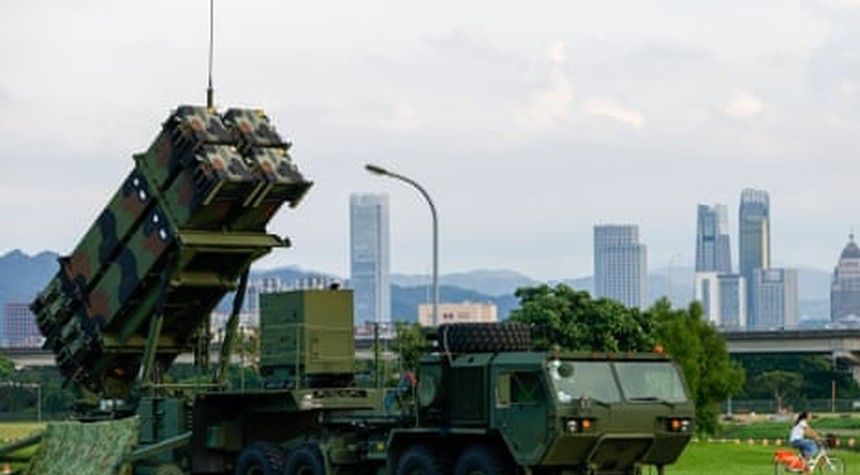
The United States has temporarily suspended arms sales to Taiwan to ensure adequate munitions remain available for ongoing military operations against Iran, according to acting Navy Secretary Hung Cao. This development marks another troubling signal for Taipei as questions mount regarding American commitment to the island democracy’s defense.
During congressional testimony Thursday, Cao addressed a fourteen billion dollar weapons package that has awaited presidential approval for several months. The acting secretary stated plainly that the pause serves to guarantee sufficient ammunition for Operation Epic Fury, the military campaign against Iran that commenced February 28th.
“We’re just making sure we have everything, then the foreign military sales will continue when the administration deems necessary,” Cao told lawmakers, indicating that decisions on resuming Taiwan arms sales would rest with Secretary of State Marco Rubio and Defense Secretary Pete Hegseth.
Senator Mitch McConnell expressed immediate concern over this policy shift, remarking “that’s what’s really distressing” when questioning whether the sales would eventually proceed.
The suspension comes as military analysts warn that American missile stockpiles have been significantly depleted during the Iran conflict, which has since entered what observers describe as a fragile ceasefire. The extended nature of that engagement has raised legitimate questions about America’s capacity to simultaneously support multiple theaters of potential conflict.
Taiwan’s presidential office responded Friday through spokesperson Karen Kuo, stating that Taipei had received no advance notification of any adjustments to the arms sale. Nevertheless, this announcement arrives at a particularly sensitive moment in cross-strait relations.
Just one week prior, President Trump met with Chinese President Xi Jinping in Beijing for discussions where Taiwan figured prominently. Beijing maintains its longstanding position that it “resolutely opposes” American weapons sales to Taiwan, which the Chinese government considers a breakaway province despite never having exercised sovereignty over the island. China has consistently refused to renounce the use of force to achieve unification.
During that summit, Xi delivered an unmistakable warning that the United States and China “will collide or even conflict” should the Taiwan situation be mishandled. The statement underscores the delicate nature of this three-way relationship.
American policy toward Taiwan has traditionally maintained strategic ambiguity regarding whether Washington would militarily defend the island in an invasion scenario. However, the Taiwan Relations Act, enacted decades ago, legally obligates the United States to provide Taiwan with adequate defensive military equipment.
President Trump’s recent statements have introduced uncertainty into this established framework. While in Beijing, he characterized the weapons packages as a “very good negotiating chip,” suggesting a willingness to depart from the longstanding American position that Taiwan arms sales are not subject to Chinese consultation.
Aboard Air Force One returning from China, Trump told reporters he discussed Taiwan in “great detail” with Xi and would soon “make a determination” on pending weapons packages.
This suspension, whether temporary or indicative of broader policy recalibration, represents a significant development for Taiwan’s security planning. For an island democracy of twenty-three million people facing potential military pressure from the world’s most populous nation, American weapons sales constitute more than commercial transactions. They represent tangible evidence of Washington’s commitment to regional stability and democratic values in the Indo-Pacific.
The coming weeks will reveal whether this pause proves merely logistical or signals a fundamental shift in American policy toward Taiwan.
Related: Israel Deports Gaza Flotilla Activists as Netanyahu Rebukes Security Minister