
The United States will deploy 5,000 additional troops to Poland, President Donald Trump announced Friday, a decision that has left NATO allies and American defense officials struggling to reconcile the move with recent orders to withdraw a similar number of forces from Europe.
The announcement, delivered via the President’s Truth Social platform, represents a significant reversal from directives issued just weeks earlier. Trump cited his relationship with Polish President Karol Nawrocki, whom he endorsed during last year’s elections, as the driving force behind the deployment decision.
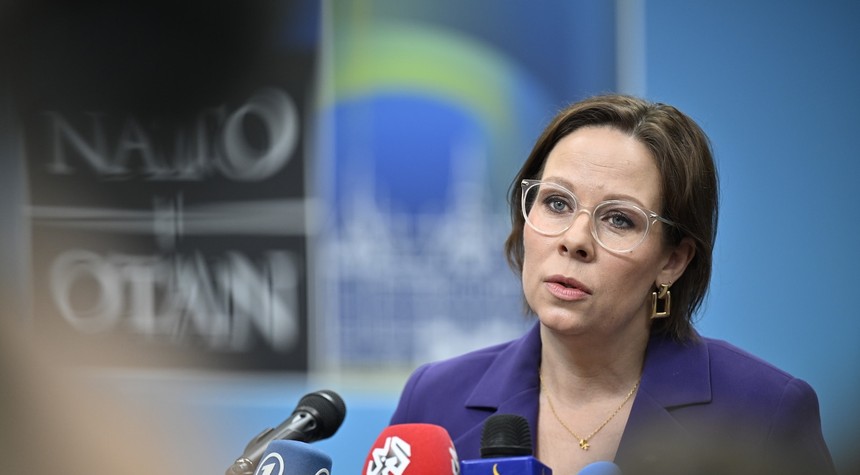
Swedish Foreign Minister Maria Malmer Stenergard, hosting a meeting of NATO counterparts in Helsingborg, Sweden, acknowledged the difficulty alliance members face in interpreting American military policy. “It is confusing indeed, and not always easy to navigate,” she stated at a press conference attended by U.S. Secretary of State Marco Rubio.
The confusion extends beyond allied capitals into the Pentagon itself. Two U.S. defense officials, speaking on condition of anonymity due to the sensitive nature of military planning, confirmed that American defense planners remain uncertain about the policy’s direction. “We just spent the better part of two weeks reacting to the first announcement. We don’t know what this means either,” one official acknowledged.
Earlier this month, the Trump administration announced a reduction of approximately 5,000 troops from European deployments, with roughly 4,000 service members no longer scheduled to deploy to Poland. That decision followed public criticism from German Chancellor Friedrich Merz, who characterized the American response to Iranian provocations as humiliating and criticized what he termed a lack of coherent strategy.
The President responded to those remarks with a pledge to cut troop levels beyond the initial 5,000 figure while simultaneously announcing new tariffs on European automobiles, a measure particularly significant to Germany, the continent’s largest automotive producer.
The United States currently maintains approximately 80,000 troops across Europe. Federal law requires the Pentagon to station at least 76,000 troops and major equipment on the continent unless allied consultation occurs and a determination confirms that withdrawal serves American interests. The previously announced 5,000-troop reduction would have brought force levels below that statutory threshold.
Polish Foreign Minister Radek Sikorski welcomed the President’s latest announcement, noting that it ensures “the presence of American troops in Poland will be maintained more or less at previous levels.”
NATO’s supreme military officer, U.S. Lieutenant General Alex Grynkewich, had promised just two days before Trump’s announcement that the alliance would “stay well-synchronized with our allies moving forward” regarding troop deployments. The latest policy shift suggests that coordination remains a work in progress.
The episode underscores the broader challenges facing the Atlantic alliance as it navigates an era of heightened uncertainty regarding American commitments to European security. For decades, the U.S. military presence in Europe has served as both a deterrent to adversaries and a reassurance to allies. The rapid policy fluctuations of recent weeks have tested that framework in ways that leave both friends and defense planners seeking clarity about American intentions.
Related: US Influence Threatens to Reverse Colombia’s Climate Progress Under New Leadership