
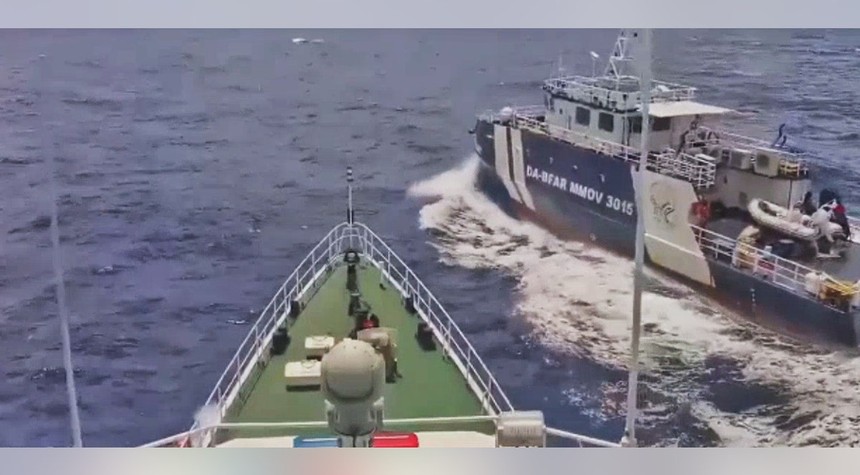
A collision between a Chinese Coast Guard vessel and a Philippine government ship in the South China Sea on Friday has once again brought into sharp focus the enduring tensions over one of the world’s most contested waterways.
The incident occurred at approximately 11:13 in the morning, some 54 nautical miles from the coast of Palawan province. The Philippine vessel, BRP Datu Magat Salamat, operated by the Bureau of Fisheries and Aquatic Resources, was in the process of distributing fuel to Filipino fishermen when the collision took place.
Video footage released by Philippine authorities captured crew members shouting warnings moments before impact. The resulting damage to the Philippine ship included bent railings, detached metal supports, and debris scattered across the deck. Fortunately, no injuries were reported among the crew.
The Philippine government maintains that the incident occurred well within its exclusive economic zone and has accused Beijing of deliberately ramming what it characterizes as a civilian government vessel engaged in humanitarian operations. Jay Tarriela, spokesperson for the Philippine Coast Guard on matters concerning the West Philippine Sea, stated that the Chinese vessel first crossed the Philippine ship’s stern at a distance of approximately 33 feet before executing a second maneuver minutes later that resulted in the collision.
Beijing has offered a markedly different account of the events. Chinese Coast Guard spokesperson Jiang Lue asserted that the Philippine vessel deliberately altered its course and accelerated to cross in front of the Chinese ship, despite repeated warnings. China maintains its vessel was conducting lawful operations near Sabina Shoal and places responsibility for the collision squarely on the Philippine side.
The diplomatic reverberations of this maritime encounter extended beyond the two principal parties. The United States Ambassador to the Philippines, Lee Lipton, issued a statement strongly condemning what he termed the China Coast Guard’s deliberate ramming. The Chinese Embassy in Manila responded by accusing the United States of supporting Philippine provocations in disputed waters.
This latest incident represents another chapter in the ongoing struggle over sovereignty and maritime rights in the South China Sea. China claims vast portions of these waters based on historical grounds, a position that overlaps with the claims of several Southeast Asian nations, including the Philippines. An international tribunal in 2016 ruled in favor of the Philippines, determining that China’s expansive claims had no legal basis under international law. Beijing has consistently rejected that ruling.
The waters around Sabina Shoal have been a particular flashpoint in recent years. The area lies within what the Philippines considers its exclusive economic zone, yet China maintains a persistent presence through coast guard and maritime militia vessels.
As nations continue to assert competing claims in these strategic waters, incidents such as Friday’s collision serve as stark reminders of how quickly maritime encounters can escalate. The presence of American diplomatic support for Manila adds another dimension to what is already a complex regional dispute with implications that extend far beyond the immediate parties involved.
Related: Two Museums Face Legal Challenge Over Paintings Seized During World War II