
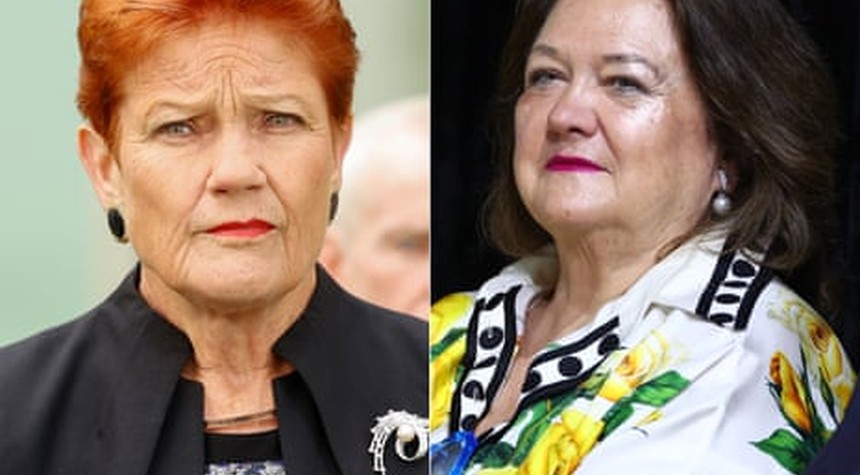
The matter of political influence in democracies has once again surfaced, this time in Australia, where Senator Pauline Hanson’s One Nation party has executed a complete reversal on energy policy following substantial financial contributions from mining magnate Gina Rinehart.
The facts are straightforward. As recently as March, Senator Hanson advanced legislation in the Australian Senate supporting a domestic gas reservation policy. Her position was clear: requiring energy companies to reserve a portion of their natural gas for domestic consumption would increase supply and reduce electricity costs for Australian families.
The Albanese government in Canberra has moved forward with precisely such a policy for Australia’s eastern seaboard. Under the plan, gas exporters would be required to supply a portion of their production to the domestic market, creating downward pressure on consumer prices in a nation that has seen energy costs climb substantially in recent years.
Yet by June, One Nation had abandoned this position entirely. The party now opposes the very reservation policy it championed three months earlier, claiming such measures risk “killing domestic Australian gas companies.”
The timing raises questions. In April, Hancock Prospecting, the mining company controlled by Rinehart, gifted One Nation an aircraft valued at approximately two million dollars. The party also received one million dollars in donations from two individuals closely associated with the billionaire heiress.
Hancock Prospecting holds a forty-nine percent stake in Senex, a nine-hundred-million-dollar energy company that has vigorously opposed the government’s reservation policy. The South Korean firm POSCO owns the remaining fifty-one percent of Senex.
Resources Minister Madeleine King has characterized One Nation’s reversal as transparent capitulation to industry pressure. “One Nation was hoping nobody would notice they had abandoned any form of gas reservation policy,” the minister stated. “One Nation claims to support Australian families but the truth is they are always on the side of their big business backers.”
One Nation’s June policy statement offered this explanation: through “consultation with industry and stakeholders,” the party determined that reservation policies “fell short” of their objectives and would “damage onshore development of oil and gas projects.”
The opposition has taken notice. Garth Hamilton, the Coalition’s spokesperson for energy affordability and security, called the reversal dramatic and suggested it benefited Senex and Rinehart directly. “This policy backflip must be for the benefit of her donors, because it is not for the benefit of the Australian people,” Hamilton said.
The broader political landscape on this issue remains fractured. The Coalition is considering support for the government’s reservation proposal. The Greens have proposed a more aggressive approach: a twenty-five percent tax on gas exports.
What remains indisputable is the sequence of events. A political party received substantial financial contributions from interests opposed to a particular policy. That party then reversed its position on that very policy. Whether correlation constitutes causation in this instance, Australians will have to judge for themselves.
The matter speaks to a larger challenge facing democratic nations in this era: the intersection of private wealth and public policy, and the degree to which substantial contributions influence the positions of those elected to represent the broader public interest. That is the way it is.
Related: Saudi Arabia Faces Strategic Setback as Houthis Capture Key Red Sea Port