
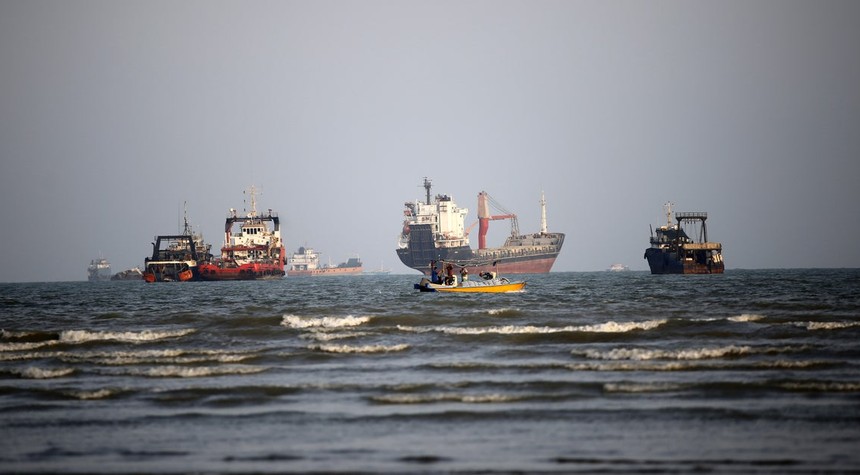
The strategic landscape of the Middle East shifted markedly this weekend as Iranian-backed Houthi forces consolidated control over critical Red Sea shipping infrastructure, dealing Saudi Arabia a significant setback in Yemen’s long-running conflict and sending global oil markets into renewed uncertainty.
Yemen’s government forces launched counteroffensives along the Red Sea coast on Sunday, even as officials acknowledged the loss of Mokha port and a strategic island position on the Bab el-Mandeb Strait. One government official characterized last week’s defeats as “painful,” an assessment that understates the broader implications for regional security and global commerce.
The Bab el-Mandeb Strait has assumed critical importance in recent months. With the Strait of Hormuz severely restricted due to the ongoing U.S.-Iran conflict, this southern gateway to the Red Sea represents Saudi Arabia’s primary alternative route for energy exports. The Houthi capture of positions commanding this waterway threatens to further constrict the flow of oil from the world’s largest petroleum exporter at a moment when global markets can ill afford additional disruption.
The Houthis have not limited their activities to Yemen. Cross-border attacks into Saudi territory continued over the weekend, escalating pressure on the Saudi military and its already strained defensive posture. These attacks underscore a troubling reality: Iran’s proxies are achieving tactical successes that translate into strategic leverage across multiple theaters.
Global oil markets responded predictably to these developments. Brent crude rose 3.2 percent on Monday morning to reach $107.94 per barrel, a dramatic increase from the roughly $72 per barrel trading level before the U.S.-Iran war commenced in late February. Benchmark U.S. crude similarly climbed 3.2 percent to $103.26 per barrel. These price movements reflect not merely current supply concerns but also market anxiety about future disruptions.
Diplomatic efforts to manage the crisis have faltered. Oman postponed a planned meeting in Muscat that would have brought together regional foreign ministers to discuss management of Strait of Hormuz shipping. Oman’s Foreign Minister Badr Albusaidi cited “the interests of consensus” in explaining the delay, though Iranian officials indicated the postponement came at the request of unnamed regional countries.
Saudi Arabia has reportedly submitted amendments to an emerging Iran-Oman agreement on strait management, expressing concerns about lasting implications for Gulf Cooperation Council members. The kingdom’s intervention suggests deep unease about any arrangement that could formalize Iranian influence over shipping lanes vital to Gulf economies.
Iranian President Massoud Pezeshkian offered a more optimistic assessment following discussions with Emirati officials at the BRICS summit in India. He characterized his exchange with Crown Prince Khaled Bin Mohamed Bin Zayed Al Nahyan as constructive and suggested both nations wish to “turn the page” on deteriorated relations since the conflict began.
Whether such diplomatic overtures can translate into meaningful progress remains uncertain. The facts on the ground paint a picture of increasing Houthi capabilities, mounting pressure on Saudi Arabia’s strategic position, and growing threats to energy infrastructure that the global economy depends upon.
The situation demands careful attention from Western policymakers. What happens in Yemen’s ports and along the Bab el-Mandeb Strait will have consequences far beyond the Arabian Peninsula. And that is the way it is.
Related: Anthropic and OpenAI Leaders Warn Artificial Intelligence Advancing Too Rapidly