
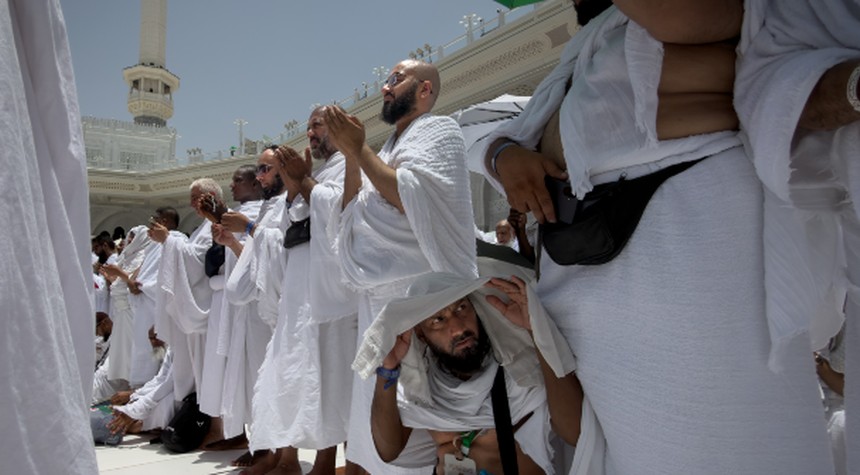
Saudi Arabia announced Friday that it has implemented comprehensive health screening measures ahead of the annual Hajj pilgrimage, responding to mounting international concerns about active disease outbreaks that could threaten the massive religious gathering.
The Islamic pilgrimage to Mecca, which represents one of the five pillars of Islam, draws Muslims from every corner of the globe to fulfill their religious obligation. This year, Saudi authorities anticipate approximately 1.5 million faithful will converge on the holy city beginning May 25, though arrivals have already commenced in significant numbers.
The timing of this year’s pilgrimage coincides with two distinct public health challenges that have captured the attention of international health authorities. The World Health Organization has identified an ongoing outbreak of the Bundibugyo strain of Ebola virus in the Democratic Republic of Congo, alongside a separate hantavirus outbreak traced to a cruise ship that crossed the Atlantic Ocean.
The situation in the Democratic Republic of Congo presents particular difficulties for containment efforts. Health workers attempting to address the Ebola outbreak have encountered substantial security obstacles, including violent resistance from local populations who dispute the existence of the disease. These groups have attacked makeshift treatment facilities and attempted to recover the bodies of deceased family members, actions that significantly increase transmission risks.
While the World Health Organization assessed this week that the likelihood of a global Ebola emergency remains low, officials have acknowledged concerning delays in their response. Authorities in the affected Congolese regions required approximately one month to properly identify and report the outbreak, a lag that has raised questions about the accuracy of current assessments. Meanwhile, Argentine authorities continue operations to locate the source of the hantavirus outbreak and prevent further spread.
The Saudi Public Health Authority issued a detailed statement confirming enhanced precautionary protocols now in effect across the kingdom. Travelers arriving from nations neighboring the Congolese outbreak zone face intensified screening procedures. These measures specifically target arrivals from Uganda, South Sudan, Rwanda, Burundi, Tanzania, and the Republic of Congo.
Saudi officials emphasized that airports and other points of entry have received particular attention in the deployment of these enhanced health measures. The government declared itself fully prepared to protect citizens, residents, and the incoming pilgrims from potential health threats.
The health concerns represent only one dimension of the complex security environment Saudi Arabia currently navigates. The kingdom finds itself positioned at the intersection of multiple regional tensions, most notably the unresolved hostilities between the United States and Iran. Despite these geopolitical pressures, Saudi authorities have chosen to proceed with the Hajj at full capacity.
The annual pilgrimage traditionally attracts Muslims from nations across the political spectrum, including those with adversarial relationships with the Saudi government. Iranian pilgrims, for instance, regularly participate despite the deep-seated tensions between Tehran and Riyadh.
This convergence of public health vigilance and security considerations underscores the magnitude of the undertaking Saudi Arabia manages each year. The successful execution of the Hajj requires not merely logistical coordination for over a million visitors, but also the implementation of comprehensive screening and prevention measures capable of detecting and containing potential disease threats before they can spread through such a densely concentrated population.
The international community will be watching closely as this year’s pilgrimage unfolds, both as a test of Saudi Arabia’s public health infrastructure and as a potential indicator of whether current disease containment efforts in Africa prove sufficient to prevent wider transmission.
Related: Pentagon Halts Taiwan Military Equipment Sales During Iran Conflict