
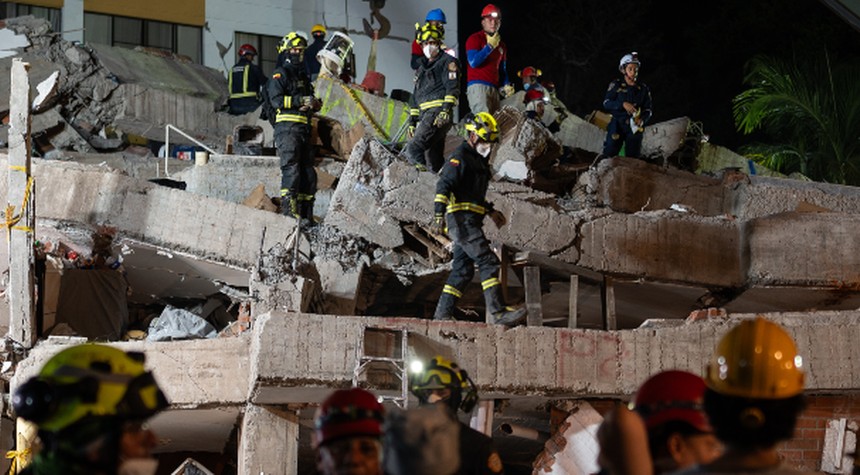
Four days after a magnitude 7.4 earthquake devastated western Colombia, the nation faces a mounting public health crisis as countless victims remain entombed beneath collapsed structures, their bodies decomposing in temperatures approaching 90 degrees Fahrenheit.
The earthquake struck the department of Chocó on Monday, reducing entire city blocks to rubble and rendering countless buildings structurally unsound. As of Friday, Colombian authorities have confirmed 281 deaths, more than 3,970 injuries, and 379 missing persons. These figures, sobering as they are, likely underestimate the true toll, as the painstaking process of searching through debris continues amid a relentless series of aftershocks.
Colombia has recorded 184 aftershocks since Monday’s initial tremor, fifteen of them exceeding 3.0 magnitude. These continuing seismic events have hampered rescue operations and delayed the critical work of recovering victims from the wreckage.
The 72-hour window considered optimal for finding survivors alive has largely passed. Recognizing this grim reality, officials in Cali announced Friday they would continue search and rescue operations for another 48 hours before redirecting resources toward caring for survivors and identifying the deceased.
The immediate challenge now extends beyond rescue operations to preventing a secondary disaster of disease and contamination. High temperatures, combined with widespread destruction of water and plumbing infrastructure, have created conditions ideal for pathogen growth. The rubble remains moist, and the pervasive smell of decomposition in hardest-hit areas like Pereira signals the gravity of the sanitary threat.
Epidemiologist Ariel Emilio Cortés warned of environmental contamination and potential water supply compromise. “Bacteria can spawn,” Cortés explained. “Epidemics can spread, particularly bacterial ones. Infections in people can surface, which is why this is an issue we need to know how to treat.”
Public health workers in Pereira report difficulties sterilizing medical equipment used in treating survivors and processing victims. Fine dust from collapsed buildings further complicates disinfection protocols, creating additional vectors for disease transmission.
In Cali, morgue operations proceed with relative efficiency, as cause of death determination presents few complications. However, victim identification poses significant challenges, particularly for infants separated from their families during the disaster. The city’s genetic testing laboratory, which would normally assist in such identifications, sustained damage in the earthquake and remains inoperative.
Many survivors now find themselves homeless, lacking basic hygiene resources and struggling to secure food and clean water. These conditions, combined with the tropical heat and compromised infrastructure, create a perfect environment for epidemic disease.
The situation in western Colombia demonstrates once again how natural disasters inflict damage far beyond their immediate destructive force. The earthquake’s impact will be measured not only in collapsed buildings and initial casualties, but in the secondary effects that threaten survivors in the days and weeks ahead.
As rescue operations wind down and recovery efforts begin, Colombian authorities face the formidable task of preventing disease outbreak while providing for thousands of displaced citizens and restoring basic services to a devastated region.
Related: Iran Faces Unprecedented Economic Isolation as Military Confrontation Looms