

The plane crashed in South Korea, killing all passengers and the majority of the crew.
Only two people survived the fire, both cabin crew.
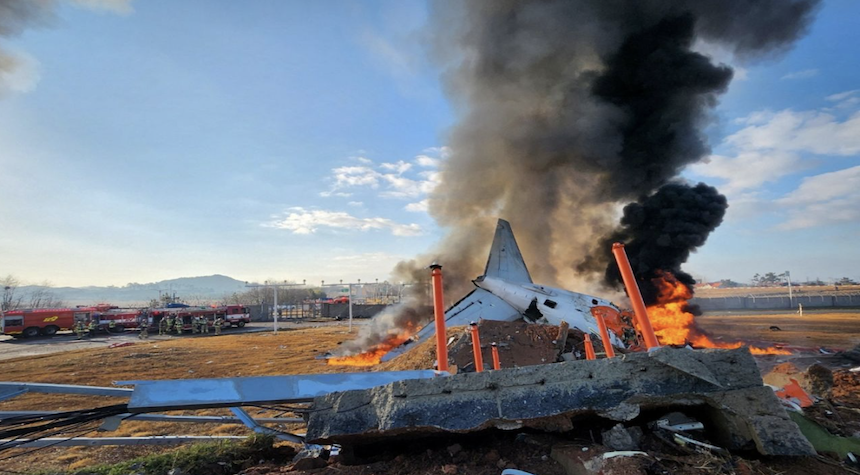
The plane skidded off the runway at Muan Airport, in the south of the country. It then crashed into a wall and ignited.
Flight 2216 was returning from Bangkok in Thailand with six crew members and 175 passengers. Many of the passengers were holidaymakers.
Experts and officials have pointed out a variety of factors that could be involved in the investigation.
Families in tears gathered in the arrival hall of the airport to wait for the bodies to be identified.
Only their fingerprints have allowed some of the victims to be identified.
Maeng Gisu (78), said that his nephew, and his nephew’s sons, were on the plane.
The family was celebrating the youngest son’s successful completion of his college entrance exam.
He said, “I cannot believe that the entire family just vanished.” “My heart hurts so much.”
There were 173 South Koreans on board and two Thais. The passengers ranged in age from three to 78 years old, but most were between 40s, 50s, and 60s.
Jongluk Doungmanee (49) was returning to South Korea after visiting his family in Thailand. The mother of two lived with her husband in South Korea and worked in agriculture.
In an interview given to BBC Thai by her cousin Pornphichaya, she said that “she had only ever seen news of this nature from other countries. She never imagined it would be Thai people”. “Watching the footage made me even more distressed.”
The crash occurred shortly after 9:00 local time (00:00 GMT). Footage showed that the aircraft landed without wheels and overshot the runway, before crashing into an airport perimeter wall.
South Korean officials stated that the plane experienced difficulties landing, with the pilot pulling out the first attempt because of bird interference.
The pilot was then allowed to land the aircraft in the opposite direction of the usual landing.
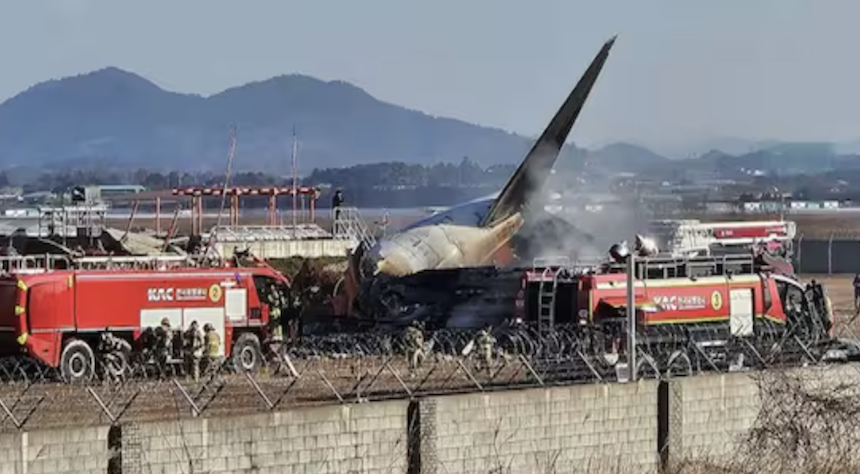
Officials suggested that a bird strike or bad weather could have played a part, but aviation experts questioned if these factors were sufficient to cause such a fatal crash.
South Korean News1 reported that a passenger told a relative that a bird had stuck to the plane’s wing. However, officials have yet to confirm whether birds were involved.
Geoffrey Thomas of Airline News stated, “A lot about this tragedy doesn’t make any sense”.
He claimed that South Korea’s airlines and aircraft were “industry-best practices” and both had “excellent safety records”.
Gregory Alegi is an aviation journalist who was a former instructor at the Italian Air Force Academy. He told Reuters that “there are a lot of questions and not many answers”
Why was the plane moving so fast? Why weren’t the flaps open? Why wasn’t the landing gear down?”
The tragedy is a national disaster for South Korea. It has been thrown into a political crisis since President Yoon Suk Yeol and his interim successor were both impeached.
Choi Sangmok, the acting president, who was appointed only on Friday, paid a visit to the crash site on Sunday.
I express my sincere condolences to the victims of this incident. He said he would do everything he could to help the injured recover quickly.
Jeju Air’s crash is the deadliest on South Korean soil since 1997 when Korean Air crashed in Guam and killed over 200 people. The previous deadliest crash on South Korean soil had been an Air China flight that was responsible for 129 deaths.
Jeju Air is one of South Korea’s largest low-cost carriers and was founded in 2005. The Muan Airport crash marks its first fatality.
At a Sunday press conference, Jeju Air’s executives apologized publicly.
We sincerely apologize to everyone affected by this incident. The firm issued a statement saying that it would make every effort to rectify the situation.
Boeing, the manufacturer of the 737-800, said that it had been in contact with the airline.