
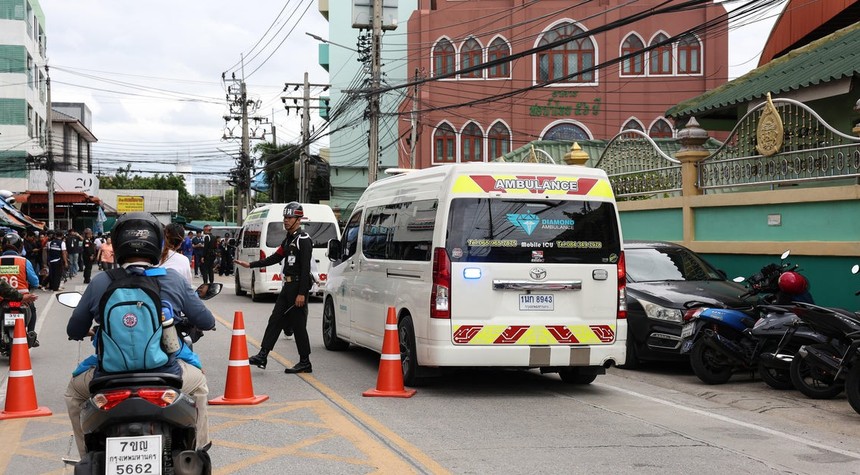
A fourteen-year-old student opened fire at a high school northwest of Bangkok on Friday, killing at least six people and wounding several others in an attack that has once again raised questions about firearm access and youth violence in the Kingdom of Thailand.
The shooting occurred at Debsirin Nonthaburi School in Nonthaburi province, located in the metropolitan area surrounding the Thai capital. Royal Thai Police spokesperson Trairong Piwpan confirmed the basic facts of the incident, though authorities provided conflicting casualty figures in the hours following the attack.
According to Trairong’s statement to news broadcasters, three teachers and three students were killed, with fifteen others injured, two of them critically. The shooter was hospitalized in serious condition. However, Health Minister Pattana Promphat reported twenty-two injuries with nine in critical condition, noting that some victims sustained injuries from falls and other causes rather than gunfire.
Deputy Interior Minister Polapee Suwunchwee offered a different account at the scene, stating that five teachers had died and that the shooter had killed his two grandparents at their home before proceeding to the school. The Deputy Interior Minister also reported that the shooter subsequently died at a hospital.
Police sources indicated that the young gunman, who lived with his grandparents, fired at least twenty-six rounds during the attack and was found with thirty-four additional bullets. The weapon belonged to his grandfather, authorities confirmed. The motive for the attack remains under investigation.
Witnesses described scenes of terror as students barricaded themselves inside classrooms while gunfire echoed from another building. Police officers eventually secured the area and evacuated the trapped students. Approximately one hour after the shooting began, concerned family members gathered outside the school grounds while law enforcement and emergency responders continued their work inside.
Prime Minister Anutin Charnvirakul expressed his condolences and directed government officials to provide care for the victims and their families.
This incident marks the second significant school shooting in Thailand within recent months. In February, a seventeen-year-old suspect stole a firearm from police and opened fire at a public high school in southern Thailand, taking hostages during a two-hour siege that resulted in one death and two injuries.
The pattern of school violence in Thailand mirrors troubling trends observed in other nations, though such incidents remain relatively rare in Southeast Asia compared to other regions. The use of a grandfather’s weapon in this attack raises particular concerns about firearm storage and access within households, issues that transcend national boundaries.
Thai authorities face difficult questions in the aftermath of this tragedy about how to prevent such violence while maintaining public confidence in school safety. The investigation into the shooter’s motives may provide insights, though such explanations rarely offer complete understanding of why young people commit such devastating acts.
As Thailand mourns these losses, the international community watches with familiar sorrow, recognizing the universal challenge of protecting children in educational settings while grappling with the complex factors that lead to such violence.
Related: American Mining Company Agrees to $150 Million Settlement for Andean Pollution Victims