
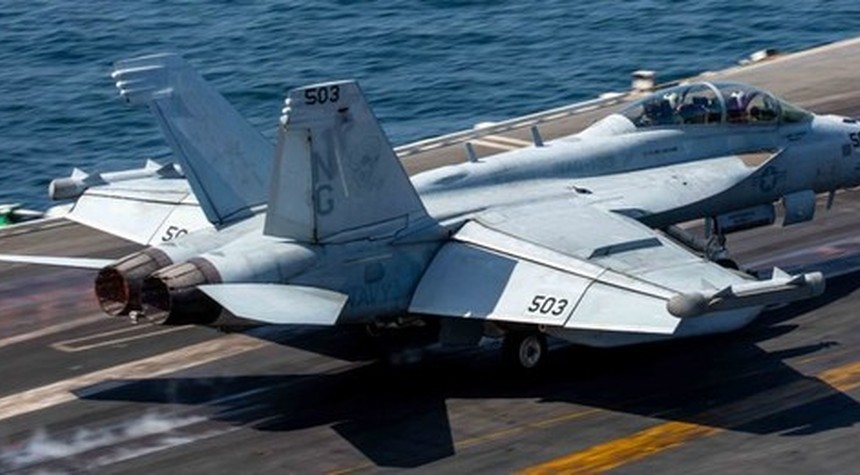
The United States military has launched a new series of airstrikes against Iranian regime targets in response to an attack that claimed the lives of at least two American servicemen stationed in Jordan.
The sequence of events unfolded with devastating swiftness. On July 17, Iranian forces conducted a strike that resulted in multiple American casualties, killing two United States troops and injuring several others. The following day, Iranian Supreme Leader Ayatollah Mojtaba Khamenei issued sweeping threats against what he termed the “Great Satan” America, promising to deliver “unforgettable lessons” through what the regime calls “Resistance,” their preferred terminology for jihad.
Hours after these threats, United States Central Command confirmed the American military response. At 6 p.m. Eastern Time on Saturday, American forces commenced airstrikes against Iranian positions under direct orders from the Commander in Chief. According to CENTCOM’s official statement, these strikes were designed to further degrade Iran’s capacity to threaten commercial shipping in the strategically vital Strait of Hormuz and to deliver swift punishment to Islamic Revolutionary Guard Corps forces responsible for the Jordan attack.
The facts of this matter are straightforward. The Iranian regime has now killed at least fifteen American service members since the commencement of Operation Epic Fury. The Trump administration has authorized multiple strikes in recent weeks as Tehran’s leadership has rejected proposed peace agreements. The message from Iran’s theocratic rulers could not be clearer: they prefer conflict to peaceful resolution.
The attack in Jordan itself involved Iranian ballistic missiles and drones targeting American and partner forces. CENTCOM initially reported two servicemen killed in action, with one additional service member listed as missing. The fate of this missing soldier remains unknown at this hour. Four American service members required medical evacuation to Jordanian hospitals, though they have since been discharged. Other personnel evaluated for minor injuries have returned to duty.
Out of respect for the families of the fallen, CENTCOM has withheld the identities of the deceased servicemen pending notification of next of kin, a process that requires twenty-four hours under military protocol.
The broader strategic picture presents a sobering reality. The fundamentalist regime controlling Iran operates under an ideology that views perpetual conflict with Israel and the United States as religiously mandated. Their leadership believes either in hastening the arrival of the Mahdi, their prophesied messianic figure, or in earning eternal reward through sustained warfare against what they consider infidel nations.
This is not a government motivated by rational self-interest or conventional diplomatic incentives. It is a regime driven by apocalyptic theology and revolutionary fervor. Negotiation with such an adversary presents unique challenges that differ fundamentally from traditional state-to-state diplomacy.
The Trump administration now faces critical decisions regarding the appropriate level of response. The strikes thus far represent measured retaliation, but the question remains whether such measured responses will prove sufficient to deter future Iranian aggression against American forces and interests in the region.
What is certain is this: American servicemen and women continue to face deadly threats from Iranian forces and their proxies throughout the Middle East. The safety of these troops and the credibility of American deterrence both hang in the balance as this crisis continues to unfold.
Related: Trump Threatens Tariffs Over Canadian Wildfire Smoke Damage to United States