
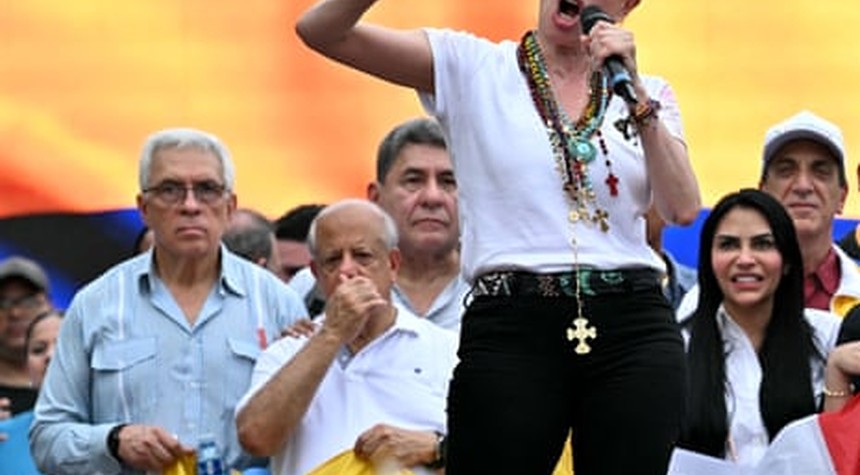
Venezuelan opposition leader María Corina Machado has issued her first public statement regarding the oil agreement between the United States and Venezuela’s interim government, raising fundamental questions about legitimacy and democratic governance that merit serious consideration.
The Nobel Peace Prize laureate found herself in a delicate position, addressing what President Trump characterized as “the biggest oil deal in world history” while attempting to maintain diplomatic relations with Washington. Her measured response reflects the complex realities facing those who seek democratic restoration in Venezuela.
“Of course the United States is the principal partner Venezuela needs to fully develop its strategic potential,” Machado stated in a video address. “This is what the majority of Venezuelans believe, and it is something I have spent my whole life defending.”
However, she directed pointed criticism at the current interim government’s authority to negotiate such agreements. Machado argued that Venezuela’s natural resources belong to the Venezuelan people, not to what she termed “an illegitimate regime” occupying the Miraflores presidential palace in Caracas. She described the current government officials as “enemies of the United States” who lack the democratic mandate to make decisions of this magnitude.
The agreement in question involves more than 65 billion barrels of Venezuela’s estimated 303 billion barrels in proven crude oil reserves, the largest such reserves in the world. The Trump administration negotiated this deal with interim president Delcy Rodríguez, who assumed power in January following the removal of Nicolás Maduro by United States special forces.
The circumstances surrounding Rodríguez’s ascension to power have prompted questions about the administration’s strategic decisions. Many observers anticipated that Trump would elevate Machado, a conservative democracy activist who demonstrated her respect for American leadership by presenting her Nobel Prize to the president. Instead, the administration opted for Rodríguez, with Trump issuing a stern warning that she would “pay a very big price, probably bigger than Maduro” if she failed to fulfill her obligations.
The White House maintains that this agreement serves American interests by securing energy dominance and reducing Chinese and Russian influence in the Western Hemisphere. Energy Secretary Chris Wright, speaking from Caracas, emphasized the administration’s commitment “to massively grow production and economic opportunities in Venezuela” while bringing “peace, freedom, opportunity, and prosperity to everyone in Venezuela.”
These assurances have not satisfied critics who view the arrangement as problematic. Machado’s supporters express particular concern that Washington may now have reduced incentive to advocate for new presidential elections. Evidence suggests that Machado’s movement defeated Maduro decisively in the 2024 election, but Maduro refused to accept the results and maintained power until his removal in January.
The situation presents a fundamental question about the relationship between democratic legitimacy and international agreements. Machado expressed that her supporters feel “sadness and anger” at being excluded from decisions affecting their nation’s future. This sentiment reflects broader concerns about whether expedient arrangements serve long-term interests or merely exchange one form of questionable governance for another.
As this situation develops, the international community watches to see whether American policy will ultimately support democratic aspirations in Venezuela or prioritize immediate strategic and economic objectives. The answer to that question will have implications extending well beyond Venezuela’s borders.
That is the state of affairs as we understand them today.
Related: American Energy Giant Backs Trump’s Venezuela Strategy with Massive Investment