
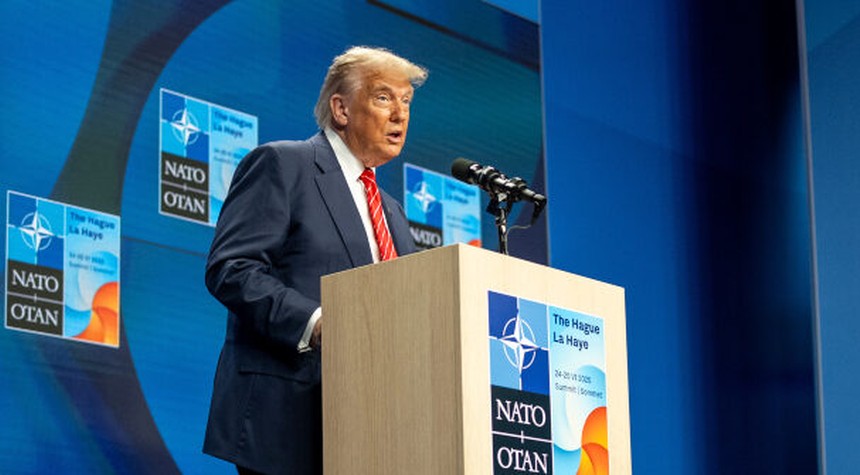
The British Ambassador to the United States has acknowledged the validity of President Donald Trump’s longstanding concerns about NATO defense spending, while simultaneously defending the alliance’s fundamental purpose and historical record.
Ambassador Christian Turner, speaking this week, addressed the President’s recent characterizations of NATO as ineffective, emphasizing a crucial historical fact that bears repeating: In the entire history of the North Atlantic Treaty Organization, Article 5—the mutual defense provision—has been invoked only once. That single invocation came after the September 11th attacks on American soil, when European allies rallied to America’s defense.
“NATO is a defensive alliance. It is there for our shared protection,” Turner stated, underscoring the organization’s core mission in an era when its purpose has come under renewed scrutiny.
The ambassador’s comments reflect a broader European response to American pressure. European leaders, including NATO Secretary General Mark Rutte, have publicly committed to substantial increases in defense expenditures. This represents a significant shift from the burden-sharing disputes that have characterized trans-Atlantic relations for years.
The numbers tell a compelling story. European NATO members are indeed raising their defense spending to unprecedented levels, responding directly to what Turner called “this shared challenge.” Whether this constitutes too little, too late, or a genuine turning point in alliance responsibilities remains a matter of considerable debate.
Beyond the NATO discussion, Turner revealed details of an international security initiative that directly addresses another Trump administration priority: freedom of navigation through the Strait of Hormuz. British Prime Minister Keir Starmer and French President Emmanuel Macron are leading a coalition effort involving fifty-one nations, including South Korea, Japan, and countries across Africa, Asia, and the Gulf region.
This coalition aims to establish a comprehensive military mission encompassing de-mining operations, naval escorts, intelligence sharing, and command and control infrastructure. The objective is straightforward: ensuring commercial shipping can transit the Strait without facing tolls, restrictions, or threats from regional actors.
The timing is significant. Turner indicated this international force would be prepared to assume responsibilities seamlessly, working in coordination with American forces once current diplomatic negotiations conclude. The implication is clear: European and allied nations are attempting to demonstrate their willingness to shoulder security burdens that have traditionally fallen primarily on American military resources.
The Strait of Hormuz represents one of the world’s most critical maritime chokepoints, with roughly one-fifth of global oil supplies passing through its narrow waters. Any disruption to shipping in this region carries immediate consequences for global energy markets and, by extension, the world economy.
What emerges from these developments is a picture of alliance relationships in transition. The Trump administration’s persistent criticism of NATO and demands for greater burden-sharing appear to be producing tangible results, even as the rhetoric surrounding these issues remains contentious.
Whether these European commitments represent a fundamental recalibration of trans-Atlantic security arrangements or merely tactical responses to immediate political pressure will become evident in the months ahead. What is certain is that the decades-old assumptions governing Western alliance structures are being tested as never before in the post-Cold War era.
Related: Lebanese President Declines Netanyahu Call While Ceasefire Negotiations Continue