
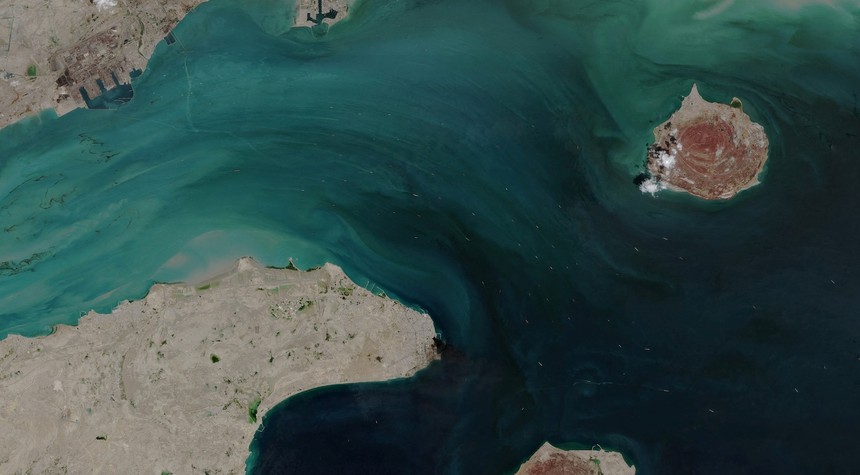
The strategic Strait of Hormuz remains at the center of escalating tensions between the United States and Iran, with both nations offering conflicting accounts of the vital waterway’s operational status.
The White House stated Friday that the strait was “completely open,” even as President Donald Trump announced plans to maintain a blockade of the waterway until what he termed a “transaction” with Iran reaches completion. This declaration follows the President’s announcement of major combat operations against Iran on February 28, which included extensive joint U.S.-Israeli strikes on Iranian military and government installations.
The military action preceded diplomatic efforts in Pakistan, where negotiations between American and Iranian representatives failed to produce a peace agreement. According to President Trump, Iran’s nuclear program represented the primary obstacle to reaching a settlement. In response to the diplomatic impasse, the President announced the blockade would commence at 10 a.m. Eastern Time on Monday.
Iran, for its part, announced Friday it had fully reopened the Strait of Hormuz. However, the situation on the ground tells a more complicated story. On Saturday, a container ship reported being struck by what authorities described as an “unknown projectile” approximately 25 nautical miles northeast of Oman. The United Kingdom Maritime Trade Operation confirmed the incident, noting damage to containers aboard the vessel, though no fires or environmental damage resulted. Earlier reports indicated an Iranian Revolutionary Guard Corps gunboat had fired upon a tanker in the same waters.
President Trump addressed Iran’s actions with characteristic directness, saying the nation “got a little cute” in its attempts to leverage control of the strait. “They cannot blackmail us,” the President stated. “We have very good conversations going on. It is working out very well. They got a little cute, as they have been doing for 47 years, and nobody ever took them on. We took them on.”
The President also suggested the United States might benefit economically from the disruption, noting that shipping traffic has increasingly diverted to American ports in Texas and Louisiana. “The ships are coming up. They got used to it. Maybe they will keep doing it,” Trump observed.
Iran’s Supreme Leader, Ayatollah Mojtaba Khamenei, issued a defiant statement Saturday, his first public communication since hostilities began. Khamenei characterized the conflict as a battle “against the two leading armies of disbelief and Arrogance,” referring to the United States and Israel. He praised what he described as Iran’s Islamic Army for exposing the “weakness and abjectness” of its adversaries and warned that Iranian naval forces stood “ready to inflict new bitter defeats on its enemies.”
Meanwhile, regional developments have seen some de-escalation. Israel reached a ceasefire agreement with Lebanon, ending ground operations and intensive strikes against the Iran-backed Hezbollah militia. Israeli Prime Minister Benjamin Netanyahu expressed support for a ceasefire arrangement with Iran as well.
The Strait of Hormuz serves as a critical chokepoint for global energy markets, with approximately one-fifth of the world’s petroleum passing through its narrow waters. Any prolonged disruption carries significant implications for international commerce and energy prices.
As this situation continues to develop, the international community watches closely to see whether diplomatic channels can produce a lasting resolution or whether the military confrontation will intensify further.
Related: Brussels Moves to Curtail National Sovereignty After Orbán Defeat in Hungary