
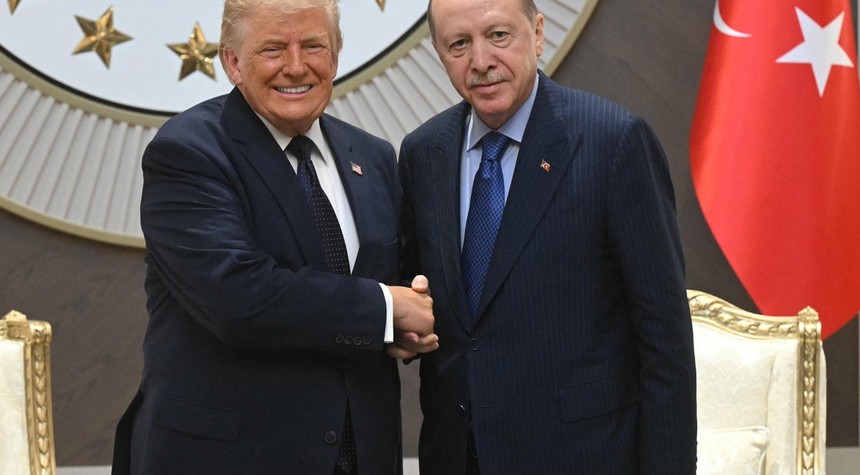
The North Atlantic Treaty Organization summit opened in Ankara, Turkey on Tuesday with President Trump renewing his call for member nations to commit five percent of their gross domestic product to defense spending, a significant increase from current levels that has generated considerable debate among alliance partners.
The President arrived in the Turkish capital shortly before seven o’clock Eastern Time and received a brief greeting from Turkish President Recep Tayyip Erdoğan before the two leaders proceeded to a bilateral meeting. The choice of Ankara as the summit location represents a notable diplomatic achievement for Turkey and underscores the strengthened relationship between Washington and Ankara that has developed across Mr. Trump’s two terms in office.
This summit convenes at a moment of particular complexity for the Atlantic alliance. The United States has begun a gradual reduction of its military assets stationed in Europe, a process that has proceeded with careful deliberation but nonetheless generated anxiety among European capitals long accustomed to robust American military presence on the continent.
The President’s push for the five percent defense spending target represents a substantial elevation from the two percent benchmark that NATO members agreed to in 2014, a goal that many alliance members have yet to achieve. The administration’s position holds that European security cannot remain predominantly dependent on American military expenditure, particularly as global security challenges multiply and demand attention across multiple theaters.
Tensions have emerged on multiple fronts as this summit proceeds. A renewed disagreement with Italian Prime Minister Giorgia Meloni has surfaced, adding strain to what had previously been regarded as a productive working relationship between Washington and Rome. The substance of this dispute remains under discussion, but it has added an element of uncertainty to alliance deliberations.
The administration’s continued interest in Greenland has proven particularly vexing to European partners. While American strategic interest in the Arctic region carries legitimate security and economic rationale, the manner in which this interest has been expressed has unsettled traditional allies and raised questions about American intentions in the region.
The President has, throughout his time in office, maintained an unconventional relationship with NATO. His periodic questioning of the alliance’s utility and his willingness to challenge long-standing assumptions about transatlantic security arrangements have kept alliance members in a state of considerable uncertainty. This approach has generated both criticism and, from some quarters, acknowledgment that difficult questions about burden-sharing and alliance purpose deserve serious examination.
Turkey’s position within NATO has itself been subject to scrutiny in recent years, as Ankara has pursued policies that have at times diverged from alliance consensus. The selection of the Turkish capital for this summit suggests a degree of confidence in Turkey’s alliance commitment, though questions about Turkish foreign policy independence persist.
The summit will test whether the alliance can navigate these various tensions while maintaining the collective security framework that has underpinned European stability for more than seven decades. The outcome of these deliberations will have consequences extending well beyond the immediate questions of defense spending and force posture.
Related: Iranian Funeral for Khamenei Features Open Calls for Assassination of Trump and Netanyahu