
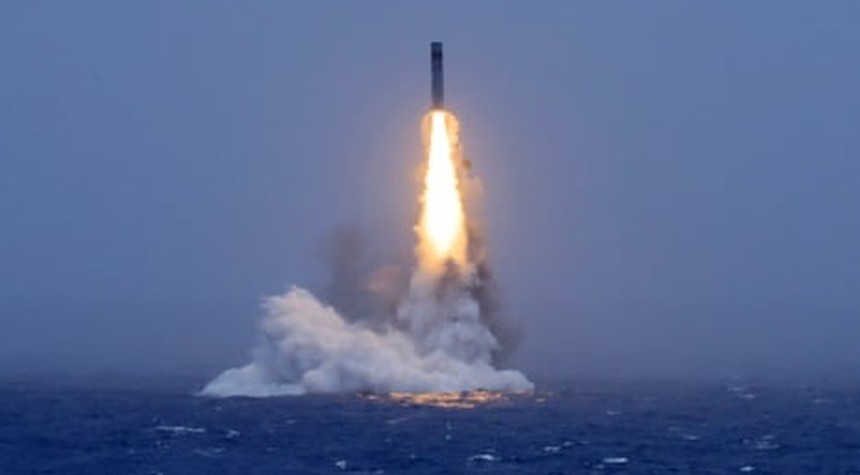
The international community finds itself confronting a troubling development in the Pacific as China’s test launch of an intercontinental ballistic missile has sparked widespread condemnation and raised serious questions about nuclear proliferation in one of the world’s most strategically sensitive regions.
Australian Prime Minister Anthony Albanese, speaking during an official visit to Solomon Islands, characterized the Chinese weapons test as a provocative act capable of destabilizing the region. The missile, launched Monday from what Chinese state media described as a strategic nuclear submarine, carried a dummy warhead but possesses the capability to inflict considerable damage if weaponized.
The facts of this matter are clear and concerning. China conducted this test in the wake of new Pacific treaty alliances, at a time when Beijing has been actively expanding its influence across the Pacific island nations. The timing alone raises questions about strategic intent.
Solomon Islands Prime Minister Matthew Wale delivered perhaps the most pointed rebuke, telling China’s ambassador directly that such actions do not reflect the behavior expected of a friend. His message was unambiguous: “Be our friend but don’t threaten us.” Wale, serving as chair of the Pacific Islands Forum, registered what he termed a “strong protest” and made clear that no nation, whether China, America, or any other power, should conduct ICBM tests in Pacific Island waters.
The regional response reflects a broader concern about great power competition playing out in the backyards of smaller nations that have no desire to become testing grounds for nuclear-capable weapons systems. These island nations seek partnership and development assistance, not the shadow of mushroom clouds.
Australian and American officials have stated that China’s missile test failed to comply with international law and was conducted with insufficient notice to nearby countries. This represents a significant breach of the protocols that govern such sensitive military operations, protocols designed precisely to prevent miscalculation and unnecessary alarm.
China’s response has been dismissive. A foreign ministry spokesperson characterized the test as routine military training conducted in accordance with international law and practice, claiming relevant countries received advance notification. The spokesperson urged critics not to over-interpret the exercise.
This is where the matter becomes particularly troubling. What China describes as routine, the region’s leaders view as threatening. What Beijing characterizes as normal military training, others see as provocative posturing. The gap between these interpretations is not merely semantic but reflects fundamentally different understandings of responsible behavior in a nuclear age.
Prime Minister Albanese emphasized that the world needs fewer nuclear weapons, certainly not more. His concern centers on the nature of the weapon tested, a long-range system capable of considerable destructive power. The test comes at a moment when nuclear proliferation concerns are already elevated globally, from North Korea’s expanding arsenal to Iran’s nuclear ambitions.
The Solomon Islands leader’s call for a new regional security pact gains credibility in light of this incident. Pacific island nations increasingly find themselves caught between competing powers, and they are making clear they will not be passive observers in matters affecting their security and sovereignty.
As Albanese prepares to host Pacific leaders in Brisbane, the message from the region is unmistakable: partnership is welcome, but intimidation will not be tolerated. That is a principle worth defending, and one that transcends the particular politics of any single nation.
And that is the way it is.
Related: Explosions Rock Damascus During Historic Macron Visit to Post-Assad Syria