
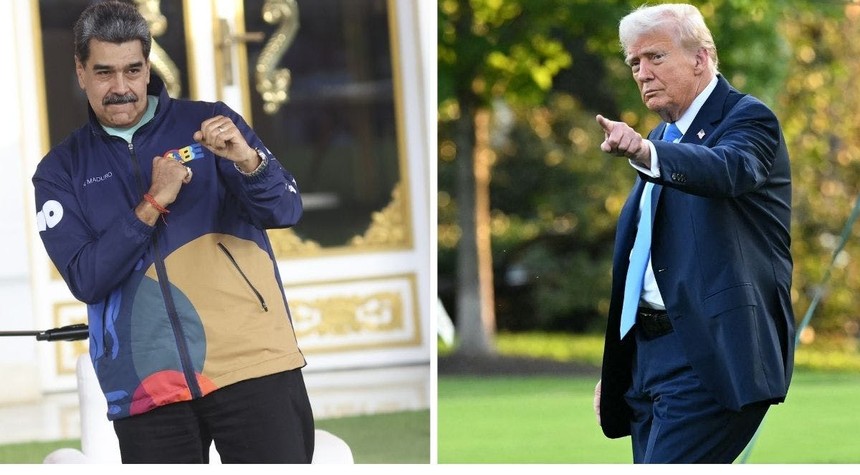
President Donald Trump has expressed interest in direct communication with Venezuelan dictator Nicolás Maduro, even as American military forces continue striking drug-trafficking vessels operating from Venezuelan waters in the Caribbean Sea.
The diplomatic overture comes at a moment of intensified American military action in the region. Under Operation Southern Spear, United States forces have conducted twenty-one strikes against drug boats in Caribbean waters, resulting in at least eighty-three deaths. These operations represent a significant escalation in America’s long-standing efforts to disrupt narcotics trafficking from South America.
The State Department formally designated Venezuela’s Cartel de Los Soles as a foreign terrorist organization this week, according to a notice published in the Federal Register. President Trump has identified Maduro himself as a leader of this criminal enterprise, which has transformed Venezuela’s government apparatus into what many observers describe as a narco-state.
Administration officials characterize the president’s interest in dialogue as a potential diplomatic avenue that does not preclude continued military pressure. The discussions remain in preliminary stages, with no confirmed date or agenda for any conversation between the two leaders.
“We have covert operations, but it’s not designed to kill Maduro. It’s designed to stop narcotrafficking,” a White House official stated, adding candidly that “if Maduro leaves, we would not shed a tear.”
The dual-track approach reflects the complexity of America’s Venezuela policy. While military operations continue unabated, targeting the maritime drug routes that have enriched Maduro’s regime and fueled America’s opioid crisis, the administration appears willing to explore whether diplomatic engagement might achieve objectives that military pressure alone cannot guarantee.
Officials familiar with the planning express deep skepticism about Maduro’s reliability as a negotiating partner. The Venezuelan leader has repeatedly promised democratic reforms and cooperation with international partners, only to renege on such commitments once immediate pressure subsided.
“Maduro is a narcoterrorist. Always lead with that word if you want to represent the president’s thinking,” one official emphasized, establishing the administration’s fundamental view of the Venezuelan leader.
Administration sources suggest that any dialogue would likely involve Maduro offering assurances about future elections, increased oil exports to the United States rather than Russia, and other concessions designed to ease American pressure. However, officials note that similar promises have been made and broken repeatedly over the past decade.
The military component of America’s Venezuela strategy continues without pause. Secretary of Defense Pete Hegseth confirmed another lethal strike this week against what he described as a vessel operated by a designated terrorist organization engaged in narcotics trafficking in the Eastern Pacific.
Operation Southern Spear serves dual purposes in the administration’s strategy. Publicly, it aims to disrupt drug trafficking routes that have contributed significantly to America’s ongoing struggles with narcotics addiction. Less publicly, officials acknowledge the operation also applies pressure intended to encourage regime change in Caracas.
The situation presents President Trump with a familiar challenge in American foreign policy: balancing the immediate tactical advantages of military action against the potential strategic benefits of diplomatic engagement, however distasteful the interlocutor may be. For now, the administration appears committed to pursuing both tracks simultaneously, maintaining military pressure while exploring whether dialogue might produce meaningful change in Venezuelan behavior.
The outcome of this approach will test whether sustained American military action can create conditions for productive diplomacy, or whether Maduro will simply use any talks to buy time while continuing the activities that prompted American intervention in the first place.
Related: Trump Administration Intensifies Pressure on Nigeria Over Christian Persecution