
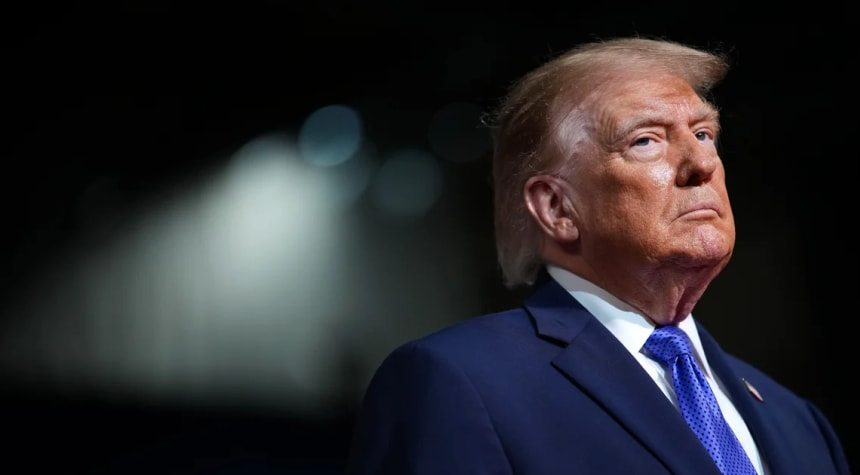
President Trump, Russian President Vladimir Putin, and Chinese President Xi Jinping will convene next week for an unprecedented three-way meeting on the sidelines of the Asia-Pacific Economic Cooperation summit in Shenzhen, China. The White House confirmed Friday that this historic gathering will take place on Thursday, November 19, marking the first time these three leaders have met together in a trilateral format.
The significance of this meeting cannot be understated. These three nations represent the world’s largest nuclear arsenals and a substantial portion of global economic activity. What transpires in that room in Shenzhen will reverberate across capitals worldwide.
According to White House spokeswoman Olivia Wales, nuclear arms reduction will top the agenda. The president believes, as Wales noted, that nuclear proliferation poses a very dangerous threat to global stability. This is a sensible priority. The world’s nuclear stockpiles, while reduced from Cold War peaks, remain capable of unprecedented destruction.
The meeting’s agenda reveals as much through its omissions as its inclusions. Administration officials confirmed that Mr. Trump intends to address the ongoing conflict in Iran during the trilateral discussions. However, Russia’s war in Ukraine will notably not be part of these three-way talks. A senior administration official, speaking on condition of anonymity, explained that separate diplomatic tracks are handling the Ukraine situation, with American envoys recently meeting both President Putin and Ukrainian President Volodymyr Zelenskyy.
The logic, officials say, is that China has not been centrally involved in the Ukraine negotiations, making it inappropriate for that multilateral setting. Whether this represents sound diplomatic strategy or a missed opportunity remains to be seen.
Mr. Trump will also hold a separate bilateral meeting with President Xi on Thursday, their fourth such encounter since the president returned to office last year. Notably absent from that agenda will be any discussion of export controls on sensitive semiconductor technology. Administration officials were emphatic on this point, stating that national security export controls are not negotiable matters but rather sovereign decisions made by the United States.
Tesla and SpaceX executive Elon Musk will travel to China with the presidential delegation but will not participate in the meetings with Xi and Putin.
The president’s Asia trip begins Monday, with stops first in the Philippines for an Association of Southeast Asian Nations summit before proceeding to Shenzhen.
Some observers have drawn comparisons to the Yalta Conference of 1945, where President Franklin Roosevelt, British Prime Minister Winston Churchill, and Soviet leader Joseph Stalin made arrangements that shaped the postwar world order. Kremlin spokesman Dmitry Peskov has dismissed such comparisons, arguing that any agreements reached in Shenzhen cannot be imposed on other nations.
Peskov’s comments underscore a fundamental tension that will likely characterize these talks. While acknowledging the significance of a meeting among leaders of Russia, China, and the United States, he insisted that global order should be based on mutual benefit and mutual respect rather than imposed visions.
The question facing President Trump is whether meaningful agreements on nuclear proliferation and regional conflicts can be achieved with two powers whose interests often run counter to American objectives. The challenge of diplomacy has always been finding common ground even among adversaries. Next week in Shenzhen, we will learn whether that remains possible in our current international landscape.
Related: Safety Concerns Force US Soccer to Pull Team from Under-17 World Cup in Qatar