
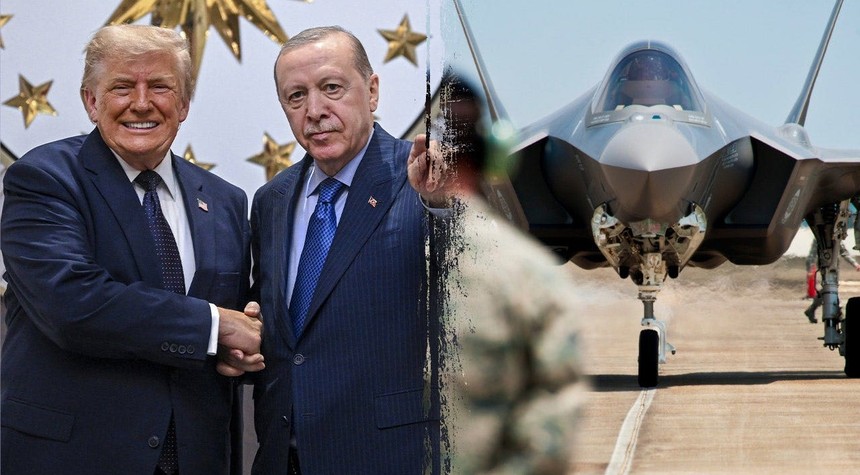
The question of whether Turkey should receive America’s most advanced fighter aircraft has emerged as a significant point of tension between the White House and members of Congress, with implications that extend far beyond the bilateral relationship between Washington and Ankara.
President Donald Trump, speaking during the recent NATO summit, characterized the current state of U.S.-Turkish relations as stronger than at any previous point. The President has expressed support for selling F-35 fighter jets to Turkey and indicated his intention to lift sanctions previously imposed on Ankara for its acquisition of Russian S-400 missile defense systems.
However, the State Department has informed Congress that Turkey has not satisfied the legal requirements necessary to receive the advanced aircraft. In a letter dated July 22, the department stated plainly that Turkey has not yet met these conditions. The letter was first reported by the Greek newspaper Kathimerini.
This discrepancy between presidential rhetoric and departmental assessment has created discomfort among Republican lawmakers, who have expressed their concerns through unofficial channels. The reluctance stems from broader strategic considerations about the balance of power in the Middle East.
Israeli Prime Minister Benjamin Netanyahu has added his voice to the debate, warning that Turkey provides support to Hamas. This assessment carries particular weight given Israel’s position as America’s closest ally in the region and the ongoing security challenges facing the Jewish state.
The F-35 program represents one of the most significant defense investments in American history. The stealth fighter’s advanced capabilities include sensor fusion, electronic warfare systems, and the ability to evade detection by enemy radar. Sharing this technology requires careful consideration of both the recipient nation’s reliability as an ally and the security of the aircraft’s classified systems.
Turkey’s relationship with NATO has grown increasingly complicated in recent years. While Ankara remains a member of the alliance and controls strategically vital territory along the alliance’s southeastern flank, Turkish foreign policy has diverged from traditional Western positions on numerous issues. The acquisition of Russian military systems represented a particularly troubling development, as it raised concerns about Moscow’s potential access to information about NATO capabilities and operations.
The sanctions imposed on Turkey over the S-400 purchase were not merely punitive but reflected genuine security concerns about the integration of Russian systems with NATO infrastructure. Lifting those sanctions without corresponding Turkish concessions would establish a precedent that could complicate future alliance discipline.
Congressional authority over foreign military sales exists precisely to provide a check on executive decisions that might compromise American security interests or regional stability. The backchannel resistance from Republican members suggests that this authority may be exercised should the administration proceed without addressing the outstanding concerns.
The situation requires careful navigation. Turkey occupies a crucial geographic position and maintains the second-largest military in NATO. However, strategic geography alone cannot justify overlooking actions that undermine alliance cohesion or regional security.
The coming weeks will reveal whether the administration can bridge the gap between presidential ambition and legislative caution, or whether this issue will develop into a more significant confrontation over the conduct of American foreign policy in a strategically vital region.
Related: Fifteen Elephants Dead in Kenya as Officials Launch Investigation Into Mysterious Deaths