
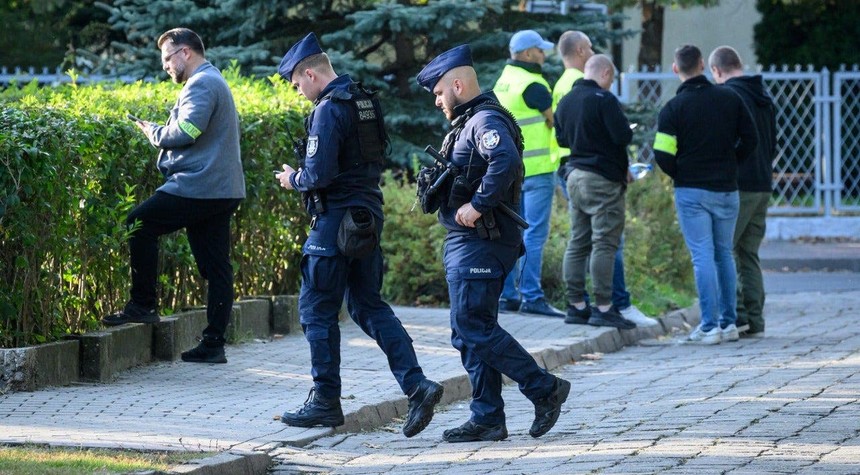
A troubling pattern of violence has emerged in Poland, where three separate school attacks in as many days have left authorities scrambling to understand whether an online challenge is driving teenagers to commit mass violence.
The most recent incident occurred Thursday morning at a primary school in Leszczydol-Nowiny, northeast of Warsaw. A 15-year-old boy, armed with three knives and wearing a helmet-mounted camera, attacked the school he once attended. The assault claimed the life of a 37-year-old caretaker and left two others wounded, including the school’s head teacher, Krzysztof Ochmanski.
Ochmanski’s account of subduing the attacker demonstrates the quick thinking that likely prevented further casualties. After hearing a scream, he ran into the hallway where the teenager confronted him. The attacker wounded Ochmanski with what the teacher described as “a rather long knife,” and struck him with the handle before Ochmanski managed to restrain him. This act of courage, while successful, underscores the vulnerability of educational institutions when determined attackers strike.
The Thursday attack followed a similar incident the day before in Ostroleka, in northeastern Poland, where a 19-year-old allegedly wounded ten people, including himself, at another school. Police have also arrested a 17-year-old in Sierpc, in north-central Poland, after discovering he was allegedly planning an attack of his own.
What distinguishes these attacks from previous school violence is the apparent premeditation and the disturbing element of documentation. The 15-year-old’s use of a helmet-mounted camera suggests an intent to record and possibly disseminate footage of the attack. This detail has raised concerns among Polish authorities about the influence of online content encouraging such violence.
Prime Minister Donald Tusk addressed the crisis at an emergency meeting, acknowledging the unprecedented nature of these attacks. His government faces what he termed “an extraordinary situation,” dealing with attackers who appear to be inspired by digital content and motivated to document their crimes for online audiences.
The Polish government’s response has been swift. Tusk has ordered daily police visits to schools as a deterrent to further violence. This measure, while perhaps reassuring to parents and educators, reflects the difficult reality that authorities are uncertain about the scope of the threat or how many other young people might be contemplating similar actions.
The investigation into whether these attacks connect to an online challenge represents a broader concern about the vulnerability of young people to dangerous internet content. If confirmed, it would mark another example of how digital platforms can amplify destructive behavior among impressionable youth.
For Poland, a nation that has generally enjoyed lower rates of school violence compared to other Western countries, these attacks represent a jarring shift. The fact that all three incidents occurred within a concentrated geographic area and timeframe suggests either coordination or rapid imitation among perpetrators.
As authorities work to establish connections between the attacks and potential online influences, the immediate task remains protecting students and staff while determining how extensively this violent trend may spread. The coming days will reveal whether Poland’s aggressive response can prevent what Prime Minister Tusk fears most: a grim copycat phenomenon that could endanger schools throughout the nation.
Related: Australian Opposition Defends Uncosted Immigration Reduction Plan