
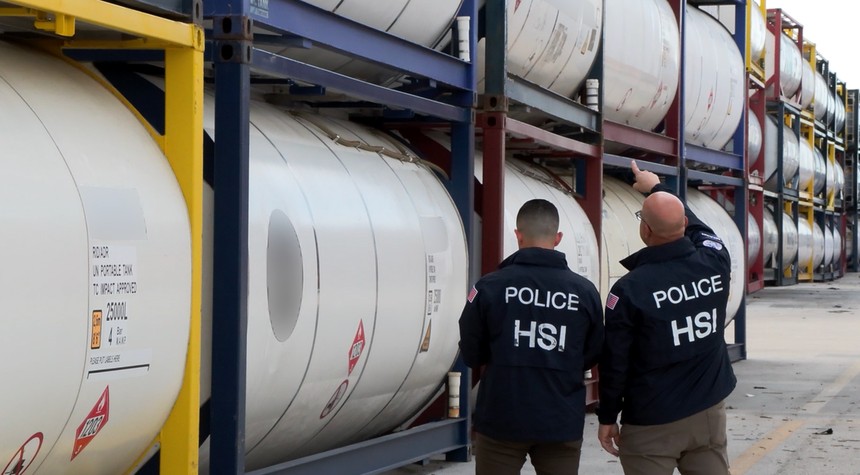
Federal authorities have intercepted 90 shipments of biodiesel fuel valued at nearly three million dollars that were destined for Cuba, marking a significant expansion of enforcement efforts aimed at preventing illegally trafficked energy supplies from reaching the sanctioned island nation.
The coordinated operation, conducted by Homeland Security Investigations, U.S. Customs and Border Protection, and the Commerce Department’s Bureau of Industry and Security, targeted shipments bound for ENETEC S.A., a state-owned fuel wholesaler based in Havana that was sanctioned by the U.S. Treasury’s Office of Foreign Assets Control in July.
According to the Department of Homeland Security, federal intelligence first identified that fuel exported from American ports was being diverted to the sanctioned company in violation of U.S. export restrictions. Following this discovery, authorities analyzed trade and intelligence data throughout early September, ultimately tracing biodiesel shipments departing from Port Everglades in Florida and the Port of Houston.
The scale of the interdiction underscores the determination with which federal agencies are pursuing sanctions enforcement. At Port Everglades, authorities seized 71 oil storage tanks containing approximately 500,000 gallons of biodiesel. An additional 19 shipments at the Port of Houston yielded roughly 120,000 gallons of the fuel.
Federal officials have indicated that the seizures were executed based on suspected violations of the International Emergency Economic Powers Act, along with regulations governing exports under the Export Administration Regulations. The agencies have not yet disclosed the identities of the exporters involved, nor have they announced any formal charges in what remains an ongoing investigation.
The enforcement action represents the latest chapter in a broader campaign to restrict Cuba’s access to energy resources. Earlier this month, the United States Coast Guard intercepted the Grace, a cargo vessel measuring approximately 300 feet, between Cuba and Mexico while it was transporting fuel. That interdiction followed a similar seizure during the summer when the Coast Guard stopped the Jaira Provider, which was carrying more than 200,000 gallons of fuel.
These enforcement efforts align with the Trump administration’s policy objective of severing Cuba’s energy supply lines. Earlier this year, President Trump announced measures designed to cut off most energy shipments to the island, including threats of tariffs against any nation that sells or provides oil to Cuba.
The timing of these interdictions coincides with a deepening energy crisis on the island. Cuba has faced chronic fuel shortages in recent years, compounded by an aging electrical infrastructure and diminishing oil supplies. American sanctions have contributed significantly to these shortages, though they are not the sole cause of Cuba’s energy difficulties.
In a statement following the seizures, Jose Figueroa, Special Agent in Charge of HSI Miami, emphasized that his agency would continue working with partner organizations to identify and disrupt efforts to circumvent American sanctions. The commitment reflects a broader determination to maintain the integrity of export controls and deny the Cuban government access to resources obtained in violation of American law.
Daniel Alonso, director of field operations for U.S. Customs and Border Protection, reinforced this stance, stating that his agency remains steadfast in enforcing American laws across all domains, encompassing both incoming commerce and outbound shipments.
The investigation continues, and additional enforcement actions may follow as authorities pursue leads related to sanctions evasion.
Related: Trump Administration Awards $6.6 Billion Contract to Expand Submarine Production Capacity