
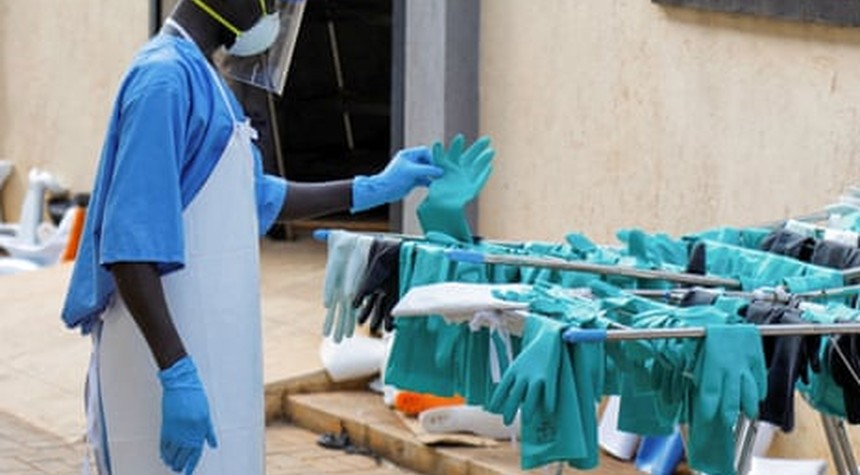
Uganda has discharged its last confirmed Ebola patient from hospital and begun the formal process toward being declared free of the disease, even as the nation grapples with significant economic damage from international travel restrictions that officials argue no longer reflect the reality on the ground.
The discharge Thursday of a Congolese national from Kampala’s Mulago national referral hospital initiated a 42-day countdown mandated by the World Health Organization before Uganda can officially receive Ebola-free status, provided no new infections emerge during that period.
The outbreak in Uganda infected 20 individuals and claimed two lives since it was first declared by the WHO on May 17. By any measure of epidemic response, these are remarkably low numbers. The case fatality rate of less than 10 percent stands in stark contrast to the typical 30 percent mortality rate associated with Ebola outbreaks in the region.
Yet fifteen countries continue to maintain either partial or full travel restrictions on Uganda. The United States has placed Uganda on a level four advisory against all travel due to the Ebola outbreak, the same category reserved for North Korea, Somalia, Afghanistan, and Russia. This classification has dealt a severe blow to Uganda’s tourism industry, trade relationships, and broader business environment.
“As we make progress in managing this disease, we are engaging and asking those countries with a view to opening up so that the economy does not get injured,” Uganda’s health minister, Dr. Chris Baryomunsi, said following the ceremony marking the release of the last patient.
The minister was careful to note that Uganda is not yet officially Ebola-free under WHO guidelines, which require countries to complete two consecutive 21-day incubation periods without recording a new case before an outbreak can be declared over.
“This is an imported outbreak. We remain on high alert because what we are celebrating here is different from what is happening in the Democratic Republic of the Congo,” Baryomunsi said.
Indeed, the situation across the border presents a sobering contrast. The DRC reported Thursday that confirmed cases in the country had risen to 2,073, including 796 deaths, as of July 14. The outbreak continues to worsen while Uganda appears to have successfully contained its spread.
Uganda’s outbreak has been markedly different from previous Ebola emergencies in the region. Of the 20 confirmed infections, 15 were Congolese nationals, four were health workers, and one was a driver. The outbreak was caused by the Bundibugyo strain of the virus, for which no licensed vaccine currently exists.
Dr. Kasonde Mwinga, the WHO representative in Uganda, attributed the country’s success to sustained investment in epidemic preparedness rather than fortunate circumstances. Uganda had established treatment facilities, trained emergency medical teams, and pre-positioned medical supplies before the outbreak, allowing authorities to respond rapidly when cases were detected.
“The case fatality rate of less than 10 percent is among the lowest recorded in Ebola outbreaks because the lowest has always been 30 percent. That is not by luck. It is because people invested in preparedness,” Mwinga said.
The outbreak has also accelerated scientific efforts to develop vaccines against the Bundibugyo strain of Ebola, potentially providing protection against future occurrences of this particular variant.
The facts present a clear picture. Uganda invested in preparedness, responded effectively when the outbreak occurred, and achieved results that stand among the best responses to Ebola in recorded history. Whether the international community will adjust its travel advisories to reflect this reality remains to be seen, but the economic consequences of maintaining restrictions designed for far more severe circumstances continue to mount.
Related: Tehran Erects Billboard Depicting President Trump Dead in Coffin