
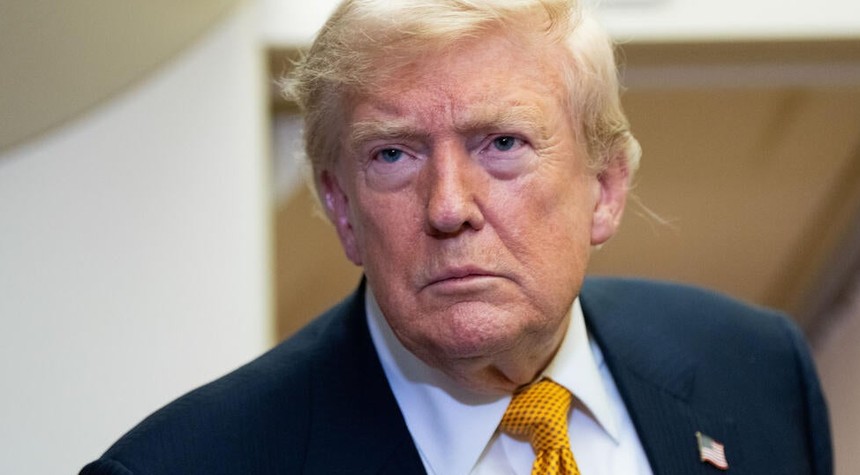
President Trump has designated the SAVE America Act as his administration’s foremost legislative objective, creating a significant impasse within the Republican legislative agenda as Senate support remains elusive.
The measure represents one of the most substantial proposed changes to federal voting procedures in recent memory. At its core, the legislation would mandate that prospective voters present physical proof of United States citizenship when registering for federal elections. Acceptable documentation would include passports or birth certificates, documents that millions of Americans do not routinely maintain in readily accessible form.
The bill extends beyond registration requirements. Under its provisions, voters would need to present photo identification at polling places, and that identification would itself need to contain proof of citizenship. This dual requirement distinguishes the measure from existing voter identification laws in numerous states.
The House of Representatives has advanced several iterations of this legislation, with Republican leadership pledging to attach the provisions to other essential measures before transmitting them to the Senate. This legislative strategy effectively holds other Republican priorities in a state of suspension until the voting bill receives consideration.
The political mathematics in the Senate present considerable obstacles. The measure currently lacks support from even a simple majority in the upper chamber, a particularly notable circumstance given Republican control of that body. This deficit underscores the divisions within the party itself regarding the legislation’s necessity and implementation.
The president has indicated his intention to expand the bill’s scope beyond its original framework. Additional provisions under consideration include prohibitions on mail-in voting and restrictions on transgender athletes participating in women’s athletic competitions. These additions would transform the measure from focused voting legislation into a broader vehicle for conservative policy objectives.
Proponents of the SAVE America Act characterize it as a measured response to concerns about electoral integrity, specifically targeting the possibility of non-citizens casting ballots in federal elections. Republican advocates maintain that requiring citizenship documentation represents a reasonable safeguard for the democratic process.
The empirical record, however, indicates that documented instances of non-citizens voting in American elections occur with extreme rarity. This statistical reality has provided ammunition for critics who contend the legislation addresses a largely theoretical problem while creating substantial practical barriers for legitimate voters.
The intelligence community’s framework for understanding foreign electoral involvement proves instructive in this context. American intelligence agencies distinguish between election influence and election interference. The former encompasses efforts to shape voter preferences through information campaigns, whether accurate or misleading. The latter involves direct manipulation of electoral mechanics, including ballot casting, vote tabulation, or registration processes.
The current legislative debate centers on domestic policy rather than foreign interference, yet it touches upon fundamental questions about balancing electoral security with voter accessibility. Critics warn that the citizenship documentation requirements could effectively disenfranchise millions of eligible American voters who lack the specified documents, a concern that extends across demographic and geographic lines.
As this legislative confrontation continues, it has effectively paralyzed other elements of the Republican agenda, demonstrating the president’s willingness to prioritize this measure above competing policy objectives. The outcome will likely define not only voting procedures but also the trajectory of the current administration’s relationship with its own party in Congress.
Related: Ebola Outbreak in Congo Outpaces International Containment Efforts