
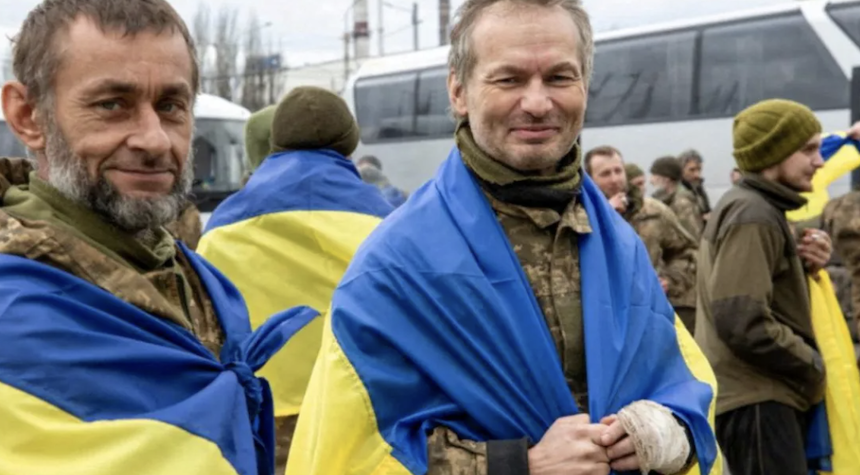
An official from Ukraine said that they hope to have a prisoner exchange between Russia and Ukraine “any day”, although the arrangements may fall through last minute.
Petro Yatsenko from Ukraine’s Headquarters for the Treatment of Prisoners of War said that negotiations with Moscow regarding prisoner exchanges have grown more difficult over the past few months as Russian forces made significant gains on the front lines.
In 2024 there were only 10 exchanges, the lowest since the invasion. Ukraine does not publish the number of Russian prisoners of war it holds, but there are believed to be more than 8,000.
The number of Ukrainians captured by Russia is increasing, as a result of the significant gains made on the battlefield in the past year.
Andriy Toras, a Ukrainian marine, was one of the people brought home by the last swap in September 2024. Andriy Turas and his wife Lena share their remarkable ordeal in a flat located in Lviv, Ukraine. They were both captured in 2022 while defending Mariupol.
Lena, an army medic, says of her Russian captors: “They gave us lectures about how Ukraine didn’t exist.” “They tried exterminating our Ukrainian identity in our minds.”
Lena was freed after two weeks in captivity. The psychological scars from her time in a Russian PoW camp remain. She says, “We heard screams constantly and knew that the men [in her unit] were tortured.”
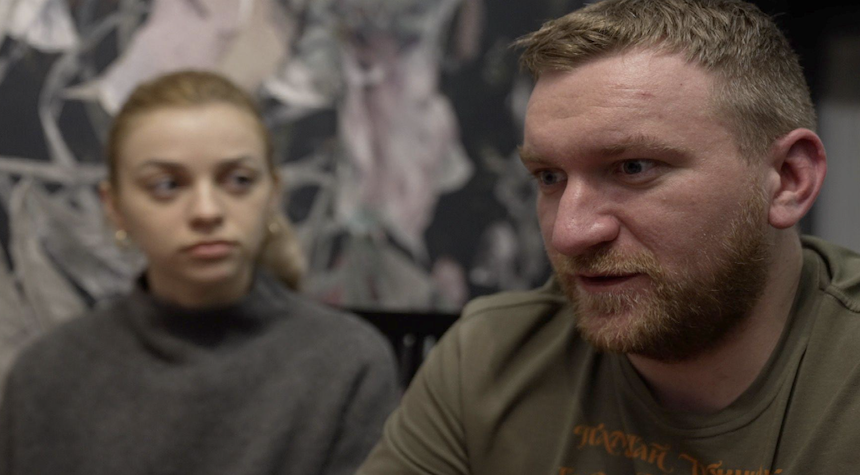
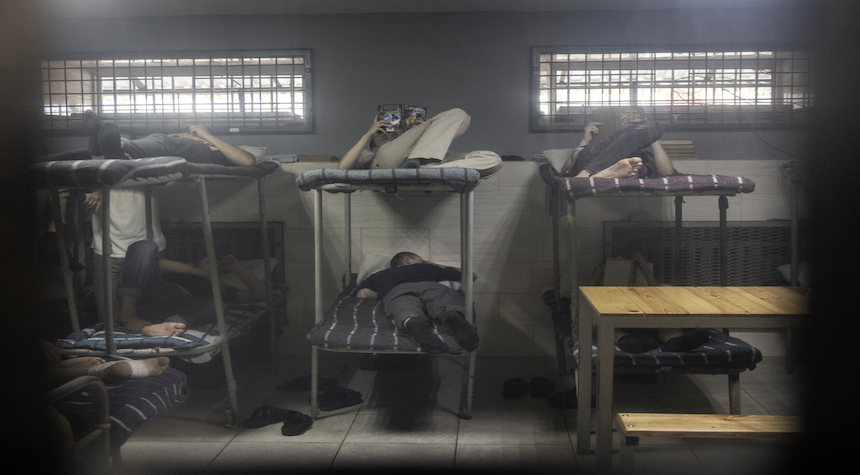
Andriy claims, “They beat us mercilessly with their fists and sticks. They used hammers as well. They stripped us in the cold and forced us to crawl on asphalt. We were terrified, our legs were ripped up and our feet were frozen.”
The food was disgusting – sour fish heads and rotten cabbage. The marine says, “It’s a nightmare.” It’s like waking from a nightmare in the middle night, sweaty and terrified.
Andriy was incarcerated for two and a half years, far more than his wife.
Andriy first met Leon, his son of two years, three months after his release from prison. Lena was not aware that she was pregnant when the couple were captured.
“I cried when I learned I was pregnant. First from joy, then from sadness because I couldn’t inform my husband.”
Lena’s eyes sparkle as she says: “I wrote him letters constantly, telling him he would have the child he had wanted for so many years.” “But he didn’t get a single letter.”
Andriy tells me how it felt to see his son for the first time. He says with a smile, “I thought I had the best day ever.”
International organizations who interviewed hundreds of Ukrainian POWs have corroborated Lena’s and Andriy’s accounts.
The UN claims that Russia subjected Ukrainian prisoners to “widespread, systematic torture and ill-treatment… including severe beatings and electric shocks. Sexual violence was also used. Suffocation and prolonged stress positions were also employed.
The Russian Embassy in London stated: “The accusations you have made are patently untrue.” The captured Ukrainian militants were treated with humanity and following the Geneva Convention and relevant Russian legislation. “They are given good food, shelter, medical aid, religious and intellectual nutrition, as well as religious and intellectual guidance.”
Andriy undergoes rehabilitation in a medical facility located in Lviv. He still has the time to spend with his son and wife. The Turas’ first Christmas as a family is a special one for Leon. Having Daddy at home will be the best gift he can give him.
Many Ukrainians still wait desperately for any news about their loved ones. Families and activists gather in central Kyiv for a special demonstration at Christmas to demand the release of Ukrainian prisoners.
The drivers honking their horns as they pass by in a cacophony that is deafening in solidarity have been standing in the cold for hours.
Tetiana’s son Artem, 24, was kidnapped almost three years earlier. “My deepest wish is that my son be released,” she says. I’ve pictured our meeting at least 100 times. I can see his eyes lightening up as he embraces me and we are finally in his homeland.
Liliya, 29, a dancer from the Kyiv National Operetta Theatre, was also at the protest holding a red banner. In 2022, Russian forces captured her boyfriend Bohdan. Since then, she has not spoken to him.
Liliya says, “I’d like to say it’s difficult for me to be by myself, but that’s not what I want to say, as I am always wondering how he is doing there.”
Liliya, backstage at the theater, shows us the pictures of hearts she sends Bohdan nearly every day. “I miss him a lot. She says with trembling bottom lip, “He needs to be rescued and have his freedom returned.” The messages have not been read.
Liliya invites you to watch her special Christmas Day performance. This dance, Johann Strauss’s Blue Danube Waltz is a Ukrainian festive favorite. It was written in 1866 by Strauss to boost the Austrian public’s spirits after a war. The theatre is full.
She says as she gets ready to take the stage, “Christmas holidays are a painful time.” “There’s not much of a festive spirit.”
As the show ends, theatregoers rush to collect their coats. After almost three years of war, almost everyone here has a loved one fighting on the frontline, in captivity, or killed in action.
Liliya says that many people in Ukraine face difficult circumstances. “We are just waiting for a time when we can celebrate together once again.” It is important to remember that our army deserves credit for the fact we even have holidays.